A wireless infrared repeater can solve a common home-theater problem: your remote works only when it has a clear line of sight to equipment hidden in a cabinet or located in another room.
These 10 wireless infrared repeaters vary in range, device capacity, emitter design, and installation style. The right choice depends on your room layout, the number of components you need to control, and how discreetly you want the system installed.
Best 10 Wireless Infrared Repeaters Picks for 2026
Multi-Device Cabinet Control

- Controls up to 10 devices, expandable to 12
- Broad compatibility with common A/V equipment
- Includes five dual IR emitters
Best For: Multi-device home-theater cabinets
Long-Range Bidirectional Control
Ten-Channel Wireless IR Repeater

- Up to 300 feet in open space
- Supports 10 device groups
- Bidirectional 20–60 kHz IR control
Best For: Multi-zone A/V setups over longer distances
Ultra-Long-Range Compact Design
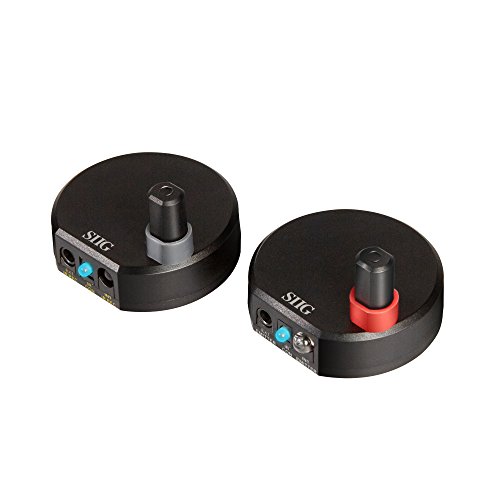
- Wireless range up to 656 feet
- Supports 20–60 kHz IR signals
- Compact design with two power adapters
Best For: Single-device, long-distance IR extension
Multi-Zone Wireless Control

- Controls four IR devices in this version
- 433 MHz bidirectional wireless link
- Designed for multi-room and multi-floor use
Best For: Large homes and multi-zone installations
Long-Range Pick

- Up to 200m wireless range in ideal conditions
- Supports up to 10 compatible IR devices
- Includes flexible receiver and emitter cables
Best For: Large rooms and multi-zone IR entertainment systems
Multi-Device Value

- Controls up to 10 devices, expandable to 12
- Includes five emitters and one receiver
- Supports 20–60 kHz IR signals
Best For: Cabinets containing multiple A/V components
Flexible Home Setup

- Up to 200m or 500ft in ideal conditions
- Supports 20–60 kHz IR devices
- Designed for control through walls and doors
Best For: Multi-level homes and room-to-room remote control
Best with Extra Features

- 700-foot claimed emitter-to-receiver range
- 20–60KHz compatibility for mainstream IR devices
- 90-degree receiver coverage up to 30 feet
Best For: Large rooms and hidden conventional AV equipment
Best for Multi-Device Cabinets

- 500-foot 433MHz wireless range
- Two selectable channels help prevent cross-control
- Includes dual extension cables and AC/USB adapters
Best For: Cabinets containing multiple nearby IR-controlled devices
Best for Wide-Angle Control

- Up to 800-foot stated transmission range
- Remote detection up to 40 feet at 90 degrees
- 20–60KHz support with signal indicators
Best For: Large rooms and multi-room conventional AV setups
Multi-Device Cabinet Control – 10-Device IR Repeater Kit
This wireless infrared repeaters kit is designed for managing several hidden home-theater components from one existing IR remote. It supports up to 10 devices, with expansion up to 12, making it practical for TV consoles, cabinets, and other installations where equipment is out of sight.
Best For: Home-theater setups with multiple IR-controlled devices stored behind cabinet doors or in nearby rooms.
Pros:
- Controls up to 10 devices and can expand to 12.
- Supports a broad range of IR electronics, including cable boxes, receivers, DVD players, and Blu-ray players.
- Includes five dual IR emitters, a receiver, distribution block, power plug, and manual.
Cons:
- Plasma displays may interfere with the IR receiver.
- Multiple receivers need spacing to help avoid interference.
- Its listed range is up to 10 meters, which may be limiting for larger properties.
Choose this model when device capacity and cabinet organization matter more than maximum distance. Its included emitters and compatibility with common A/V equipment make it a flexible wired-extension-style solution for centralized setups.
Long-Range Bidirectional Control – Ten-Channel Wireless IR Repeater
Among wireless infrared repeaters, this Inteset system stands out for long-range, bidirectional communication and support for up to 10 separate device groups. It uses RF between the two interchangeable units, so the remote signal does not require direct line of sight through walls.
Best For: Larger homes or buildings where multiple A/V zones need independent control without line-of-sight placement.
Pros:
- Offers a stated open-space range of up to 300 feet.
- Supports 10 device groups with automatic channel pairing to reduce interference.
- 20–60 kHz IR coverage is designed for virtually all standard A/V devices.
- Bidirectional units can both send and receive IR signals.
Cons:
- Not compatible with RF remotes.
- Walls and other obstructions can reduce the stated range.
- The setup includes two units but does not indicate broad multi-device emitter hardware in the supplied notes.
This is a strong option when distance and multi-zone flexibility are priorities. Its channel pairing and bidirectional design may also help when several repeater pairs operate in close proximity.
Ultra-Long-Range Compact Design – SIIG 200M IR Extender
SIIG Ultra Compact Wireless IR Remote Control Extender Repeater Kit – 200M (CE-RC0014-S1)
Check Price On AmazonThis SIIG kit uses wireless RF communication to extend control of IR-enabled equipment across distances of up to 200 meters, or 656 feet, depending on obstructions. Its compact transmitter and receiver are suited to installations where a small footprint and real-time operation are important.
Best For: Users who need a compact wireless infrared repeaters kit for extending control between rooms or across a large open area.
Pros:
- Provides a stated wireless range of up to 656 feet in suitable conditions.
- Recognizes 20–60 kHz IR signals for compatibility with many A/V devices.
- Highly sensitive modules transmit signals in real time without delay.
- Includes two power adapters and bundled IR extension cables.
Cons:
- The stated range depends on surrounding obstructions.
- The supplied details list support for one device.
- Extension cables must be positioned close to and in line with the source IR sensor when used.
The SIIG is a sensible pick for a single-device installation that needs substantial range without bulky hardware. For best performance, start without the extension cables and place the receiver in line of sight with the source device as recommended.
Multi-Zone Wireless Control – 433MHz Four-Device IR Blaster
This SPENFiLY system is a wireless infrared repeaters option for sending remote commands through walls and across rooms. Its 433 MHz bidirectional link is designed for multi-zone installations, with the supplied Control 4 Devices version supporting up to four IR devices.
Best For: Large homes, multi-floor spaces, offices, or commercial areas that need centralized control of several IR appliances.
Pros:
- Supports control of four IR devices in the specified model.
- Claims over 500 meters outdoors and over 200 meters through two walls.
- Uses bidirectional 433 MHz communication with a 180-degree reception angle.
- Includes receiving and transmitting hosts, transmitter, receiver, cables, power adapters, and manual.
Cons:
- The IR transmitter range itself is listed as less than 1 meter.
- The supplied warranty description is limited to half a year.
- Performance claims for distance depend on the installation environment.
This model is best suited to unusually large or divided spaces where standard short-range extenders may not reach. Confirm the four-device configuration and plan transmitter placement carefully, since the long-distance wireless link does not mean the local IR transmitter has unlimited range.
Long-Range Pick – Sewell BlastIR Wireless Pro
For shoppers comparing wireless infrared repeaters, the Sewell BlastIR Wireless Pro stands out with a claimed wireless distance of up to 200 meters (650 feet) in suitable conditions. It is designed for IR-controlled equipment and supports multi-device setups, while included receiver and emitter cables help improve placement flexibility.
Best For: Large rooms or multi-zone entertainment systems using compatible IR devices.
Pros:
- Up to 200 meters of wireless range, though obstacles can reduce it.
- Supports up to 10 devices.
- Includes USB and AC power cables, receiver and emitter cables, adhesive, and rubber feet.
- Optional cables can help position the receiver and emitters more precisely.
Cons:
- Works with IR devices only; RF-controlled remotes are not supported.
- The main receiver is directional unless the included receiver cable is used.
- Listed incompatibilities include Yamaha HTR 6140, Arris DCX 3520E-M, and OSD ATM-7 Speaker Selector.
This is a feature-rich choice for users who need extended reach and control of several IR components, provided their equipment is compatible and the receiver is positioned carefully.
Multi-Device Value – Herfair IR Repeater System
This Herfair kit is a practical option among wireless infrared repeaters for hiding A/V equipment inside a cabinet or in another room. It controls up to 10 devices, with expansion to 12, and includes five emitters for connecting multiple components.
Best For: Organized media cabinets with several IR-controlled A/V devices.
Pros:
- Controls up to 10 devices and can expand to 12.
- Includes one receiver and five IR emitters.
- Supports a broad 20–60 kHz frequency range.
- Plug-and-play design with status lights for power and signal transmission.
Cons:
- Listed operating range is 8 meters.
- Multiple connected receivers should be spaced at least 6 meters apart to reduce interference.
- Requires careful emitter placement when concealing equipment.
With its generous emitter count and straightforward setup, this kit is well suited to a consolidated entertainment center, especially when long-distance room-to-room coverage is not the priority.
Flexible Home Setup – TNP Wireless IR Repeater Kit
The TNP Wireless IR Repeater Kit is aimed at extending existing remote controls around walls and doors without requiring direct line of sight. It supports common entertainment equipment and a 20–60 kHz IR range, making it a flexible candidate for households with cable, disc, satellite, and audio components.
Best For: Homes that need convenient remote control from another room or across multiple levels.
Pros:
- Claims up to 200 meters, or 500 feet, in ideal conditions.
- Works with many IR-equipped devices, including DVD players, cable boxes, satellite receivers, and audio systems.
- Supports IR frequencies from 20 to 60 kHz.
- Includes an IR receiver, power adapter, emitter, and transmitter.
Cons:
- Actual range may vary from the stated ideal-condition distance.
- Compatibility depends on the device using IR rather than another remote-control technology.
- The notes do not specify a maximum number of devices supported.
This kit offers a useful balance of range claims and broad stated compatibility, but buyers should verify that each intended device uses IR and keep expectations realistic regarding obstacles.
Best with Extra Features – Fourair Wireless IR Repeater
For shoppers comparing wireless infrared repeaters, the Fourair model is designed to hide AV equipment in cabinets or closets while preserving remote control access. It supports 20–60KHz infrared devices and provides a claimed 700-foot connection between the receiver and emitter.
Best For: Home theaters, offices, hotels, and tidy entertainment setups using standard IR-controlled equipment.
Pros:
- Long 700-foot emitter-to-receiver range.
- Supports a broad 20–60KHz IR frequency range.
- Receiver covers remotes up to 30 feet away within a 90-degree area.
- LED indicator and 12-month warranty support setup and troubleshooting.
Cons:
- Not compatible with Bluetooth remotes or app- and Wi-Fi-controlled devices.
- Emitter cables should be positioned within 2 inches of the source IR sensor.
The Fourair is a strong choice when maximum stated range and broad conventional IR compatibility matter most. Confirm that your equipment has an active IR receiver before ordering.
Best for Multi-Device Cabinets – OrangeLight 2CH IRBlast
The OrangeLight 2CH IRBlast is a practical wireless infrared repeater for controlling equipment behind cabinet doors or in closets. Its 433MHz wireless link reaches up to 500 feet, while dual channel switches help separate nearby devices and reduce accidental cross-control.
Best For: Multi-device home theater cabinets with cable boxes, Blu-ray players, receivers, or other standard IR equipment.
Pros:
- 500-foot wireless range, with a claimed 984-foot open-air range.
- Two adjustable channels support separate device pairings.
- Includes two IR extension cables, power adapters, adhesive pads, and a manual.
- LED feedback and a 12-month manufacturer warranty aid installation.
Cons:
- Works only with IR remotes, not RF, Bluetooth, or Wi-Fi/app-controlled devices.
- Its receiver detects commands within a narrower 45-degree angle.
Choose this kit if channel selection and included accessories are more useful than the longest possible range. Verify that your remote uses infrared before buying.
Best for Wide-Angle Control – Binken Wireless IR Repeater
The Binken wireless infrared repeater focuses on convenient hidden-equipment control for home theaters, offices, and hotels. It supports 20–60KHz IR signals, claims up to 800 feet between units, and accepts remote commands from up to 40 feet within a 90-degree angle.
Best For: Large-room or multi-room setups using cable and satellite boxes, disc players, soundbars, amplifiers, or Hi-Fi systems.
Pros:
- Highest stated range in this selection at up to 800 feet.
- 90-degree receiver angle and up to 40-foot remote detection distance.
- Supports common 20–60KHz infrared devices.
- Plug-and-play design with signal LEDs and a 12-month warranty.
Cons:
- Not compatible with Bluetooth- or Wi-Fi-only equipment.
- The emitter should be aligned within 2 inches of the device’s IR sensor.
The Binken stands out for buyers prioritizing stated range and receiver coverage. As with other IR repeaters, check the target equipment’s control method and plan for close emitter placement.
How We Picked the Best Wireless Infrared Repeaters
We focused on the features that matter most in real installations: wireless range, compatibility with standard IR remotes, supported device count, transmitter and receiver design, setup requirements, and suitability for enclosed cabinets or larger spaces. We also considered whether each kit is better suited to a simple television setup, a multi-component home theater, or a commercial-style installation.
Long-range claims are useful for comparison, but actual performance depends on walls, furniture, interference, and the placement of the receiver and emitter. Products with flexible placement and multiple emitter outputs generally offer more installation options.
Quick Comparison
| What to Compare | Why It Matters |
|---|---|
| Wireless range | Determines how far the remote signal can travel between rooms or across a large space. |
| Device capacity | Shows how many hidden components can receive commands from one system. |
| Emitter design | Individual emitters provide targeted control; broad blasters are easier to install. |
| Channel configuration | Multiple channels can help prevent interference between nearby systems. |
| Installation format | Compact receivers and adhesive emitters make discreet setups easier. |
Key Buying Factors for Wireless Infrared Repeaters
Range and Room Layout
Choose a rated range that exceeds the distance between the remote-control area and the equipment. For thick walls, multiple rooms, or large offices, a model marketed for several hundred feet may provide more flexibility, although the rating is normally measured in open conditions.
Number of Devices
Count every component you want to control, including a television, receiver, Blu-ray player, streaming box, cable box, and amplifier. A system supporting several devices is preferable if equipment may be added later.
Emitter Placement
Check whether the kit includes separate IR emitters, a wide-area blaster, or both. Stick-on emitters are precise and work well inside cabinets, while a room-facing blaster can be more convenient for multiple components with exposed sensors.
Compatibility and Interference
Most kits are designed for conventional infrared remote controls, not Bluetooth, Wi-Fi, or radio-frequency remotes. If you use a universal remote, verify that it sends IR commands. In crowded wireless environments, channel selection or a multi-channel design can improve reliability.
Setup and Visibility
Look for clearly labeled transmitter and receiver units, practical cable lengths, and mounting options. Confirm that the receiver can be positioned where it will capture commands without being blocked by furniture or a cabinet door.
Who Should Buy Which Wireless Infrared Repeaters?
Choose a compact repeater for a television or small cabinet installation where you need straightforward remote access without a complicated system.
Choose a multi-device kit if your home theater includes several hidden components. Individual emitters can provide more dependable control than relying on a single broad blaster.
Choose a long-range model for a second-room installation, conference room, hotel-style setup, or large open area. Compare the stated range with your actual walls and floor plan rather than treating the maximum figure as guaranteed.
Choose a multi-channel or bi-directional design when multiple IR systems operate nearby or when you need greater flexibility in a complex installation. Before buying, confirm the kit supports every IR-controlled device you plan to connect.