Choosing an audio interface with Dante can simplify routing between microphones, mixers, computers, stage boxes, and installed audio systems. The right model depends on channel count, connector type, conversion needs, and whether you need recording, playback, or network-only I/O.
We’ve gathered 10 options spanning compact USB and XLR converters, rackmount interfaces, stage boxes, and professional Dante network hardware. Use the guide below to narrow the list by workflow, capacity, and installation requirements.
Best 10 Audio Interface with Dante Picks for 2026
Flexible Dante Recording Hub

- 16x16 Dante and USB audio
- VST Rack Pro with 30-plus plug-ins
- Two mic inputs and two line outputs
Best For: Mac/Windows studios and live rigs needing 16-channel Dante/USB audio
High-Capacity Network Bridge
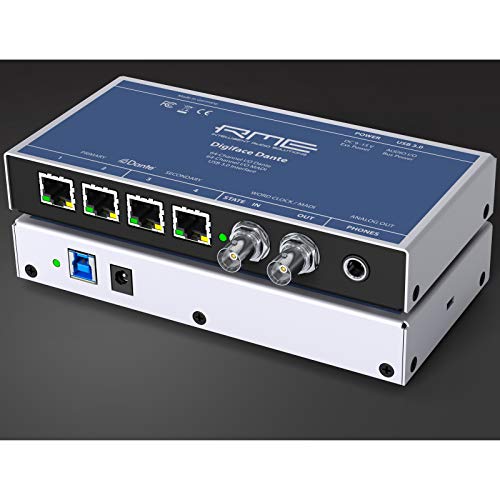
- 128-in/128-out Dante, MADI, and USB
- Up to 192 kHz operation
- Headphone output with bus power
Best For: Large Dante/MADI computer systems requiring extensive routing
Four-Input Conferencing Interface
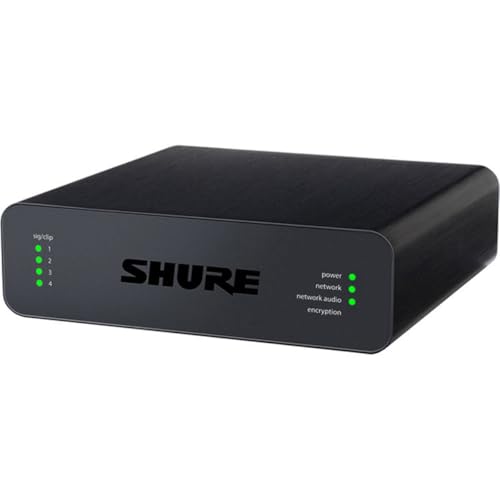
- Four mic/line XLR inputs
- Dante networking for installed AV
- Crestron and AMX compatibility
Best For: Meeting rooms and AV systems needing four networked XLR inputs
X32 Dante Expansion Card

- Adds 32 Dante channels to X32 systems
- Ethernet-based network connectivity
- Designed as an X32 expansion card
Best For: X32 owners adding Dante networking to an existing mixer
RedNet Network Hub

- 16-channel bidirectional Dante interface
- Per-channel level control via RedNet Control
- Redundant power and Ethernet connections
Best For: Professional Dante networks requiring resilient 16-channel digital I/O
Stagebox Expansion Pick
Yamaha Tio1608-D2 Dante Stage Box

- 16 inputs and 8 outputs at up to 96kHz
- Recallable D-PRE preamplifiers
- QUICK CONFIG support for DM3 and TF systems
Best For: Yamaha-based live sound and stage I/O expansion
Compact XLR Converter

- Two-channel XLR-to-Dante conversion
- 96kHz/24-bit support with five sensitivity levels
- PoE or USB-C powered
Best For: Compact Dante integration for two XLR audio sources
Flexible Dante Bridge
Bi-Directional RCA/3.5mm Dante Box

- Two-way Dante and AES67 audio conversion
- RCA and 3.5mm connections
- Adjustable 0–170 ms audio delay
Best For: AV setups needing flexible consumer-audio Dante connections
USB-C Dante Link
ToVi 2-Channel USB-C Dante Transceiver

- Bidirectional USB-C and Dante conversion
- 96 kHz/24-bit audio support
- Plug-and-play Windows, macOS, and Linux compatibility
Best For: Computers and USB audio devices joining a Dante network
Professional XLR Interface
4-Channel Dante Analog Input Box

- Four 3-pin XLR analog inputs
- Dante and AES67 low-latency transmission
- PoE or Type-C power with aluminum housing
Best For: Professional installations needing four Dante-connected XLR inputs
Flexible Dante Recording Hub – Yamaha RUio16-D
The Yamaha RUio16-D is a practical audio interface with Dante for Mac or Windows setups that need 16-channel networked audio alongside USB connectivity. It supports 16-in/16-out Dante and USB operation, includes two mic inputs and two line-level outputs, and comes with VST Rack Pro software and more than 30 plug-ins.
Best For: Home studios, live sound rigs, and computer-based systems needing 16-channel Dante/USB integration.
Pros:
- Provides 16×16-channel Dante and USB audio connectivity.
- Includes VST Rack Pro with 30-plus plug-ins.
- Supports sample rates up to 96 kHz.
- Offers two mic inputs and two line-level outputs.
Cons:
- Its two mic inputs may be limiting for larger analog recording sessions.
- It does not match the listed 192 kHz capability of some alternatives.
The RUio16-D balances networked channel capacity with useful desktop I/O and bundled processing software. It is a strong fit when 16 channels are sufficient and VST Rack Pro adds value to your workflow.
High-Capacity Network Bridge – RME Digiface Dante
The RME Digiface Dante is a high-capacity audio interface with Dante, MADI, and USB 3.0 connectivity for Mac and PC workflows. Its listed 128-in/128-out Dante/MADI/USB design, TotalMix FX support, headphone output, and bus-powered operation suit demanding routing and monitoring setups.
Best For: Large computer-based Dante and MADI systems that need extensive channel counts and flexible routing.
Pros:
- Offers 128-in/128-out Dante, MADI, and USB connectivity.
- Supports sample rates up to 192 kHz.
- Includes a headphone output and bus-powered operation.
- Works with TotalMix FX software.
Cons:
- It is designed around computer and network connections rather than built-in analog mic inputs.
- The extensive routing capacity may be more than a small setup requires.
With its unusually large channel count and combination of Dante, MADI, and USB 3.0, the Digiface Dante is aimed at complex systems. Choose it when expansion and routing flexibility matter more than onboard analog I/O.
Four-Input Conferencing Interface – Shure ANI4IN-XLR
The Shure ANI4IN-XLR is a focused audio interface with Dante for connecting four microphone or line-level sources to a networked audio system. Its four XLR inputs, support for professional control platforms such as Crestron and AMX, and 192 kHz maximum sample rate make it suited to installed AV and conferencing applications.
Best For: Meeting rooms, installed AV systems, and Dante networks needing four XLR mic/line inputs.
Pros:
- Provides four mic/line XLR inputs.
- Designed for Dante audio networking.
- Supports professional devices plus Crestron and AMX control environments.
- Lists support for sample rates up to 192 kHz.
Cons:
- Four inputs provide less capacity than larger multichannel interfaces.
- Its XLR-focused design is less suited to users seeking broad USB studio connectivity.
The ANI4IN-XLR prioritizes straightforward integration of analog microphones and line sources into a Dante installation. It is a sensible choice when four networked XLR inputs are enough and conferencing or installed control compatibility is important.
X32 Dante Expansion Card – Behringer X-DANTE
The Behringer X-DANTE is an expansion card rather than a standalone interface, adding Dante connectivity to compatible X32 systems. It provides 32 channels through an Ethernet-based connection and is intended for users who want to extend an X32 mixer into a Dante audio network.
Best For: X32 owners who need 32-channel Dante expansion for networked audio distribution.
Pros:
- Adds 32-channel Dante capability to a compatible X32 system.
- Uses Ethernet connectivity for networked audio.
- Provides a focused upgrade path without replacing the mixer.
Cons:
- It is not a standalone audio interface.
- Compatibility depends on having a suitable X32 mixer.
- The listed operating frequency is 48 kHz.
If you already use an X32, the X-DANTE offers a direct way to add Dante networking and 32 channels. It is less appropriate for buyers seeking an independent computer audio interface or built-in analog inputs.
RedNet Network Hub – Focusrite RedNet D16R MkII
The Focusrite RedNet D16R MkII is a rackmount audio interface with Dante for setups that need 16 channels of bidirectional digital audio and dependable network connectivity. Its channel-level controls and redundant power and Ethernet connections make it especially practical for installed, broadcast, and live-production systems.
Best For: Professional Dante networks that need 16-channel I/O, remote level control, and redundancy.
Pros:
- Provides 16-channel bidirectional Dante audio.
- Offers individual input and output level control through RedNet Control software.
- Includes dual PSUs and redundant primary/secondary etherCON network connections.
- Front-panel indicators show power, network, sample rate, signal, and clock status.
Cons:
- At 9.2 pounds, it is less suited to lightweight portable rigs.
- Its feature set is more specialized than a simple two-channel converter.
The D16R MkII is a strong choice when system resilience and per-channel management matter as much as Dante connectivity. Verify that its digital I/O format and rack-based design match your workflow before buying.
Stagebox Expansion Pick – Yamaha Tio1608-D2 Dante Stage Box
The Yamaha Tio1608-D2 is a Dante-enabled stage box and rack audio interface with Dante, combining 16 inputs and 8 outputs in a 3U design. With 96kHz operation, recallable D-PRE preamps, and QUICK CONFIG support for Yamaha DM3 and TF systems, it is tailored to compatible Yamaha-based installations.
Best For: Yamaha TF or DM3 users who need Dante-connected stage I/O with 16 inputs and 8 outputs.
Pros:
- Provides 16 inputs and 8 outputs at up to 96kHz.
- Uses recallable D-PRE preamplifiers.
- Supports QUICK CONFIG Mode for DM3 and TF series systems.
- Offers Dante Ethernet connectivity and compatibility with Yamaha TF mixers with Dante cards.
Cons:
- Its stated compatibility is focused on Yamaha TF mixers and related systems.
- The 3U rack format and 12.6-pound weight may not suit compact setups.
For Yamaha-centered live sound systems, the Tio1608-D2 offers a purpose-built way to expand networked I/O. Buyers using other console ecosystems should confirm compatibility before choosing it.
Compact XLR Converter – ToVi Dante XLR Audio Encoder
The ToVi Dante XLR Audio Encoder is a compact two-channel audio interface with Dante for converting balanced or unbalanced XLR sources into network audio. It supports 96kHz/24-bit PCM, five input-sensitivity settings, and PoE or USB-C power, making it flexible for AV, conference, broadcast, and live-sound installations.
Best For: Adding two XLR inputs to a Dante network where compact size, adjustable sensitivity, and flexible power are useful.
Pros:
- Converts two XLR channels to Dante audio.
- Supports up to 96kHz/24-bit audio.
- Provides five selectable input-sensitivity levels from +24dBu to -10dBV.
- Can run from PoE or USB-C and supports CAT6/6A/7 transmission up to 328 feet.
Cons:
- Two channels provide less I/O than the rackmount options in this roundup.
- Its hook-and-loop mounting approach may be less suitable for permanent rack installation.
The ToVi is a practical choice for small Dante expansions and installations that need to accept different XLR source levels. Its two-channel design is best viewed as a targeted converter rather than a full stage box.
Flexible Dante Bridge – Bi-Directional RCA/3.5mm Dante Box
If you need an audio interface with Dante for connecting consumer-style audio sources or outputs, the MSQ-3600D offers two-way conversion over a Dante network. Its RCA and 3.5mm connections, adjustable delay, and multiple power options make it practical for AV installations and flexible audio routing.
Best For: AV setups that need bidirectional Dante connectivity with RCA or 3.5mm audio connections.
Pros:
- Encodes and decodes low-latency, uncompressed audio over Dante and AES67 RTP.
- Includes RCA and stereo 3.5mm connections for broad source and playback compatibility.
- Adjustable 0–170 ms audio delay helps align sound with video.
- Supports Ethernet, micro-USB, or DC 5V power.
Cons:
- Provides two audio channels rather than multichannel XLR connectivity.
- Maximum supported sample rate is 192 kHz, but connection options are oriented toward line and consumer audio.
The MSQ-3600D is a versatile choice when delay correction and easy RCA or 3.5mm integration matter more than a large input count. TAA compliance, a one-year warranty, and lifetime technical support add reassurance for supported installations.
USB-C Dante Link – ToVi 2-Channel USB-C Dante Transceiver
The ToVi USB-C transceiver is a compact audio interface with Dante for bringing a laptop, computer, or USB audio device into a professional network. It converts two-channel USB audio in both directions, supports up to 96 kHz/24-bit operation, and is designed for plug-and-play use across Windows, macOS, and Linux.
Best For: Laptops, computers, conferencing systems, and USB audio devices that need two-channel Dante connectivity.
Pros:
- Provides bidirectional USB-C-to-Dante audio conversion.
- Supports up to 96 kHz/24-bit audio for live sound, studios, conferencing, and AV installations.
- USB Audio Class 1.0 and 2.0 compatibility enables driver-free operation on Windows, macOS, and Linux.
- Can use PoE or USB-C power over a network connection up to 328 feet/100 meters.
Cons:
- Limited to two audio channels.
- Maximum sample rate is 96 kHz rather than 192 kHz.
- Uses USB-C audio rather than analog XLR or RCA inputs.
Choose the ToVi when computer-based audio is central to your system. Its driver-free design and dual power options simplify deployment, while bidirectional operation lets a connected computer both send and receive Dante audio.
Professional XLR Interface – 4-Channel Dante Analog Input Box
For systems that need an audio interface with Dante and multiple professional analog inputs, the MSQ-3900D provides four 3-pin XLR inputs. It sends uncompressed, low-latency audio over Dante or AES67 RTP and supports common sample rates through 96 kHz, making it suited to professional AV and networked audio installations.
Best For: Professional audio systems requiring four XLR inputs and PoE-powered Dante networking.
Pros:
- Offers four 3-pin XLR analog inputs for professional audio sources.
- Supports 44.1, 48, and 96 kHz sample rates.
- Provides uncompressed, low-latency Dante and AES67 RTP transmission.
- Uses PoE Class 0 or Type-C power and has a durable aluminum housing.
Cons:
- Designed for analog input rather than bidirectional USB or consumer RCA/3.5mm connections.
- Its maximum supported sample rate is 96 kHz.
The MSQ-3900D is the strongest fit of these options for a four-microphone or line-input Dante installation. PoE simplifies cabling, while the aluminum enclosure, TAA compliance, one-year warranty, and lifetime technical support suit demanding professional deployments.
How We Picked the Best Audio Interface with Dante
We selected products that support Dante-based audio networking while covering different use cases and budgets. The lineup includes interfaces for computer recording, studio and broadcast routing, live-stage I/O, installed systems, and compact analog conversions. We considered channel capacity, input and output formats, Dante and AES67 support where applicable, power options, physical controls, rack or desktop practicality, and compatibility with common networked-audio workflows.
Because these products are not interchangeable, the best choice is determined by the connection you already have and the signal path you need to build. A two-channel converter may be ideal for a simple stereo source, while a rackmount interface or stage box is better for larger systems.
Quick Comparison
| Best For | Typical Format | What to Look For |
|---|---|---|
| Computer recording | USB or USB-C plus Dante | Driver support, clocking, and channel routing |
| Studio and broadcast networks | Rackmount digital I/O | Channel count, redundancy, and remote control |
| Live sound | Analog stage box | Mic preamps, robust construction, and PoE or rack power |
| Installed audio | Compact Dante converter | Connector flexibility, PoE, and configuration options |
Key Buying Factors for an Audio Interface with Dante
Channel Count and Signal Direction
Count both the inputs and outputs you need today, then allow some room for expansion. A two-channel interface suits a stereo source or small point-to-point connection; four-channel and 16-channel devices are more appropriate for multi-microphone systems, consoles, and distributed audio. Check whether the quoted channel count is simultaneous, and confirm whether the unit is unidirectional or bi-directional.
Connectors and Analog Conversion
XLR inputs are useful for microphones and balanced line sources, while RCA and 3.5mm connections fit consumer or playback equipment. USB and USB-C models can bridge a computer and Dante network. Also verify preamp availability, phantom power, maximum sample rate, bit depth, and whether level controls are available per channel.
Network, Clocking, and Power Requirements
Confirm that your network switch and Dante Controller workflow support the device. If AES67 interoperability matters, check for explicit support rather than assuming it. Redundant network ports can improve resilience in critical systems. PoE may simplify installation, but make sure your switch provides adequate power; otherwise, plan for the included or required external supply.
Form Factor and Control
Rackmount units are suited to permanent studios, broadcast rooms, and equipment racks, while compact boxes are easier to place near a source. For live use, prioritize durable construction and straightforward status indicators. Remote software control can be valuable, but local gain, level, or mute controls may be preferable when operators need immediate access.
Who Should Buy Which Audio Interface with Dante?
Choose a USB or USB-C Model for Hybrid Workflows
Pick a USB or USB-C Dante interface if you need to move audio between a computer and a Dante network for recording, playback, conferencing, or content production. These models are especially practical when a dedicated Dante PCIe system would be excessive.
Choose a Rackmount Interface for Studios and Broadcast
Rackmount digital interfaces make sense when you need many channels, dependable integration, centralized cabling, and continuous operation. Look for redundant networking, remote configuration, and clear metering when the system is mission-critical.
Choose a Stage Box for Live Production
A Dante-enabled stage box is the natural choice when microphones and instruments are located away from the mixing position. Match the number of mic inputs and line outputs to your console and leave expansion capacity for future productions.
Choose a Compact Converter for Installed or Point-To-Point Audio
Small XLR, RCA, or 3.5mm converters work well for paging systems, meeting rooms, playback devices, and distributed audio endpoints. Prioritize the exact connector type, PoE support, mounting needs, and configuration features rather than buying more channels than the installation requires.