The best headphone amplifier can make difficult-to-drive headphones louder, cleaner, and more flexible while adding useful features such as multiple outputs, bass control, DAC conversion, or Bluetooth.
This roundup compares 10 headphone amplifiers across desktop, studio, gaming, guitar, and portable setups, so you can match the right model to your headphones and listening habits.
Best 10 Headphone Amplifier Picks for 2026
Session Splitter
Compact Four-Channel Headphone Amp

- Four headphone outputs from one source
- Independent volume for each listener
- Compact metal build for studio setups
Best For: Tracking sessions, rehearsals, and shared monitoring
Power Desktop Amp
High-Output Class AB Headphone Amplifier

- Up to 4600mW+4600mW balanced output
- Discrete Class AB amplification
- 4.4mm, 3.5mm, RCA, and 3.5mm inputs
Best For: Planar magnetic and high-impedance headphones
Studio Monitor Hub
Four-Channel Amp with Bass Boost
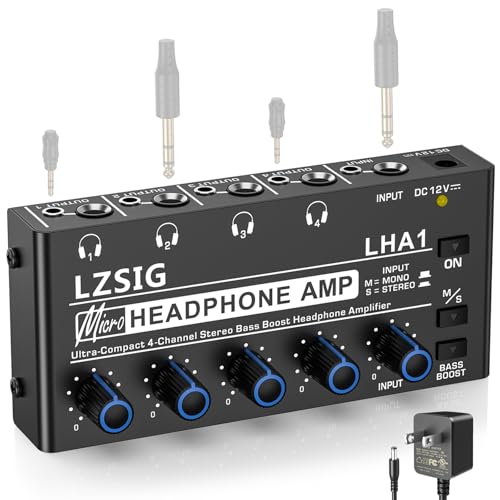
- Four independently controlled headphone outputs
- Bass boost and stereo/mono switching
- Metal chassis with 3.5mm and 6.35mm support
Best For: Home studios, stage use, and shared monitoring
R2R Desktop DAC
High-Fidelity DAC and Headphone Amplifier

- 24-bit R2R DAC with NOS and OS modes
- Balanced, single-ended, RCA, and XLR outputs
- LDAC Bluetooth and 10-band PEQ
Best For: Feature-rich desktop listening and preamp setups
Portable Hi-Fi Pick
Neoteck 16-300Ω Headphone Amplifier
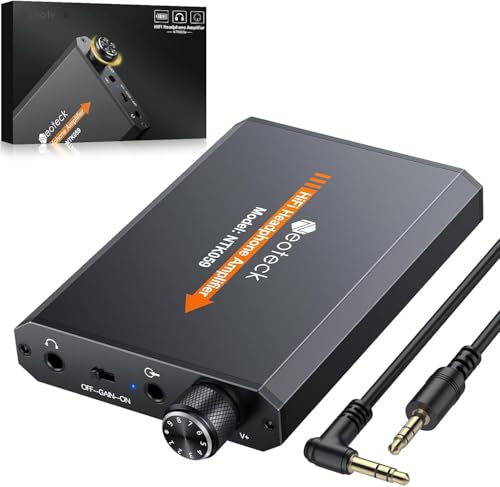
- Supports 16Ω–300Ω headphones
- 12+ hours of rechargeable battery life
- Compact aluminum design with two-stage gain
Best For: Portable listening with phones and other 3.5mm sources
Gaming DAC Choice
Fosi Audio K5 Pro Gaming Headphone Amp
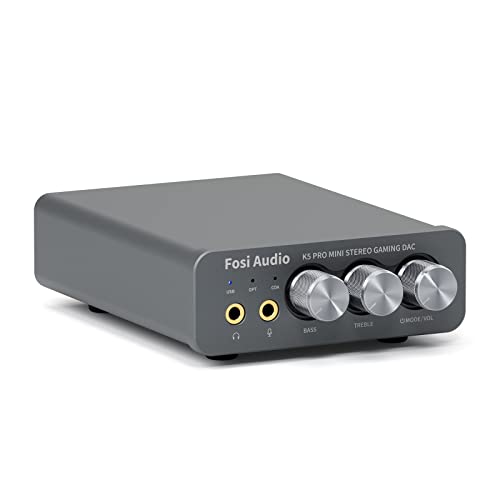
- USB-C, optical, and coaxial digital inputs
- Microphone input plus bass and treble controls
- Drives 16Ω–300Ω headphones
Best For: Gaming and desktop audio systems
DIY Desktop Value
Douk Audio U3 Class A Headphone Amplifier

- 3.5mm and 6.35mm headphone outputs
- Class A design with TI NE5532 op amp
- Pluggable socket for op-amp upgrades
Best For: Desktop listeners with high-impedance headphones
Best Modeling Headphone Amplifier

- 25 amp and 25 effect models with 100 editable presets
- Bluetooth streaming with video sync and USB recording
- Rechargeable, portable design with tuner and integrated display
Best For: Guitarists seeking versatile silent practice and recording features
Best Portable Hi-Fi Headphone Amplifier
LVY A010 Portable Headphone Amplifier
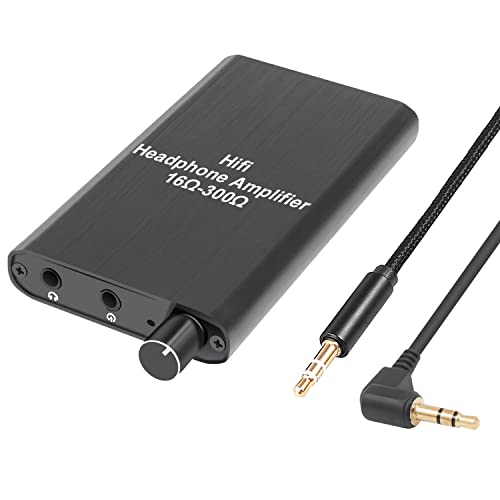
- Two-stage gain switch for flexible headphone matching
- Supports 16–300Ω headphones through 3.5mm connections
- Rechargeable design provides more than five hours of use
Best For: Portable 3.5mm listening with phones, computers, and MP3 players
Best Multi-Listener Headphone Amplifier
Pyle PHA40 4-Channel Headphone Amplifier

- Powers up to four pairs of headphones at once
- Independent volume control for every listener
- Compact unit with 1/4-inch TRS input and outputs
Best For: Studio monitoring and rehearsals with multiple listeners
Session Splitter – Compact Four-Channel Headphone Amp
The Mackie HM-4 is a straightforward headphone amplifier for tracking sessions, rehearsals, and shared listening. It sends one source to four headphones, with a separate volume control for each listener and support for 1/4-inch or 1/8-inch connections.
Best For: Home studios, rehearsals, and small recording sessions where several people need independent headphone volume.
Pros:
- Drives four headphones from a single source
- Independent level control for every output
- Compact metal enclosure can be mounted or secured to a desk
Cons:
- Provides four outputs but no stated mixing or tone-shaping features
- Uses a corded electric power source
The HM-4 focuses on simple, reliable headphone distribution rather than advanced processing. Its compact size and independent controls make it a practical choice for collaborative monitoring.
Power Desktop Amp – High-Output Class AB Headphone Amplifier
The FiiO JadeAudio GIGAS 1 is a high-power desktop headphone amplifier designed for demanding headphones. Its Class AB discrete stage, balanced 4.4mm output, and support for optional 12V USB-C PD power give it extra headroom for planar magnetic and high-impedance models.
Best For: Listeners using power-hungry headphones who want a compact desktop amp with balanced and single-ended output options.
Pros:
- Up to 4600mW+4600mW balanced output at 32Ω
- Class AB discrete amplification with high current capability
- 4.4mm balanced and 3.5mm outputs with dual gain modes
- Works with 5V USB power or 12V USB-C PD
Cons:
- Higher-power operation requires compatible 12V USB-C PD power
- Focused on analog-source amplification rather than built-in DAC functions
GIGAS 1 is a strong fit when output power and connection flexibility matter most. It can also accommodate compatible gaming headsets through microphone pass-through on its 3.5mm output.
Studio Monitor Hub – Four-Channel Amp with Bass Boost
The LZSIG LHA2 is a four-channel headphone amplifier for home studios, stage applications, and shared monitoring. It accepts 3.5mm or 6.35mm connections, provides independent volume controls, and adds selectable bass boost plus stereo/mono operation.
Best For: Musicians, performers, and small production setups that need four individually controlled headphone feeds.
Pros:
- Four outputs with independent level controls
- Supports 32–100Ω headphones and 3.5mm or 6.35mm plugs
- Bass boost and stereo/mono switching add flexibility
- Solid metal chassis with heavy-duty control knobs
Cons:
- It is a headphone amplifier and distributor, not a mixer
- Designed for one input feeding four outputs
With its durable enclosure and flexible connector support, the LHA2 is suited to practical monitoring duties. The bass-boost and stereo/mono controls provide useful adjustment without turning the unit into a full mixer.
R2R Desktop DAC – High-Fidelity DAC and Headphone Amplifier
The FiiO K13 R2R combines a high-fidelity 24-bit R2R DAC with a powerful headphone amplifier, preamp functions, wireless streaming, and extensive output options. It supports balanced and single-ended headphones, high-resolution decoding, LDAC Bluetooth, and 10-band PEQ customization.
Best For: Desktop listeners who want an all-in-one DAC, headphone amplifier, preamp, EQ, and Bluetooth streaming system.
Pros:
- 24-bit fully differential R2R DAC with NOS and OS modes
- 4.4mm balanced and 6.35mm single-ended headphone outputs
- Supports PCM 384kHz/32-bit and DSD256
- Includes LDAC Bluetooth 5.4 and 10-band PEQ
Cons:
- Its broad feature set may be more than needed for simple amplification
- Desktop-oriented design rather than a portable headphone amp
The K13 R2R is the most versatile option in this group for a complete desktop audio system. It is especially appealing when you want amplification alongside conversion, wireless playback, EQ, and balanced line outputs.
Portable Hi-Fi Pick – Neoteck 16-300Ω Headphone Amplifier
If you want a compact headphone amplifier for phones, laptops, or portable music players, the Neoteck offers broad 16–300Ω compatibility in a lightweight, rechargeable design. Its two-stage gain switch, volume control, and stated high signal-to-noise performance make it a practical option for improving headphone output on the go.
Best For: Travelers and mobile listeners who want a rechargeable amp for low- to high-impedance headphones.
Pros:
- Supports headphones rated from 16Ω to 300Ω.
- Compact aluminum body weighs about 102g and is smartphone-sized.
- 1500mAh battery provides more than 12 hours of continuous use.
- Two-stage gain and volume controls offer flexible listening adjustment.
Cons:
- Designed around 3.5mm audio connections rather than desktop digital inputs.
- Requires charging before extended portable use.
The Neoteck is a sensible headphone amplifier when portability and battery life matter most. It is less suited to a desktop setup requiring optical, coaxial, USB, or speaker outputs, but its wide impedance range covers many everyday headphones.
Gaming DAC Choice – Fosi Audio K5 Pro Gaming Headphone Amp
The Fosi Audio K5 Pro is a versatile headphone amplifier and DAC for gaming desktops, consoles, and home audio systems. It accepts USB-C, optical, or coaxial input, provides microphone connectivity, and adds separate master volume, bass, and treble controls for a more adjustable setup.
Best For: Gamers and desktop users who need digital inputs, microphone support, and flexible headphone or speaker connections.
Pros:
- Works with PS5, computers, Mac, active speakers, and other listed systems.
- Supports USB-C audio up to 24-bit/96kHz and optical/coaxial audio up to 24-bit/192kHz.
- Drives 16Ω–300Ω headphones with output power specified across that range.
- Includes bass, treble, microphone, RCA, and 3.5mm connections.
Cons:
- Requires a wired desktop or console setup rather than portable battery operation.
- USB audio requires the source to connect through the USB-A/C port.
For a gaming-focused headphone amplifier, the K5 Pro stands out for its input flexibility and built-in controls. Its DAC functionality and RCA output also make it useful as the control center for a compact desktop audio system.
DIY Desktop Value – Douk Audio U3 Class A Headphone Amplifier
The Douk Audio U3 is a small desktop headphone amplifier built for listeners who prefer a dedicated analog setup. Its RCA input, 3.5mm and 6.35mm headphone support, Class A output stage, and pluggable op-amp socket give it both substantial drive capability and room for enthusiast experimentation.
Best For: Home or office desktop listeners using demanding headphones and interested in op-amp upgrades.
Pros:
- Supports both 3.5mm and 6.35mm headphone connections.
- Designed to drive many high-impedance headphones, including models rated up to 300Ω.
- Uses a Class A circuit with a TI NE5532 op amp and transistor current expansion.
- Pluggable op-amp socket supports future upgrades and DIY customization.
Cons:
- RCA input and DC power make it less convenient for mobile use.
- Does not provide the digital inputs or DAC features found on more feature-rich desktop amps.
- Op-amp experimentation may be unnecessary for listeners seeking a simple plug-and-play device.
The U3 is a strong fit when a headphone amplifier needs to supply desktop drive power without taking much space. Its analog-only design and upgradeable socket appeal particularly to audiophiles who value a warm, customizable listening setup.
Best Modeling Headphone Amplifier – Fender Mustang Micro Plus
The Fender Mustang Micro Plus is a versatile headphone amplifier for guitarists who want modeled amp tones, effects, and quiet practice in a compact format. Its presets, tuner, Bluetooth streaming, and USB recording make it useful beyond basic headphone listening.
Best For: Guitarists who want portable practice, tone customization, Bluetooth play-along, and mobile or computer recording.
Pros:
- Includes 25 amp models, 25 effect models, and 100 editable preset slots.
- Supports Bluetooth audio streaming with video sync for playing along in real time.
- Offers a built-in tuner, integrated display, global EQ, USB recording, and more than four hours of rechargeable use.
- Compact design works with guitars and basses, wired earbuds, or wireless headphones.
Cons:
- Designed for guitar and bass practice rather than general-purpose headphone amplification.
- Battery play time is listed as 4+ hours, so extended sessions may require recharging.
Choose this model if you want an all-in-one headphone amplifier with extensive Fender modeling and recording features. It is especially compelling for silent rehearsals and portable guitar practice.
Best Portable Hi-Fi Headphone Amplifier – LVY A010 Portable Headphone Amplifier
The LVY A010 is a compact headphone amplifier for improving the output from phones, computers, MP3 players, and other 3.5mm devices. Its two-stage gain switch and support for 16–300Ω headphones make it a practical choice for portable listening.
Best For: Listeners who need a rechargeable 3.5mm amplifier for headphones used with phones, laptops, MP3 players, or similar devices.
Pros:
- Portable mini design measures 3.6 x 0.5 x 1.9 inches.
- Two-stage gain switch helps match the signal to different headphone needs.
- Supports 16–300Ω loads and provides both 3.5mm AUX input and output.
- Offers more than five hours of use, with stated SNR above 120dB and distortion of 0.004%.
Cons:
- Uses 3.5mm connections and is not suited to headphones requiring other connector types without an adapter.
- Its nominal power is listed as 0.04 watts, so it is focused on portable use rather than high-output applications.
The LVY A010 is a straightforward headphone amplifier for users who want a small, rechargeable device with gain adjustment. It is a sensible fit for everyday 3.5mm listening setups.
Best Multi-Listener Headphone Amplifier – Pyle PHA40 4-Channel Headphone Amplifier
The Pyle PHA40 is a four-channel headphone amplifier built for monitoring a shared audio source. With four 1/4-inch stereo outputs and independent volume controls, it lets multiple listeners hear the same mix while setting their own levels.
Best For: Small recording setups, rehearsals, and monitoring situations where up to four people need separate headphone volume control.
Pros:
- Drives up to four pairs of headphones simultaneously.
- Provides an independent rotary volume control for each channel.
- Uses 1/4-inch TRS input and output connections for mixer and headphone compatibility.
- Compact size is suitable for studio, stage, or mobile use.
Cons:
- Its 1/4-inch connections may require adapters for headphones with smaller plugs.
- It is a corded amplifier, limiting use where mains power is unavailable.
- It is intended for distributing one source to multiple listeners rather than personal tone modeling.
Pick the PHA40 when the priority is shared monitoring rather than portable personal listening. Individual level controls make it particularly practical for recording sessions with several performers or collaborators.
How We Picked the Best Headphone Amplifiers
We grouped these models by their intended use rather than treating every amp as interchangeable. The selection includes compact multi-output splitters, desktop headphone amps with DAC functionality, portable battery-powered units, gaming-focused options, and a dedicated guitar headphone amp. We considered output power, connector types, gain and tone controls, portability, input options, and the type of headphones each model is designed to support.
Specifications such as maximum output are useful, but they do not tell the whole story. Compatibility, noise performance, control layout, and whether the amplifier fits your existing source can matter just as much in everyday use.
Quick Comparison
| Best For | Look For | Models in This Roundup |
|---|---|---|
| Sharing one source | Multiple outputs and independent volume control | Mackie HM-4, LZSIG, 4-Channel Portable Stereo Amp |
| High-end desktop listening | Strong output, balanced connections, DAC features | FiiO GIGAS 1, FiiO K13 R2R |
| Gaming and computer audio | USB or DAC functions, tone controls, low-latency operation | Fosi Audio K5 Pro |
| Portable listening | Rechargeable battery, compact design, suitable gain | Neoteck, LVY |
| Guitar practice | Built-in amp models, effects, and wireless streaming | Fender Mustang Micro Plus |
| Simple desktop amplification | Analog input, compact enclosure, easy controls | Douk Audio U3 |
Key Buying Factors for a Headphone Amplifier
Power and Headphone Impedance
Check the amplifier’s output at the impedance of your headphones, not only its headline maximum. Low-impedance headphones usually need less voltage, while high-impedance or low-sensitivity models may benefit from greater voltage swing and a higher-power desktop design. Excess power is not automatically better if it introduces hiss or makes volume adjustment difficult.
Connections and Source Compatibility
Confirm that the amp accepts your source and your headphones. Common inputs include 3.5mm, RCA, USB, and Bluetooth, while outputs may include 3.5mm, 6.35mm, or 4.4mm balanced connections. A balanced output requires compatible cabling and does not make every headphone inherently sound better.
DAC, Controls, and Extra Features
A built-in DAC can simplify a computer-based system, while bass, treble, gain, and microphone controls may be more valuable for gaming or casual listening. For studio sharing, multiple independently controlled outputs are usually more important than Bluetooth or elaborate processing.
Portability and Power
Portable amps should be judged by battery life, charging convenience, size, and whether they add meaningful power over your phone or music player. Desktop units generally provide more output and connectivity but require a permanent power source.
Who Should Buy Which Headphone Amplifier?
Choose a multi-channel model if several people need to monitor one source or you are connecting multiple headphones in a rehearsal or production setup. Pick a powerful desktop unit if you own demanding headphones and want headroom, balanced connectivity, or higher-quality digital conversion.
A compact analog amp suits listeners who simply need more drive from a computer or basic source. Gaming users should prioritize convenient DAC connectivity, tone controls, and a microphone-friendly setup. For travel, select a rechargeable portable model; for guitar practice, a modeling headphone amp with effects and wireless streaming is the more specialized choice.
Before buying, verify the required cables, output format, power supply, and headphone impedance. Those details will determine whether the amplifier integrates cleanly with your current equipment.