The best headphone amplifiers with balanced output can deliver more power, cleaner signal handling, and greater flexibility than basic headphone jacks. They range from compact DAC/amp combinations to high-output desktop units and multi-channel splitters.
This roundup compares 10 options for audiophile listening, gaming, recording, mixing, and shared monitoring. Pay close attention to output types, gain range, connectivity, and whether you need a dedicated amplifier or an all-in-one DAC solution.
Best 10 Headphone Amplifiers with Balanced Output Picks for 2026
High-Power Choice

- Up to 4600mW+4600mW via 4.4mm balanced output
- Discrete Class AB design for demanding headphones
- 5V USB or 12V USB-C PD power options
Best For: Planar magnetic and high-impedance headphones
Multi-Listener Pick
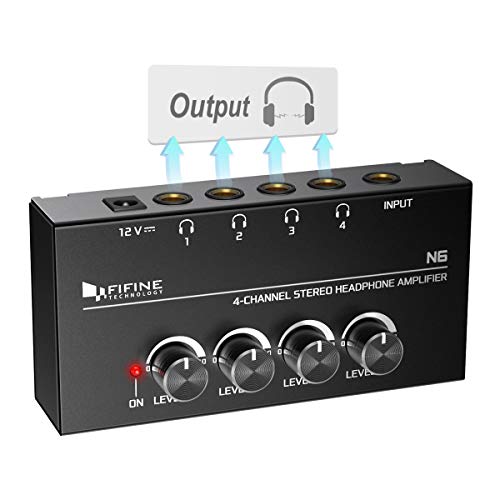
- Four 1/4-inch headphone outputs
- Independent volume control for each listener
- Includes 12V power adapter
Best For: Group monitoring, tracking, and rehearsal sessions
All-in-One Audiophile
TOPPING DX5 II DAC/Headphone Amp

- 4.4mm balanced and 6.35mm headphone outputs
- Dual DACs with PCM768kHz/32-bit and DSD512 support
- Bluetooth 5.1, PEQ, preamp mode, and 12V trigger
Best For: Feature-rich desktop Hi-Fi and headphone systems
Simple Sharing Solution
Mackie HM-4 4-Channel Headphone Amp

- Four independent headphone outputs
- Separate volume control for each listener
- Compact metal design for studio or rehearsal use
Best For: Shared monitoring from one audio source
Powerhouse Class A

- 4000mW+4000mW balanced output at 32 ohms
- Warm Class A sound with five gain levels
- 4.4mm, XLR, RCA, and adjustable tone controls
Best For: High-power desktop headphone systems
Gaming and DSP Pick

- 1000mW x2 balanced output at 32 ohms
- 10-band PEQ with gaming and headphone profiles
- USB-C, optical, PS5, and Switch compatibility
Best For: Gaming and flexible compact desktop setups
Tube-Warm Balanced Choice

- Up to 4000mW balanced output for 16–600Ω headphones
- Dual ECC83 tubes create a warm, rich presentation
- 4.4mm, XLR, 6.35mm, and preamp connectivity
Best For: Tube-focused desktop HiFi listening
Compact Balanced Power

- 4.4mm balanced output rated up to 1100mW at 32 ohms
- USB-C and optical inputs with PCM 32-bit/384kHz support
- Compact DAC, headphone amp, and preamp design
Best For: Desktop listeners wanting strong balanced output in a compact unit
Four-Listener Monitoring
Pyle PHA40 4-Channel Headphone Amp

- Four 1/4-inch TRS headphone outputs
- Independent volume control for every listener
- Compact monitor distribution design
Best For: Studio monitoring with several listeners sharing one source
Fully Balanced Desktop Control
Fosi Audio ZH3 DAC Headphone Amplifier
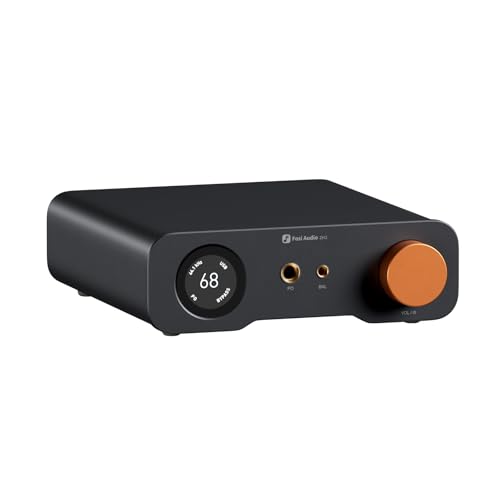
- 4.4mm balanced output rated at 2570mW at 32 ohms
- USB, optical, coaxial, and RCA inputs with XLR/RCA outputs
- EQ, filters, gain control, and swappable op-amps
Best For: Flexible HiFi desktop systems needing high power and extensive connectivity
High-Power Choice – FiiO GIGAS 1
For listeners comparing headphone amplifiers with balanced output, the FiiO JadeAudio GIGAS 1 stands out for its exceptionally high power delivery and flexible desktop connectivity. Its 4.4mm balanced output is designed for demanding headphones, while the 3.5mm output adds compatibility with conventional headphones and suitable gaming headsets.
Best For: Planar magnetic and high-impedance headphones that benefit from substantial power and headroom.
Pros:
- Delivers up to 4600mW+4600mW through the 4.4mm balanced output at 32Ω.
- Discrete Class AB amplification uses a high-current output stage for control and low distortion.
- Accepts RCA and 3.5mm inputs from DACs, computers, phones, DAPs, and other analog sources.
- Supports standard 5V USB power or 12V USB-C PD for increased output capability.
Cons:
- The balanced connection is 4.4mm, so headphones with other balanced terminations need an appropriate cable or adapter.
- Its desktop-oriented power and connectivity may be more than needed for very sensitive headphones.
The GIGAS 1 is a strong fit when maximum drive capability is the priority. Dual gain modes also make it more adaptable than its power rating alone suggests, including with sensitive IEMs.
Multi-Listener Pick – FIFINE N6 4-Channel Amplifier
The FIFINE N6 is a practical option in the broader category of headphone amplifiers with balanced output when the goal is sharing one stereo source. It provides four individually controlled 1/4-inch headphone outputs, making it useful for tracking, rehearsals, live monitoring, or group listening.
Best For: Studios, rehearsal spaces, and monitoring setups where up to four listeners need separate volume control.
Pros:
- Shares one stereo source with up to four headphones without reported signal loss when all outputs are connected.
- Each output has its own volume knob for independent listener control.
- Compact metal construction is suited to studio, stage, and portable setups.
- Includes a 12V DC power adapter and power indicator light.
Cons:
- This is a 1-input, 4-output distribution amplifier, not a mixer with four inputs.
- All input and output connections are 6.35mm, and the required TRS/TS cable is not included.
- It is intended for multiple listeners rather than high-power balanced headphone amplification.
The N6 makes the most sense for collaborative monitoring rather than audiophile headphone power. Its straightforward layout and four independent controls keep group sessions simple.
All-in-One Audiophile – TOPPING DX5 II DAC/Headphone Amp
The TOPPING DX5 II combines a DAC, headphone amplifier, wireless receiver, and preamp in one desktop unit, making it a versatile choice among headphone amplifiers with balanced output. Its 4.4mm balanced output, extensive digital inputs, and high-resolution decoding suit listeners building a flexible computer or Hi-Fi setup.
Best For: Desktop Hi-Fi systems that need balanced headphone output, digital sources, Bluetooth, and preamp functionality.
Pros:
- Provides a fully balanced quad-channel headphone amplifier with a listed 7600mW x2 output.
- Uses dual ES9039Q2M DAC chips and supports PCM up to 768kHz/32-bit and DSD512.
- Includes USB, coaxial, optical, and Bluetooth 5.1 with LDAC and other listed codecs.
- Offers 10-band PEQ, a color display, preamp mode, and 12V trigger integration.
Cons:
- Its large feature set may be unnecessary for shoppers seeking only a basic headphone amplifier.
- The unit requires a 12V DC supply.
The DX5 II is the most comprehensive option here for a modern desktop system. It is especially attractive if you want one component to handle wired digital sources, wireless playback, headphone listening, and active-speaker control.
Simple Sharing Solution – Mackie HM-4 4-Channel Headphone Amp
The Mackie HM-4 is a compact distribution amplifier for anyone who needs to feed four headphones from one source. While it is not a high-power 4.4mm balanced headphone amplifier, it offers a useful multi-output design with separate level controls for tracking sessions, rehearsals, and other shared listening applications.
Best For: Small recording sessions and rehearsals where four listeners need individual volume control.
Pros:
- Drives four headphones from a single source.
- Provides an independent volume control for every output.
- Compact metal enclosure can be attached to a desk, rack, or stand with Velcro.
- Supports source connections through 1/4-inch or 1/8-inch output options as described in the supplied notes.
Cons:
- It does not provide a 4.4mm balanced output.
- It is a shared-source distribution amp rather than a DAC or full-featured headphone amplifier.
- Its corded-electric design may be less convenient for setups without nearby power.
The HM-4 is a straightforward, space-saving choice when multiple people need to monitor the same signal. Choose it for practical session distribution, not for balanced-output headphone upgrades or source conversion.
Powerhouse Class A – FiiO CLASS A
For listeners seeking headphone amplifiers with balanced output, the FiiO CLASS A combines a fully balanced circuit with substantial drive power, a warm sound profile, and flexible system connectivity. Its 4.4mm and 4-pin XLR headphone outputs, five gain levels, and adjustable bass and treble make it adaptable to a broad range of headphones.
Best For: Desktop listeners who want high balanced output, Class A warmth, and extensive input/output options.
Pros:
- Up to 4000mW+4000mW balanced output at 32 ohms
- Warm Class A presentation with strong dynamics and precise control
- Five gain levels plus independent ±10dB bass and treble controls
- Supports 4.4mm, 4-pin XLR, and 6.35mm headphone connections
Cons:
- Its desktop-oriented design and 60W toroidal transformer are less suited to portable use
- Extensive controls and connections may be more than casual listeners need
The CLASS A is a strong choice when balanced power and system flexibility matter most. Its adjustable tone controls and multiple outputs also make it useful for tailoring different headphones and integrating active speakers or power amplifiers.
Gaming and DSP Pick – TOPPING DX1 II
The TOPPING DX1 II is a versatile option for shoppers comparing headphone amplifiers with balanced output for gaming, computers, and compact desktop systems. Its 4.4mm balanced output delivers up to 1000mW x2 at 32 ohms, while USB-C, optical connectivity, and 10-band PEQ add practical flexibility.
Best For: PC, PS5, and Nintendo Switch users who want balanced headphone drive, gaming-focused EQ, and a compact DAC/amp.
Pros:
- Fully balanced architecture with up to 1000mW x2 through the 4.4mm output
- 10-band PEQ supports custom profiles and independent left/right adjustment
- USB-C plug-and-play operation works with PCs, Macs, PS5, and Switch
- Low-noise design is suited to sensitive IEMs
Cons:
- Its 4.4mm balanced headphone output is the primary balanced headphone connection
- USB-C power and audio operation is more desktop-focused than fully portable
Choose the DX1 II if gaming features and digital connectivity are as important as balanced output. It also functions as a DAC, DSP processor, and preamp, making it a particularly flexible choice for a computer or console setup.
Tube-Warm Balanced Choice – AMPAPA H1 Tube Headphone Amp
The AMPAPA H1 brings tube character and balanced connectivity to shoppers looking for headphone amplifiers with balanced output. Its discrete Class A output stage provides up to 4000mW from the balanced high-gain output, while dual ECC83 tubes, multiple gain settings, and preamp connections support both headphone listening and broader HiFi use.
Best For: HiFi listeners who want a warm tube presentation, strong headphone drive, and preamp functionality.
Pros:
- Up to 4000mW balanced high-gain output for 16–600Ω headphones
- 4.4mm, 4-pin XLR, and 6.35mm headphone outputs
- Dual ECC83 tubes provide a warmer, richer sound profile
- RCA and TRS I/O support preamp use with active speakers or power amplifiers
Cons:
- Tube operation may be less appealing to listeners seeking a strictly neutral presentation
- At 1.6 pounds, it is intended for stationary use rather than portability
- Tube-based hardware requires more setup than a simple solid-state amp
The H1 stands out for combining balanced power with a customizable tube-oriented presentation. Its HP, Line, and HP+Line modes make it useful beyond headphone listening, especially in a growing desktop HiFi system.
Compact Balanced Power – Fosi Audio SK02
The Fosi Audio SK02 is a compact choice for listeners seeking headphone amplifiers with balanced output in a desktop setup. Its 4.4mm balanced connection delivers up to 1100mW at 32 ohms, while USB-C and optical inputs support computers, TVs, CD players, and other sources.
Best For: Desktop listeners who want high-resolution playback, strong headphone power, and a compact DAC/amp that can also serve as a preamp.
Pros:
- 4.4mm balanced and 3.5mm single-ended headphone outputs
- Supports PCM up to 32-bit/384kHz and DSD256
- Plug-and-play operation with USB and optical inputs
- Compact aluminum-alloy enclosure with multifunction control knob
Cons:
- Its input selection is limited to USB and optical
- The compact tabletop design may not suit larger multi-component systems
The SK02 is a practical all-rounder for a PC or desktop audio system. It combines a powerful balanced output with simple controls and preamp functionality without taking up much space.
Four-Listener Monitoring – Pyle PHA40 4-Channel Headphone Amp
The Pyle PHA40 is a straightforward distribution amplifier for users who need multiple headphone connections rather than a modern audiophile DAC. It provides four 1/4-inch TRS headphone outputs, making it a practical option for studio monitoring and shared listening.
Best For: Small recording setups, rehearsals, or monitoring situations where up to four listeners need separate volume controls.
Pros:
- Drives up to four pairs of headphones simultaneously
- Independent volume controls for each output
- Compact design suited to studio or on-the-road use
- Uses 1/4-inch TRS input and output connections
Cons:
- It does not provide a 4.4mm balanced headphone output
- It lacks the digital inputs and high-resolution decoding found on newer DAC amplifiers
- Its plastic enclosure is less premium than aluminum desktop models
The PHA40 is best understood as a multi-channel headphone splitter and monitor amp, not a dedicated balanced-output headphone amplifier. Choose it when independent volume control and four simultaneous listeners matter more than DAC features.
Fully Balanced Desktop Control – Fosi Audio ZH3 DAC Headphone Amplifier
The Fosi Audio ZH3 is a feature-rich desktop option for shoppers comparing headphone amplifiers with balanced output. Its 4.4mm balanced output is rated at 2570mW at 32 ohms, and the unit also works as a DAC and preamp with USB, optical, coaxial, and RCA inputs.
Best For: HiFi desktop systems that need substantial headphone power, broad connectivity, preamp outputs, and sound customization.
Pros:
- Powerful 4.4mm balanced output rated at 2570mW at 32 ohms
- Supports PCM up to 32-bit/768kHz and DSD512
- Offers USB, optical, coaxial, and RCA inputs plus XLR and RCA outputs
- Includes EQ, six digital filters, selectable gain, and swappable op-amps
Cons:
- EQ adjustments apply only to the headphone output
- RCA and XLR output levels differ significantly, so system matching requires care
- Its larger feature set may be more than a simple headphone-only setup needs
The ZH3 is the most flexible model in this group for a serious desktop system. Its high balanced-output power and extensive connectivity are compelling, provided you understand the output-level differences and headphone-only EQ limitation.
How We Picked the Best Headphone Amplifiers with Balanced Output
We selected these models across several common use cases rather than treating balanced output as the only deciding factor. The lineup includes powerful desktop amplifiers, DAC/headphone amp combinations, tube and Class A designs, compact gaming units, and four-channel distribution amplifiers. We considered output power, connector compatibility, input and output options, gain flexibility, controls, portability, and the needs of both casual listeners and more demanding headphones.
Balanced connections can help provide higher power and improved channel separation, but performance depends on the complete signal chain. A balanced headphone output is not automatically better with every headphone, cable, or source.
Quick Comparison
- Maximum power: High-output FiiO and Class A desktop models suit difficult-to-drive headphones.
- DAC/amp convenience: TOPPING DX5 II, DX1 II, and Fosi Audio models combine digital conversion with amplification.
- Multiple listeners: FIFINE N6, Mackie HM-4, and the four-channel portable amplifier are designed for shared monitoring.
- Analog character: The H1 tube amplifier is aimed at listeners who want a Class A, tube-based presentation and preamp functionality.
Key Buying Factors for Headphone Amplifiers with Balanced Output
Output Power and Gain
Check power ratings at the impedance of your headphones, not only the headline maximum. Sensitive headphones need low-noise operation and usable volume control, while planar magnetic or high-impedance models may benefit from higher voltage and current reserves. Multiple gain levels make it easier to match both types.
Balanced Connections
Common balanced headphone connectors include 4.4mm and 4-pin XLR. A 4.4mm output will not accept a standard 3.5mm or 6.35mm plug without the correct adapter, and adapters should be used carefully. Never combine left and right channels through an incompatible cable. Confirm that your headphones have a true balanced cable before paying extra for this feature.
DAC, Inputs, and Features
An all-in-one DAC/amp is convenient for computers, consoles, and digital sources, especially when it adds USB, optical, Bluetooth, or preamp outputs. Analog-only amplifiers can be a better choice when you already own a DAC. Features such as PEQ, bass and treble controls, display menus, and low-latency connectivity can matter more than small differences in power ratings.
Form Factor and Intended Use
Desktop Class A and Class AB units generally offer more power but require dedicated space and power. Compact models suit gaming desks and laptops, while four-channel amplifiers are better for rehearsals, studios, or group monitoring. For shared listening, verify whether each channel has independent volume control and whether the source can drive all connected headphones cleanly.
Who Should Buy Which Headphone Amplifiers with Balanced Output?
Choose a high-power desktop model if you use demanding headphones and want substantial headroom. Choose a DAC/amp combo if you need a straightforward computer or digital-source setup with fewer boxes. Choose a multi-channel amplifier for band practice, podcasting, recording, or simultaneous monitoring. Choose the tube/Class A option if analog inputs, preamp use, and a distinctive listening presentation are priorities.
Before ordering, confirm the output connector, balanced cable requirements, source compatibility, available desk space, and return policy. Those practical details will determine whether an amplifier fits your system better than its specification sheet alone.