Choosing an audio mixer for church sound means balancing speech intelligibility, worship-band flexibility, volunteer-friendly operation, and room for future expansion. The right console should make weekly services easier to manage—not add unnecessary complexity.
This roundup compares 10 options across analog, powered, and digital designs, including compact mixers for smaller congregations and advanced systems for multichannel worship production.
Best 10 Audio Mixer for Church Sound Picks for 2026
Best Tablet-Controlled Pick
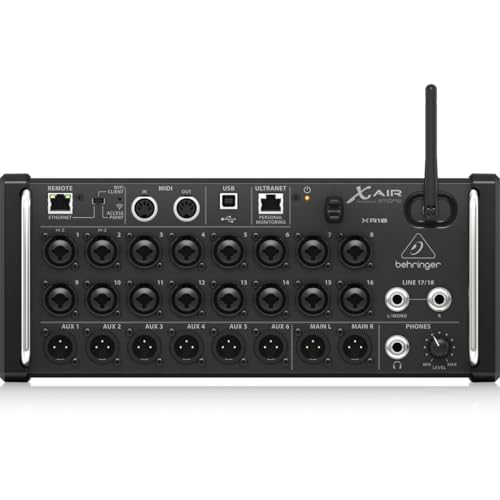
- 18 channels with 16 programmable MIDAS preamps
- Built-in Wi-Fi for iPad and Android control
- 18x18 USB interface for recording
Best For: Churches wanting compact digital mixing with tablet control
Best Powered Budget Option
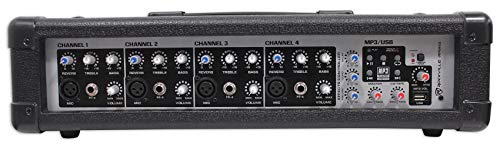
- Four-channel powered mixing console
- USB, effects, and +15V phantom power
- Dual 8-ohm speaker outputs
Best For: Small church systems needing integrated amplification
Best Analog Multitrack Mixer
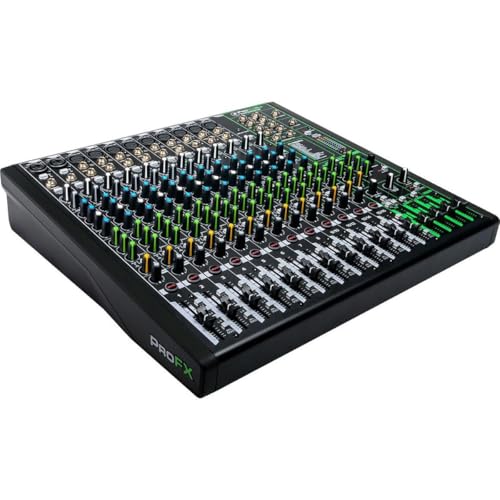
- 16 channels with hands-on analog control
- 24 built-in GigFX effects
- USB multitrack recording while mixing
Best For: Churches wanting analog operation with recording
Best for Large Worship Setups

- 40 inputs and 25 buses for complex systems
- 32 programmable MIDAS mic preamps
- Motorized faders and extensive outputs
Best For: Large churches with advanced live mixing needs
High-Power Pick
Rockville RPM1470 Powered Mixer

- 6000W peak powered output
- 14 mic preamps with phantom power
- USB, Bluetooth, effects, and dual EQs
Best For: Large church services and event spaces
Wireless Digital Choice
Soundcraft Ui24R Digital Mixer

- Remote browser control from up to 10 devices
- 24-input mixing with 20 Studer preamps
- Multitrack USB recording and feedback suppression
Best For: Churches needing remote mixing and recording
Maximum Input Capacity
Rockville RPM1870 Powered Mixer
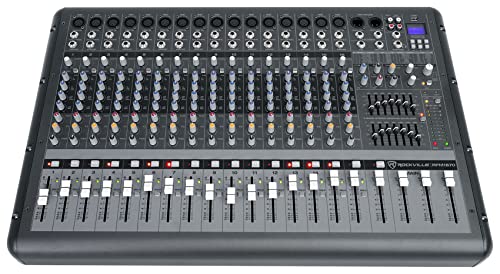
- 18 channels and 18 mic preamps
- 6000W peak powered output
- USB, Bluetooth, effects, and monitor EQ
Best For: Large services with many microphones and instruments
Premium Digital Control
Qu-6 38-In/24-Out Digital Mixer

- 38 inputs with 24 XLR/TRS combi inputs
- 96kHz processing and flexible digital routing
- USB, SD recording, effects, and app control
Best For: Large worship and AV teams needing advanced digital mixing
Powered All-in-One PA
EUROPOWER PMP2000D Mixer Bundle

- Integrated stereo power up to 2 x 1000 watts
- 14 channels with nine mic preamps
- Includes effects and two 25-foot XLR cables
Best For: Portable church PA setups needing built-in amplification
Budget-Friendly Connectivity
Pyle PMXU128BT 12-Channel Mixer

- Bluetooth and USB computer audio connectivity
- 12 channels with XLR combination inputs
- Includes phantom power, 16 DSP effects, and seven-band EQ
Best For: Smaller church systems needing simple playback and recording features
Best Tablet-Controlled Pick – Behringer X AIR XR18
The Behringer X AIR XR18 is a flexible choice when shopping for an audio mixer for church sound and you want tablet-based control. It provides 18 channels, 16 programmable MIDAS-designed mic preamps, built-in Wi-Fi, and an 18×18 USB interface for recording or playback.
Best For: Churches needing remote tablet control, multiple microphone inputs, and digital recording connectivity.
Pros:
- 18-channel design supports larger input setups.
- 16 programmable MIDAS-designed mic preamps.
- Built-in Wi-Fi avoids requiring an external router.
- 18×18 bidirectional USB interface supports direct recording.
Cons:
- Requires a tablet-based control workflow rather than a traditional fader surface.
- Firmware-supported auto-mixing is listed as future functionality in the supplied notes.
The XR18 is a strong fit for a modern church setup that values compact digital control and USB integration. Confirm that your team is comfortable operating the mixer from an iPad or Android tablet.
Best Powered Budget Option – Rockville RPM45
The Rockville RPM45 is a straightforward powered option for an audio mixer for church sound, especially in smaller rooms or school-style venues. It combines four mixer channels with USB connectivity, built-in effects, phantom power, and powered speaker outputs.
Best For: Small churches and venues that need an integrated mixer and power solution for a basic sound system.
Pros:
- Powered mixer design simplifies a compact setup.
- Includes USB connectivity and built-in effects.
- Provides +15V phantom power.
- Offers dual 8-ohm 1/4-inch speaker outputs.
Cons:
- Four channels provide less input capacity than the other mixers in this roundup.
- The supplied specifications list 225 watts per channel at 8 ohms in parallel mono, so system planning is important.
- At 18 pounds, it is heavier than a compact tablet-controlled mixer.
The RPM45 makes sense when simplicity and integrated amplification matter more than extensive channel capacity. It is best suited to modest systems rather than larger worship productions with many microphones and instruments.
Best Analog Multitrack Mixer – Mackie ProFX16v3
The Mackie ProFX16v3 is a practical audio mixer for church sound when operators prefer hands-on analog controls without giving up USB recording. Its 16-channel layout includes Onyx preamps, 24 GigFX effects, and a built-in interface for recording while mixing the room.
Best For: Churches, bands, and small venues that need 16 channels, built-in effects, and simultaneous multitrack USB recording.
Pros:
- 16-channel format suits medium-sized input setups.
- Onyx preamps provide up to 60 dB of gain on mic channels.
- Built-in GigFX engine includes 24 effects.
- USB recording works without extra hardware.
Cons:
- Analog operation lacks the remote tablet workflow of a digital mixer.
- At 19.7 pounds, it is not the lightest option for frequent transport.
The ProFX16v3 offers a familiar control surface for volunteer operators while still supporting multitrack recording. It is a balanced choice for churches that want traditional mixing and useful built-in production features.
Best for Large Worship Setups – Behringer X32
The Behringer X32 is the most expandable audio mixer for church sound in this group, with 40 inputs, 25 buses, 32 programmable MIDAS-designed mic preamps, and motorized faders. Its extensive outputs and scene-management features are suited to complex live production workflows.
Best For: Larger churches needing extensive input capacity, multiple buses, motorized faders, and detailed scene management.
Pros:
- 40-input, 25-bus configuration supports complex systems.
- Includes 32 programmable MIDAS-designed mic preamps.
- 25 automated motorized 100 mm faders provide hands-on control.
- Offers 16 XLR outputs plus additional line inputs and outputs.
Cons:
- At 45.4 pounds, it is substantially heavier than the smaller mixers here.
- Its 40.4-inch depth and 25.9-inch width require considerable installation space.
- The larger feature set may be more than a small church needs.
The X32 is designed for churches with larger teams, more microphones, and advanced routing demands. Its size and complexity are worth considering alongside the available booth space and operator experience.
High-Power Pick – Rockville RPM1470 Powered Mixer
If you need an audio mixer for church sound in a larger venue, the Rockville RPM1470 combines substantial powered output with flexible input and playback options. Its 14 XDR2 mic preamps, phantom power, onboard effects, and dual graphic EQs support vocals, instruments, monitors, and recorded music.
Best For: Churches and event spaces needing a powered mixer for large speaker systems and varied live inputs.
Pros:
- 6000W peak output with 750W RMS per channel at 4 ohms.
- 14 low-noise mic preamps with +48V phantom power.
- USB and Bluetooth playback plus USB or SD recording.
- Dual 7-band EQs and 16 selectable 24-bit effects.
Cons:
- At 28.9 pounds, it is less convenient to move frequently.
- Its powered design may be more capability than smaller congregations need.
The RPM1470 is a practical all-in-one option when you want amplification, mixing, effects, and media playback in one unit. Its output and channel count make it especially suitable for larger church services and events.
Wireless Digital Choice – Soundcraft Ui24R Digital Mixer
The Soundcraft Ui24R is a flexible audio mixer for church sound when remote control and recording matter more than built-in amplification. Browser-based control from up to 10 devices, 24-input mixing, and feedback suppression make it well suited to distributed volunteer and engineer workflows.
Best For: Churches, schools, and touring setups that want wireless mixing control, multitrack recording, and rack-mountable hardware.
Pros:
- Control mixes from iOS, Android, Windows, Mac, or Linux browsers.
- Offers 20 Studer-designed preamps and 24-input mixing capacity.
- Records all 24 inputs and the stereo mix to USB drive and computer.
- Includes Lexicon, dbx, and DigiTech processing plus dbx AFS2 feedback suppression.
Cons:
- It does not provide the powered speaker output described for the Rockville mixers.
- Wireless control depends on the unit’s built-in Wi-Fi connection.
The Ui24R is a strong fit for churches that prefer portable digital control and detailed signal processing. Its compact rack-mountable format and multitrack recording support also make it useful beyond weekly services.
Maximum Input Capacity – Rockville RPM1870 Powered Mixer
For church sound setups with many vocalists, instruments, or auxiliary sources, the Rockville RPM1870 provides 18 channels and powered output in one console. It adds Bluetooth and USB media handling, 18 mic preamps, onboard effects, and separate main and monitor EQ control.
Best For: Larger churches, bands, and event organizers that need more input capacity and powered main speakers.
Pros:
- 18 XDR2 mic preamps with +48V phantom power.
- 6000W peak output with 750W RMS per channel at 4 ohms.
- USB recording and playback plus Bluetooth streaming.
- Dual 7-band EQs, aux send/return, and 16 preset 24-bit effects.
Cons:
- Its 37-pound weight makes it less portable than compact digital mixers.
- The higher channel count may be unnecessary for simpler church sound systems.
The RPM1870 is the most input-capable powered option in this group. Choose it when your church service regularly uses numerous microphones and instruments and you want amplification, effects, and recording features built into the mixer.
Premium Digital Control – Qu-6 38-In/24-Out Digital Mixer
The Allen & Heath Qu-6 is a high-capacity audio mixer for church sound systems that need flexible routing, hands-on control, and professional audio performance. Its 38-input platform, 12 mixes, and 4 matrix outputs support complex worship, AV, recording, and live-production workflows.
Best For: Houses of worship and production teams needing extensive I/O, advanced routing, multichannel recording, and expandable digital control.
Pros:
- 96kHz XCVI FPGA processing is designed for high-quality audio with ultra-low latency.
- Offers 24 XLR/TRS combi mic-line inputs, 12 mixes, and 4 matrix outputs.
- Includes USB-C 32×32 audio, SD card recording, six multi-FX engines, and a 128×128 SLink port.
- Provides 25 motorized faders, a 7-inch touchscreen, customizable layers, and mobile or computer app control.
Cons:
- Its 37.6-pound weight and extensive feature set may be more than a small church setup requires.
- Dante networking is optional and available on Qu-6D models rather than listed as standard here.
The Qu-6 is the strongest choice in this group for a church seeking a scalable digital console rather than a basic mixer. Its combination of routing, recording, effects, and remote operation suits teams managing detailed services or multiple audio destinations.
Powered All-in-One PA – EUROPOWER PMP2000D Mixer Bundle
The Behringer EUROPOWER PMP2000D combines mixing and amplification in one compact unit, making it a practical audio mixer for church sound applications that need straightforward PA power. Its 14 channels, built-in effects, phantom power, and included XLR cables help simplify setup.
Best For: Small to mid-sized churches, rehearsals, presentations, and portable PA systems that need integrated amplification.
Pros:
- Delivers up to 2 x 1000 watts of stereo power through its integrated amplifier.
- Provides 14 channels and nine microphone preamps with switchable +48V phantom power.
- Built-in 24-bit Klark Teknik effects processor includes 25 presets.
- Bundle includes two 25-foot H&A XLR microphone cables for faster setup.
Cons:
- Its 14-channel layout offers less input and routing capacity than the digital Qu-6.
- The supplied notes do not list USB audio, SD recording, or app-based remote control.
For churches that want an amplifier and mixer without assembling separate components, the PMP2000D is a practical, portable option. It is especially useful when built-in effects and strong powered output matter more than advanced digital recording or extensive routing.
Budget-Friendly Connectivity – Pyle PMXU128BT 12-Channel Mixer
The Pyle PMXU128BT is a compact audio mixer for church sound setups that benefit from Bluetooth playback, USB computer connectivity, and simple analog controls. Its 12-channel design includes XLR inputs, phantom power, DSP effects, and a seven-band EQ for flexible everyday use.
Best For: Smaller churches, ministry events, livestream or recording beginners, and teams wanting Bluetooth and USB features at a lighter 10.6-pound weight.
Pros:
- Offers Bluetooth wireless streaming alongside USB audio interface functionality for Mac or PC.
- Includes 12 channels, XLR combination inputs, send and return connections, and a headphone output.
- Provides +48V phantom power, 16 DSP effects, MP3 playback, and a seven-band EQ.
- LED meters and rotary controls provide direct visual and hands-on adjustment.
Cons:
- Its 12-channel analog layout has less routing and expansion capability than the Qu-6.
- The listed outputs are RCA and TRS rather than a dedicated powered-amplifier configuration.
- At 20 kHz, its listed frequency specification is lower than the Qu-6’s 96kHz processing specification.
The PMXU128BT makes sense when a church prioritizes accessible controls, wireless playback, and computer recording over advanced digital console features. It is a lightweight choice for simpler services and multipurpose events, provided the system already has suitable amplification.
How We Picked the Best Audio Mixer for Church Sound
We selected these models to represent the main setups churches use today: straightforward analog consoles, powered mixers with built-in amplification, and digital mixers with remote control, scene recall, effects, and flexible routing. We considered channel capacity, microphone inputs, phantom power, USB or network connectivity, built-in effects, amplifier output where applicable, and how easily a volunteer team could operate each system.
Because church sound needs vary widely, no single mixer is ideal for every sanctuary. A small congregation may benefit from simple controls and integrated amplification, while a larger worship team may need numerous buses, monitor mixes, wireless microphone support, recording, and remote access from a tablet.
Quick Comparison
- Best for flexible digital control: Behringer X AIR XR18 or Soundcraft Ui24R
- Best for larger, more complex systems: Behringer X32 or Allen & Heath Qu-6
- Best for traditional hands-on mixing: Mackie ProFX16v3
- Best for portable amplified setups: Behringer EUROPOWER PMP2000D or a Rockville powered mixer
- Best for basic, budget-conscious use: Pyle 12-Channel Console Style Mixer
Key Buying Factors for an Audio Mixer for Church Sound
Channel Count and Input Types
Count every source you may use at the same time: pastor and worship microphones, choir channels, instruments, playback devices, livestream feeds, and room microphones. Leave spare inputs for growth. Combination XLR/TRS inputs are useful when a church mixes microphones and line-level instruments.
Analog, Digital, or Powered Design
Analog mixers are usually quicker to understand and work well for simple services. Digital mixers offer scene recall, flexible routing, compression, equalization, and remote control, which can be valuable when the same system supports worship, speaking events, and livestreaming. Powered mixers add amplifier output for passive speakers, reducing the number of separate components but limiting upgrade flexibility compared with a separate mixer and amplifier system.
Monitor, Livestream, and Recording Features
Check how many independent monitor mixes the console can create. Musicians may need separate mixes, while a livestream often requires a dedicated feed rather than the same mix sent to the sanctuary. USB, network audio, or multitrack recording can simplify rehearsal capture and online broadcasts.
Ease of Use and Reliability
Volunteer operators benefit from clear layouts, saved scenes, dependable connectivity, and accessible controls. For tablet-controlled systems, consider whether the church has a reliable wireless network and a backup operating plan. Also verify phantom-power control, output connectors, rack or case requirements, and warranty support before buying.
Who Should Buy Which Audio Mixer for Church Sound?
Choose a compact analog mixer if your services use a modest number of inputs and several volunteers prefer physical faders. Choose a powered mixer when portability and an all-in-one setup matter most, especially for smaller rooms or mobile events. Choose a compact digital mixer when you need remote operation, effects, recallable settings, and multiple monitor or livestream feeds without a large front-of-house console.
For larger sanctuaries, worship bands, choirs, or multi-purpose facilities, prioritize higher channel counts, more buses, expansion options, and robust scene management. Before purchasing, map your current inputs and outputs, then add practical headroom so the mixer remains useful as your ministry, musical program, or streaming setup grows.