A good USB hub can make a study desk feel bigger, cleaner, and far more functional. Whether you need extra ports for a keyboard, mouse, drive, printer, or charging accessories, the right hub keeps everything within reach.
For this roundup, we focused on practical, desk-friendly options that fit real study setups, from clamp-on designs to mountable hubs and simple desktop expanders.
Best 10 USB Hubs for Study Desks Picks for 2026
Clamp-Mounted Space Saver
ORICO 4-Port Aluminum Clamp Hub

- Clamps to desk or monitor edges
- 4 USB 3.0 ports, up to 5Gbps
- Aluminum build with plug-and-play setup
Best For: Studying at a tidy desk with mounted, easy-access ports
Magnetic Desk Mount Pick
EJAY 4-Port 10Gbps Magnetic Hub

- Magnetic mount for metal desk setups
- 10Gbps data transfer only
- Long cable and multiple mounting options
Best For: Fast data access on a study desk with metal mounting points
Expanded Port Mix

- 3 USB-A ports plus 1 USB-C port
- Clamp mount with silicone protection
- 5Gbps data ports and plug-and-play use
Best For: Mixed USB-A and USB-C peripherals on a compact study desk
Budget Desk Extender
VIENON Slim 4-Port USB 3.0 Hub

- Slim, lightweight 4-port USB-A hub
- 5Gbps data transfer with plug-and-play setup
- Good for mouse, keyboard, and flash drives
Best For: Basic study desk setups that need a compact USB-A extender
Clamp Desk Expansion
5Gbps 4-Port Clamp Hub for iMac

- Mounts to desk or monitor edges for a cleaner setup
- Adds 3 USB-A and 1 USB-C data ports at 5Gbps
- Extra 5V power input helps with stable multi-device use
Best For: Students and office users who want a fixed, tidy desk hub
High-Speed Clamp Hub
10Gbps 2A2C Mountable Splitter
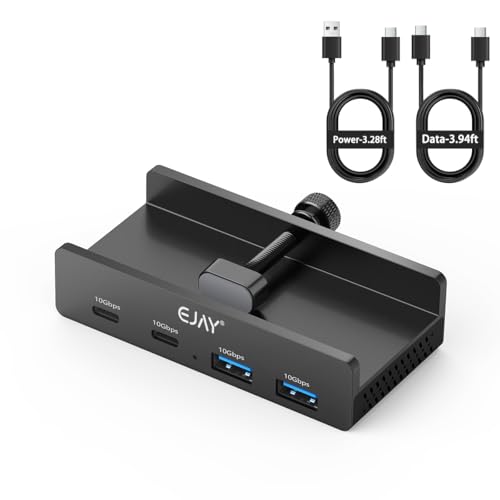
- True 10Gbps data speeds across all ports
- Clamp mount fits desks and monitor edges
- 2 USB-C plus 2 USB-A ports with long cable
Best For: Fast data-focused desk setups with external drives
Organized 7-Port Hub

- Seven USB 3.0 ports for bigger desk setups
- Sliding rails support under-desk or wall mounting
- 5V/3A USB-C power input helps stability
Best For: Users who need more ports and a tidy mounted layout
Desk Expansion Pro
7-Port Aluminum USB Hub with 4Ft Cable

- 7 ports: 4 USB-A and 3 USB-C
- 4-foot cable improves desk placement
- Data-only hub with 5Gbps transfer
Best For: study desks needing extra ports and flexible placement
Compact Four-Port Pick

- Four USB 3.0 ports from one USB-A connection
- 5Gbps data transfer for quick syncing
- Slim, heat-resistant design
Best For: minimal desk setups that need a compact data hub
Portable Power-Assist Hub
Acer 4-Port USB 3.0 Hub with Type-C Power

- 4 USB 3.0 data ports at up to 5Gbps
- USB-C power input helps stabilize drive use
- Slim 2-foot cable and LED indicator
Best For: portable study desk setups that need stable peripheral connections
Clamp-Mounted Space Saver – ORICO 4-Port Aluminum Clamp Hub
If you want one of the more practical usb hubs for study desks, this ORICO clamp hub is built to keep the desktop clear while still giving you four USB 3.0 ports. The adjustable clamp mounts to a monitor edge or desk edge, so your mouse, flash drive, and other peripherals stay within easy reach without adding clutter. Its aluminum body and long cable make it a tidy fit for fixed desk setups.
Best For: Students who want a mounted USB hub that saves desk space and keeps everyday devices close at hand.
Pros:
- Clamp design mounts to monitor or desk edges and helps keep the surface neat
- Four USB 3.0 ports support up to 5Gbps transfers and backward compatibility with USB 2.0
- Aluminum enclosure helps with durability and heat dissipation
- Plug-and-play setup works across Windows, Mac, Linux, and Chrome OS
Cons:
- No power adapter is included
- Best suited to edge thicknesses within the stated clamp range
Overall, this is a strong pick for study desks where minimizing clutter matters as much as adding ports. The clamp-mounted design is its main advantage, especially if you want a semi-permanent setup that still feels clean and accessible.
Magnetic Desk Mount Pick – EJAY 4-Port 10Gbps Magnetic Hub
For usb hubs for study desks where you want fast access without wasting surface space, this EJAY hub takes a very different approach. It uses a magnetic mount to attach to metal desk legs, monitor stands, or similar iron surfaces, while the long cable helps keep the ports where you need them. With 10Gbps data transfer, it is aimed at users moving files quickly between SSDs, flash drives, and other peripherals.
Best For: Students or desk users who want a magnetic, under-desk-friendly hub with fast data-only performance.
Pros:
- Magnetic mounting helps keep the hub fixed on metal surfaces
- 10Gbps USB 3.2 Gen2 performance is built for fast data transfer
- Three mounting options support under-desk, adhesive, or screw-rail setups
- Long cables help extend ports while keeping the desk area tidy
Cons:
- Data transfer only; it does not support charging
- Requires a metal surface for the magnetic mounting benefit
This model stands out if your study setup is built around a metal desk frame or monitor stand and you want the hub out of the way. Just keep in mind that it is designed for data, not charging, so it works best as a fast peripheral hub.
Expanded Port Mix – ORICO Clamp Hub with USB-C
This ORICO option is a smart choice if your study desk needs both USB-A and USB-C connections in one compact, clamp-mounted unit. It adds three USB-A ports and one USB-C port, all with 5Gbps transfer speeds, and the clamp design helps keep it fixed to a desk or monitor edge. The built-in extra power supply port is also useful for maintaining stable operation with connected devices.
Best For: Students who need a clamp-on hub with both USB-A and USB-C ports for mixed-device setups.
Pros:
- Includes 3 USB-A ports plus 1 USB-C port for flexible expansion
- Clamp mounts to desk or monitor edges and uses silicone pads to help prevent scratches
- Each data port supports up to 5Gbps transfer speeds
- Plug-and-play design works across major operating systems
Cons:
- No power adapter is included
- Clamp size is limited to the stated edge thickness range
If your study desk has a mix of older peripherals and newer USB-C devices, this hub is especially practical. The clamp mount keeps it accessible without taking over valuable workspace, making it a useful middle ground between a simple splitter and a larger dock.
Budget Desk Extender – VIENON Slim 4-Port USB 3.0 Hub
If you just need a simple, low-profile way to add ports, this VIENON hub fits well among usb hubs for study desks because it stays compact and easy to tuck away. It expands one USB-A port into four and supports everyday peripherals like a mouse, keyboard, printer, or flash drive. The slim body and lightweight design make it especially convenient for laptop-based study setups or shared desks.
Best For: Students who want an affordable, slim USB-A hub for everyday desk peripherals.
Pros:
- Turns one USB-A port into four usable connections
- 5Gbps USB 3.0 transfer speed for file movement
- Slim, lightweight design saves space and is easy to carry
- Plug-and-play operation with no driver needed
Cons:
- Designed for low-power peripherals, not charging high-power devices
- Plastic housing is less premium than metal options
This is the most straightforward pick in the group and works best when you want added ports without any mounting hardware or setup complexity. It is a good match for basic study desk use, especially if you rely on common USB-A accessories.
Clamp Desk Expansion – 5Gbps 4-Port Clamp Hub for iMac
If you want USB hubs for study desks that stay put and keep cables from taking over your workspace, this clamp-style model is built for that kind of setup. It mounts to desk or monitor edges, adds four data ports, and includes an extra power input for steadier performance with demanding peripherals.
Best For: Students and home-office users who want a semi-permanent, tidy desk-mounted hub for everyday peripherals.
Pros:
- Adjustable clamp fits desk or monitor edges from 0.19 to 1.1 inches thick.
- Provides 3 USB-A ports and 1 USB-C port at up to 5Gbps.
- Includes a 5V Type-C power supply port for more stable use with high-power devices.
- Aluminum alloy body helps with heat dissipation and scratch resistance.
Cons:
- Power adapter is not included.
- Does not support PD charging.
- Only offers data expansion, not charging output.
Overall, this is a practical pick if your study desk needs a fixed, clutter-reducing hub rather than a loose desktop accessory. It focuses on stable, everyday connectivity with broad compatibility and a clean mountable design.
High-Speed Clamp Hub – 10Gbps 2A2C Mountable Splitter
For USB hubs for study desks where speed matters, this clamp-mounted splitter stands out with USB 3.2 Gen2 performance and a long cable for flexible positioning. It is designed for data transfer only, so it suits setups that need fast access to drives, keyboards, and other peripherals without adding charging duties.
Best For: Users who want a fast, mountable data hub for a clean desk or monitor-edge setup.
Pros:
- Delivers true 10Gbps transfer speeds across all ports.
- Clamp design fits desk or monitor edges from 0.2 to 1.2 inches thick.
- Offers a balanced 2 USB-C and 2 USB-A port layout.
- Includes a 47-inch C-to-C data cable plus a separate power cable for stable use.
Cons:
- Data transfer only; it is not meant for charging devices.
- Requires an external 5V adapter for powered operation.
- May be more than you need if you only want basic USB expansion.
This is a strong choice if your desk setup includes external SSDs or other fast-transfer devices and you want the hub mounted neatly out of the way. The long cable and clamp design make it especially useful for organized study or editing stations.
Organized 7-Port Hub – Mountable USB 3.0 Rail Hub
If you need USB hubs for study desks with more room for accessories, this 7-port model is built to expand a single port into a fuller workstation. Its removable sliding rails make it easy to mount under a desk, on a monitor stand, or even on a wall, which helps keep cables out of the way.
Best For: Students or laptop users who want lots of USB ports and a cleaner, mounted setup.
Pros:
- Seven USB 3.0 ports give plenty of expansion for peripherals.
- Removable sliding rails support under-desk, monitor-stand, or wall mounting.
- 5Gbps transfer speed is suitable for everyday file transfers and accessories.
- 5V/3A USB-C power input supports stable use with higher-demand devices.
Cons:
- Bulkier than smaller 4-port hubs.
- Only provides 5Gbps, not faster 10Gbps transfer.
- Best suited to a more permanent setup than a grab-and-go portable hub.
For a study desk that needs both organization and extra connectivity, this hub makes a lot of sense. It offers the most ports in this group while still focusing on stable, tidy placement and broad device compatibility.
Desk Expansion Pro – 7-Port Aluminum USB Hub with 4Ft Cable
If you need one of the more flexible usb hubs for study desks, this 7-port model is built to add both USB-A and USB-C connectivity without taking up much space. The 4-foot cable makes it easier to place the hub where it works best on a crowded desk, while the aluminum body is designed for durability and heat dissipation.
Best For: Students or desk users who want a long-cable, high-capacity data hub for multiple peripherals and drives.
Pros:
- 7 total ports, including 4 USB-A and 3 USB-C.
- 4-foot cable helps with desk organization and reach.
- 5Gbps data transfer for fast file syncing.
- Aluminum enclosure adds sturdiness and heat dissipation.
Cons:
- Data-only design; it does not support charging.
- Best suited to connectivity needs rather than power delivery.
For a study desk setup that needs more ports and a longer reach, this hub offers a practical balance of capacity and convenience. Its main strength is expanding connectivity while keeping cable clutter manageable.
Compact Four-Port Pick – Anker 4-Port USB 3.0 Hub
For usb hubs for study desks where simplicity matters, this Anker 4-port hub is a straightforward way to turn one USB-A connection into four. It focuses on fast data transfer and a slim footprint, making it easy to tuck beside a laptop or desktop setup.
Best For: Users who want a compact, reliable data hub for basic desk peripherals and flash drives.
Pros:
- Expands one USB-A port into four USB 3.0 ports.
- Up to 5Gbps transfer speed for quick file syncing.
- Ultra-slim build with a small footprint.
- Heat-resistant construction for everyday desk use.
Cons:
- Charging is not supported.
- Only four ports, so expansion is more limited than larger hubs.
This is a practical pick if your desk setup mainly needs a few dependable ports without extra bulk. It keeps the focus on speed, durability, and easy placement rather than added features.
Portable Power-Assist Hub – Acer 4-Port USB 3.0 Hub with Type-C Power
If you want usb hubs for study desks that can also travel well, this Acer model is a slim 4-port extender with a 2-foot cable and a power-only USB-C input. It is designed for stable data use with peripherals like a mouse, keyboard, printer, or flash drive, and the LED indicator adds quick status feedback.
Best For: Students and mobile users who need a lightweight desk hub with power support for more stable drive use.
Pros:
- Four USB 3.0 data ports with up to 5Gbps transfer.
- Type-C power port helps support stable hard drive transfers.
- Lightweight, slim design with a 2-foot cable.
- LED indicator and plug-and-play setup add convenience.
Cons:
- USB-C port is for power only, not data or charging other devices.
- Fewer ports than larger desktop hubs.
This hub makes sense when portability and stable peripheral use matter more than maximum port count. It is a tidy choice for a study desk that also doubles as a laptop or travel setup.
How We Picked the Best USB Hubs for Study Desks
We prioritized hubs that make desk organization easier without sacrificing everyday usability. That means stable mounting options, useful port mixes, dependable data transfer, and designs that work well in shared or compact study areas. We also looked for models that suit both laptops and desktops, since many study desks switch between devices.
Quick Comparison
Clamp and mountable hubs are best if you want to keep ports off the desk surface and reduce cable clutter. Traditional desktop hubs are better if you prefer easy plug-and-play access and move your gear often. If you use multiple accessories at once, look for a mix of USB-A and USB-C ports so you are not forced into adapters.
Key Buying Factors for USB Hubs for Study Desks
Port Count and Port Type
Think about what you actually connect daily. A basic four-port hub may be enough for a mouse, keyboard, flash drive, and lamp controller, while a larger hub works better for students using drives, card readers, tablets, and printers. USB-C ports can be especially helpful for newer devices and charging cables.
Mounting Style and Desk Space
For smaller study desks, clamp-on and magnetic hubs help free up surface space and reduce clutter. Mountable hubs can also keep ports easy to reach while hiding cables underneath or beside the monitor. If your desk layout changes often, a lightweight desktop hub may be the most flexible choice.
Speed and Power Needs
If you transfer large files, back up class projects, or use external drives, pay attention to USB 3.0 or faster specs. For bus-powered accessories, a hub may be fine on its own. If you plan to connect power-hungry devices, a model with an extra power input is a smarter pick for stable performance.
Cable Length and Build Quality
A longer cable gives you more placement options, especially if your tower sits under the desk or your laptop is docked farther away. Aluminum housings and well-fitted mounts are worth considering because they tend to hold up better in busy study setups and feel more stable over time.
Who Should Buy Which USB Hubs for Study Desks?
If you want a cleaner, more permanent setup, choose a clamp, magnetic, or under-desk mountable hub. If you move between dorm, library, and home, a compact desktop hub is easier to carry. Students with multiple peripherals and storage drives should lean toward higher-port-count models, while Mac and USB-C users may benefit most from hubs that include both USB-A and USB-C connections.
In short, the best USB Hubs for Study Desks are the ones that match your devices, your space, and how often you plug and unplug gear. A well-chosen hub should simplify your desk, not add another layer of clutter.