Finding the right router for college life is about more than raw speed. You need a setup that can handle streaming, video calls, gaming, and late-night assignments without constant dropouts.
This roundup of the best WiFi routers for college students in 2026 focuses on practical, budget-friendly options for dorms, shared apartments, and small bedrooms.
Best 10 Wifi Routers for College Students Picks for 2026
Best Budget Wi‑Fi 6 Upgrade

- Wi‑Fi 6 with up to 1.8 Gbps total bandwidth
- OFDMA, Beamforming, and 4 high-gain antennas
- Gigabit ports, app control, and WPA3 support
Best For: Affordable shared-room or small-apartment use
Simple Starter Router

- Up to 1,000 sq. ft. coverage for about 10 devices
- Dual-band AC1200 speeds with Gigabit ports
- Easy setup through the Linksys app
Best For: Small dorms and basic everyday browsing
Best Mesh Coverage
Amazon eero 6 Mesh Wi‑Fi Router
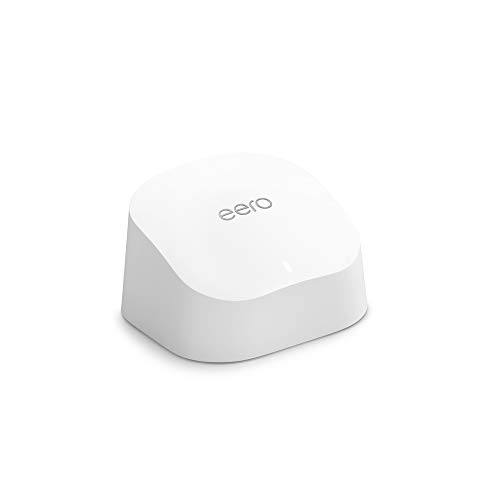
- Covers up to 1,500 sq. ft. with Wi‑Fi 6
- TrueMesh helps reduce dead spots and buffering
- Supports 75+ devices and expands later
Best For: Shared apartments that need steadier whole-home coverage
Best Performance Pick
TP-Link Archer AX10 Wi‑Fi 6 Router

- Wi‑Fi 6 with OFDMA, MU-MIMO, and 1024-QAM
- Dual-core 900MHz processor for smoother multitasking
- Beamforming plus OneMesh compatibility
Best For: Busier student setups with gaming, streaming, and calls
Budget-Friendly Dorm Router

- Up to 1200 sq ft coverage
- Supports up to 20 devices
- 4 Ethernet ports plus USB sharing
Best For: Small dorms or apartments with a few wired and wireless devices
Wi-Fi 6 Upgrade Pick

- Wi-Fi 6 dual-band AX1500 speeds
- 1.5GHz tri-core CPU
- 4 Gigabit Ethernet ports
Best For: Students wanting a newer Wi-Fi 6 router for a busy dorm or apartment
Performance Value Pick
TP-Link Archer A6 Gigabit Dual-Band

- AC1200 dual-band with MU-MIMO
- 4 Gigabit LAN ports
- WPA3 security and OneMesh support
Best For: Shared student spaces that need strong wired connectivity and better security
Best Budget Wi‑Fi 6 Pick
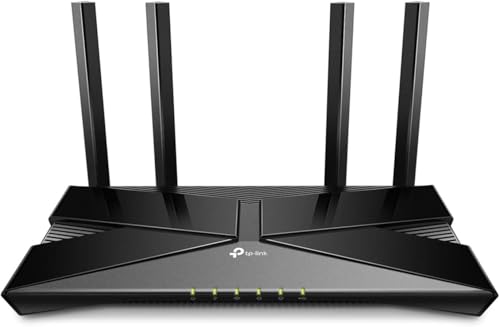
- Wi‑Fi 6 with OFDMA and MU-MIMO
- Tri-core processor for smoother multitasking
- Beamforming and WPA3 security
Best For: students wanting affordable Wi‑Fi 6 performance
Best Simple Dorm Router

- AC1200 dual-band speeds with four antennas
- WPA3, Guest WiFi, and parental controls
- EasyMesh-compatible for future expansion
Best For: students in small spaces who want simple, reliable Wi‑Fi
Best Simple Pick

- Mesh networking with a single WiFi name
- Up to 2,000 sq. ft. coverage
- HomeCare security and parental controls
Best For: students who need stronger coverage in bigger living spaces
Best Budget Wi‑Fi 6 Upgrade – TP-Link AX1800 Archer AX21 V5
If you want wifi routers for college students that can handle classes, streaming, and a few roommates without getting complicated, the TP-Link Archer AX21 is a strong starter pick. It brings Wi‑Fi 6 speeds, better device handling, and solid coverage into a simple dual-band setup.
Best For: Students who want an affordable Wi‑Fi 6 router for shared apartments, dorms, or small homes.
Pros:
- Wi‑Fi 6 with up to 1.8 Gbps total bandwidth for smoother streaming and downloading
- OFDMA and Beamforming help it handle more devices and reach farther rooms better
- Gigabit ports and broad ISP compatibility make setup flexible
- Includes app control, Alexa support, and security features like WPA3
Cons:
- Dual-band only, so it does not include a 6 GHz band
- Performance can vary with walls, distance, and device placement
Overall, this is a practical value choice for students who need faster, more stable home Wi‑Fi without paying for extra features they may not use. It balances speed, coverage, and ease of setup well for everyday campus life.
Simple Starter Router – Linksys EA6350 AC1200
Linksys EA6350 Dual-Band Wi-Fi Router for Home (AC1200 Fast Wireless Router),Black
Check Price On AmazonThe Linksys EA6350 is a straightforward pick for wifi routers for college students who just need reliable coverage for basics like browsing, streaming, and light gaming. It offers dual-band AC1200 speeds, easy app setup, and enough range for a small living space.
Best For: Students needing an easy-to-set-up router for a dorm room or small apartment.
Pros:
- Up to 1,000 square feet of coverage for around 10 wireless devices
- Dual-band speeds up to 1.2 Gbps for everyday streaming and gaming
- Gigabit Ethernet ports support faster wired connections
- Simple setup through the Linksys app with no CD required
Cons:
- Wi‑Fi 5 only, so it lacks newer Wi‑Fi 6 efficiency benefits
- Coverage is aimed at smaller spaces rather than larger shared houses
This router makes sense if you want a low-fuss option that covers the essentials without overcomplicating things. It is best when your network needs are modest and you value simple setup over cutting-edge features.
Best Mesh Coverage – Amazon eero 6 Mesh Wi‑Fi Router
If your living space has dead spots, the eero 6 is one of the most practical wifi routers for college students who need whole-home coverage instead of just a strong signal near the router. Its mesh design, Wi‑Fi 6 support, and simple app-based setup make it especially useful in larger apartments or shared houses.
Best For: Students who need easy mesh coverage for a bigger apartment, suite, or shared house.
Pros:
- Covers up to 1,500 sq. ft. and supports speeds up to 900 Mbps
- TrueMesh technology helps reduce dead spots and buffering
- Wi‑Fi 6 supports 75+ devices for busy shared networks
- App setup is quick, and the system can expand later with compatible eero hardware
Cons:
- This is a 1-pack, so larger spaces may need additional units
- Some of its strongest benefits depend on expanding the mesh system over time
For students living with multiple roommates or spread-out rooms, this model is more about consistent coverage than raw router specs. It is a smart pick when keeping everyone connected matters more than having a traditional standalone router.
Best Performance Pick – TP-Link Archer AX10 Wi‑Fi 6 Router
The TP-Link Archer AX10 is a strong fit for wifi routers for college students who need better performance for streaming, gaming, video calls, and multiple devices at once. With Wi‑Fi 6, OFDMA, MU-MIMO, and a dual-core processor, it is built to keep traffic moving in a busy dorm-style setup.
Best For: Students who want a more powerful router for heavier use and multiple connected devices.
Pros:
- Wi‑Fi 6 with OFDMA and 1024-QAM for better efficiency
- Dual-core 900MHz processor helps manage multiple data streams smoothly
- Beamforming, MU-MIMO, and four antennas improve coverage and device handling
- Gigabit ports, app control, and OneMesh compatibility add flexibility
Cons:
- Still dual-band, so it does not include a 6 GHz band
- Modem is required for most internet providers
This is the best choice here if your student network has a lot going on at once and you want more headroom for lag-prone activities. It offers a good mix of speed, coverage, and device efficiency for demanding everyday use.
Budget-Friendly Dorm Router – NETGEAR AC1200 Dual-Band
If you want wifi routers for college students that cover a dorm room or small apartment without overcomplicating setup, the NETGEAR R6230 is a practical pick. It delivers dual-band AC1200 speeds, up to 1200 sq ft of coverage, and support for up to 20 devices, which is a solid fit for everyday streaming, browsing, and homework.
Best For: Students who need reliable coverage for a smaller space with a mix of laptops, phones, and game consoles.
Pros:
- Up to 1200 sq ft of coverage and support for up to 20 devices
- Four Gigabit Ethernet ports for wired laptops, consoles, or streaming devices
- Dual-band AC1200 performance with an 880MHz processor and QoS
- USB 2.0 port for sharing a printer or storage drive on the network
Cons:
- Wi-Fi 5 hardware, so it is not the newest Wi-Fi 6 option
- Coverage is best suited to smaller living spaces rather than large homes
Overall, the R6230 looks like a straightforward campus-friendly router when you want dependable basics and wired flexibility. It offers the right mix of coverage, ports, and performance for a student setup.
Wi-Fi 6 Upgrade Pick – TP-Link Archer AX10 AX1500
For college students who want a newer standard in their wifi routers for college students, the TP-Link Archer AX10 brings Wi-Fi 6 support and a dual-band design in one affordable package. With AX1500 speeds, a 1.5GHz tri-core CPU, and Gigabit Ethernet, it is built for smoother everyday use when several devices are online at once.
Best For: Students who want Wi-Fi 6 performance for streaming, browsing, and multitasking in a small to medium living space.
Pros:
- Wi-Fi 6 (802.11ax) with dual-band AX1500 speeds
- 1.5GHz tri-core CPU for handling busy student networks
- Four Gigabit Ethernet ports for wired connections
- Supports both IPv4 and IPv6, plus WPA/WPA2 security and SPI firewall
Cons:
- No USB port for printer or storage sharing
- Coverage details are listed at 1500 sq ft, which may still be modest for larger shared spaces
The AX10 is a strong choice if you want a modern router without jumping to a more expensive feature set. It balances speed, wired connectivity, and current-gen Wi-Fi support well for student use.
Performance Value Pick – TP-Link Archer A6 Gigabit Dual-Band
The TP-Link Archer A6 is a strong option if you are comparing wifi routers for college students and want a simple, feature-rich model with good wired and wireless flexibility. It offers AC1200 dual-band speeds, four Gigabit LAN ports, MU-MIMO, Beamforming, and WPA3 security, making it well suited to everyday campus life with multiple connected devices.
Best For: Students who want better security, solid speed, and lots of wired ports for a shared room or apartment.
Pros:
- AC1200 dual-band performance with support for 4K streaming
- Four Gigabit LAN ports for wired devices
- MU-MIMO and Beamforming help serve multiple devices efficiently
- WPA3 security plus AP Mode and OneMesh support
Cons:
- Wi-Fi 5, so it lacks Wi-Fi 6 support
- OneMesh benefits depend on adding a compatible extender
In a student setup, the Archer A6 stands out for combining useful extras with a clean, practical feature set. It is a balanced pick if you want dependable performance and security without moving to a newer Wi-Fi generation.
Best Budget Wi‑Fi 6 Pick – TP-Link Archer AX10 Renewed
For college students who need a fast, modern router without paying top-tier prices, the TP-Link Archer AX10 is a practical WiFi routers for college students option. It brings Wi‑Fi 6 features like OFDMA and MU-MIMO, plus beamforming and a tri-core processor to keep multiple devices running smoothly in a dorm or apartment.
Best For: Students who want Wi‑Fi 6 performance, easier multitasking, and strong value in a renewed router.
Pros:
- Wi‑Fi 6 with OFDMA and MU-MIMO helps handle several devices at once.
- Tri-core 1.5 GHz processor is designed for smoother, buffer-free communication.
- Beamforming helps focus signal strength for more reliable coverage.
- Supports WPA3 and easy setup through the TP-Link Tether app.
Cons:
- Renewed item with a 90-day limited warranty.
- Only dual-band, so it does not add 6 GHz support.
Overall, this router stands out as a solid budget-friendly upgrade for students who need dependable speed and device handling more than premium extras. It balances newer Wi‑Fi 6 features with simple app-based setup, making it an easy fit for shared student spaces.
Best Simple Dorm Router – TP-Link Archer A54 AC1200
The TP-Link Archer A54 is a straightforward choice for wifi routers for college students who mainly want reliable everyday internet for browsing, streaming, and classwork. Its AC1200 dual-band setup, four external antennas, and app-based management make it easy to place in a dorm room or small apartment and keep running.
Best For: Students who want an easy-to-use router for a smaller space and standard Wi‑Fi needs.
Pros:
- Dual-band speeds up to 1200 Mbps for everyday use.
- Four external antennas are built for stable wireless connections.
- Supports WPA3, Guest WiFi, parental controls, and EasyMesh expansion.
- Access Point Mode adds flexibility for wired-to-wireless setups.
Cons:
- Wi‑Fi 5 hardware, not Wi‑Fi 6.
- Fast Ethernet ports are limited to 10/100 Mbps.
- Covers up to 1,000 sq. ft., which may be modest for larger shared housing.
If you want a practical router that keeps setup and management simple, this model covers the basics well. It is a good match for students who value stable connections and easy expansion over cutting-edge specs.
Best Simple Pick – TP-Link Deco M5 1-Pack
For students dealing with weak signal in a larger apartment or shared house, the TP-Link Deco M5 is a flexible option among wifi routers for college students. This mesh system creates a single network name and password, and you can add more units later if your living situation changes.
Best For: Students who need better whole-home coverage and want the option to expand later.
Pros:
- Mesh design creates a seamless network across connected Deco units.
- Up to 2,000 sq. ft. coverage from the 1-pack.
- HomeCare adds security, parental controls, and QoS tools.
- Guest WiFi, beamforming, and Alexa support add useful convenience.
Cons:
- Wi‑Fi 5, so it lacks Wi‑Fi 6 features.
- Single-unit package may not be enough for very large spaces without expansion.
This is the strongest fit if your priority is coverage rather than raw speed. The Deco M5 is especially useful in student housing where a single-router dead zone can be more frustrating than slower top-end specs.
How We Picked the Best Wifi Routers for College Students
We prioritized routers that are easy to set up, affordable to maintain, and capable of handling multiple devices at once. For student use, that means stable dual-band performance, enough Ethernet ports for consoles or desktops, and features like mesh support or parental controls when they add real value.
We also considered coverage for small-to-medium spaces, since many college apartments and dorm layouts make signal consistency more important than peak theoretical speed.
Quick Comparison: What Matters Most
In a student setup, the best router is usually the one that matches your living situation. A compact Wi-Fi 6 router can be ideal for a single room or small apartment, while a mesh system makes more sense for larger shared spaces or rooms with dead zones. If you have several roommates, look for stronger device handling and simple app-based management.
Key Buying Factors for Wifi Routers for College Students
Coverage and Layout
Check the size of your room, apartment, or suite before buying. Open layouts are easier to cover than thick-walled dorms or older buildings. Mesh systems and routers with stronger antennas usually help when walls or distance weaken the signal.
Speed and Wi-Fi Standard
Wi-Fi 6 is the safest choice for most students because it improves efficiency when multiple phones, laptops, tablets, and smart TVs are connected at the same time. AC1200 models can still work well for lighter use, but AX models are better if you stream often or share bandwidth with roommates.
Ports and Wired Connections
If you use a desktop, game console, or printer, extra Gigabit Ethernet ports are useful. Wired connections can also reduce lag for gaming or improve stability for online classes.
Ease of Setup
Student buyers should favor routers with straightforward mobile apps, guided setup, and clear admin controls. The easier the setup, the less time you’ll spend troubleshooting during a busy semester.
Shared Use and Controls
Features like guest networks, parental controls, and device prioritization can help in shared housing. They’re especially useful when you want to separate personal devices from visitors or keep video calls running smoothly.
Who Should Buy Which Wifi Routers for College Students?
If you live in a dorm or small room and want a simple, affordable option, a basic dual-band router is usually enough. If you share an apartment or need better coverage across multiple rooms, a Wi-Fi 6 router with stronger range is the smarter pick. For larger homes, older buildings, or places with dead spots, a mesh system is often the best long-term choice.
In short, choose based on your space, number of devices, and how much time you want to spend managing your network. The right router should make student life easier, not more complicated.