Finding the right astronomy camera under $300 can make planetary imaging, lunar capture, and beginner deep-sky experiments more approachable without committing to premium equipment.
This roundup compares USB, Wi-Fi, color, guide, and electronic-eyepiece options so you can match camera performance and connectivity to your telescope and observing goals.
Best 10 Astronomy Cameras Under 300 Picks for 2026
Fast Planetary Detail

- 2.1MP IMX662 color sensor with 2.9-micron pixels
- Infrared sensitivity and zero amp glow
- USB 3.0 capture up to 102.6 fps
Best For: Fast lunar and planetary imaging
All-in-One Stargazing

- 80mm aperture and 300mm focal length
- Autofocus, app, remote, and dual screens
- 4K video, 30MP stills, and six-hour battery
Best For: Beginner-friendly observing and imaging
Flexible EAA Starter

- IMX662 color sensor with low noise and improved NIR sensitivity
- ROI, binning, and 128MB frame buffer
- 1.25-inch, C-mount, and CS-mount compatibility
Best For: Entry-level planetary imaging and EAA
Simple USB Imaging

- 2MP 1080p video at up to 30fps
- UVC plug-and-play for Windows, macOS, and Linux
- Removable UV/IR-cut filter and 1.25-inch fit
Best For: Beginner lunar and planetary imaging
Best Detail for Planets
SVBONY SC715C Planetary Camera

- IMX715 color sensor with 1.45μm pixels
- 4K imaging and up to 45.5 fps over USB 3.0
- Supports SharpCap, AstroDMX Capture, and NINA
Best For: Detailed lunar and planetary imaging from a computer
Best Plug-and-Play Option
FIBONAX 4K 8MP Telescope Camera

- 8MP sensor with up to 4K video
- UVC viewing for Windows, macOS, and Linux
- Standard 1.25-inch connection with removable IR cut filter
Best For: Beginner lunar and planetary viewing on a computer
Best Wireless EAA Camera
SVBONY SC311 WiFi Telescope Camera

- Built-in WiFi for phone or tablet control
- IMX662 sensor with low noise and no amp glow
- 30-second exposures, 32GB card, and 2500mAh battery
Best For: Wireless EAA and beginner deep-sky observing
Guide-Star Value Pick

- 1.23MP color CMOS sensor for guiding and planetary work
- ST4 and USB 2.0 connections with broad guiding-software support
- Compact 1.25-inch design; not compatible with ASI AIR
Best For: Autoguiding and occasional planetary imaging
High-Resolution Planetary Pick

- 7.05MP IMX415 color sensor for detailed lunar and planetary views
- Up to 30 FPS at 1920×1080 in MJPG mode
- 1.25-inch barrel and included USB cable, dust cover, and cleaning cloth
Best For: Computer-based lunar and planetary video
Beginner-Friendly Starter
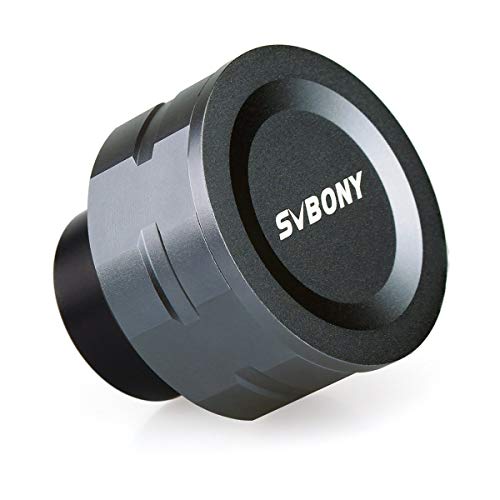
- IMX307 color sensor records up to 30 FPS at 1920×1080
- Plug-and-play design with dark-light compensation
- 1.25-inch barrel and M28.5×0.6 filter thread
Best For: First-time lunar and planetary imaging
Fast Planetary Detail – ZWO ASI662MC
For shoppers comparing astronomy cameras under 300, the ZWO ASI662MC is a focused planetary and lunar imaging option. Its 2.1MP IMX662 color sensor combines 2.9-micron pixels, strong infrared sensitivity, zero amp glow, and USB 3.0 connectivity for high-speed capture.
Best For: Amateur astrophotographers who want detailed color images and fast planetary video capture.
Pros:
- IMX662 sensor offers 1920×1080 resolution and 2.9-micron pixels.
- Infrared sensitivity can help reveal additional planetary detail.
- Zero amp glow supports cleaner, lower-noise images.
- USB 3.0 supports up to 102.6 frames per second at full resolution.
Cons:
- Its 16:9, 2.1MP format is more specialized than a high-resolution deep-sky camera.
- The camera body is lensless and requires a compatible telescope setup.
The ASI662MC stands out when speed and planetary detail matter more than broad camera versatility. It is a strong fit for users building a dedicated telescope imaging workflow.
All-in-One Stargazing – FASHIONARI Smart Telescope
Among astronomy cameras under 300, this FASHIONARI smart telescope is aimed at beginners who want an integrated viewing and imaging experience. It combines an 80mm aperture, 300mm focal length, autofocus, app and remote control, dual screens, and 4K imaging in one portable system.
Best For: Beginners seeking a simple telescope for stargazing, lunar viewing, planetary photography, and birdwatching.
Pros:
- 80mm aperture and 300mm focal length provide a complete optical platform.
- Autofocus, mobile-app control, and an 85-foot wireless remote simplify operation.
- Supports 30MP stills and 4K video according to the supplied specifications.
- Built-in 4500mAh battery is rated for up to six hours of operation.
Cons:
- It is a complete smart telescope rather than a standalone USB astronomy camera.
- Its feature-rich design may be more than needed for users who already own a telescope.
This model prioritizes convenience over modularity. The integrated camera, displays, controls, and battery make it appealing for accessible, shareable observing sessions.
Flexible EAA Starter – SVBONY SV305C
The SVBONY SV305C is a practical choice for astronomy cameras under 300 if you want an entry-level color camera for planetary, lunar, and electronically assisted astronomy. Its IMX662 sensor, ROI and binning functions, buffer memory, and 1.25-inch interface provide useful flexibility for telescope-based imaging.
Best For: Beginners who want a color telescope camera for lunar, planetary, and EAA sessions.
Pros:
- Back-illuminated IMX662 sensor offers low read noise and improved red/NIR sensitivity.
- ROI mode can increase capture rates by reading a smaller sensor area.
- Built-in 128MB image buffer helps reduce dropped or damaged frames.
- Supports 1.25-inch telescope connections plus C-mount and CS-mount compatibility.
Cons:
- USB 2.0 is less suited to high-throughput transfer than USB 3.0.
- Manual focus requires adjustment through the telescope setup.
- The UV/IR-cut filter is built in, while the protective glass is removable.
The SV305C offers more control features than a basic digital eyepiece, especially for users experimenting with ROI, binning, and SharpCap modes. It is a versatile entry point for planetary imaging and EAA.
Simple USB Imaging – FIBONAX Nova200
For straightforward astronomy cameras under 300, the FIBONAX Nova200 focuses on plug-and-play lunar and planetary viewing. Its 2MP 1080p sensor records at up to 30fps, connects through USB, and fits directly into a standard 1.25-inch telescope focuser.
Best For: Beginners, classrooms, and astronomy clubs that need simple computer-based Moon and planet imaging.
Pros:
- 1080p video at up to 30fps is suitable for lunar and planetary targets.
- UVC compatibility supports plug-and-play use on Windows, macOS, and Linux.
- Optional ASCOM driver supports more astronomy-focused Windows workflows.
- Removable UV/IR-cut filter adds flexibility for different imaging setups.
Cons:
- Its 2MP resolution and 30fps limit are modest for advanced imaging.
- Manual focus requires adjustment at the telescope.
- USB power and computer connection are required for operation.
The Nova200 is best viewed as an accessible electronic eyepiece rather than an advanced deep-sky camera. Its simple connection, lightweight aluminum body, and removable filter make it a sensible starter option.
Best Detail for Planets – SVBONY SC715C Planetary Camera
If you want astronomy cameras under 300 for detailed lunar and planetary imaging, the SVBONY SC715C stands out for its small-pixel IMX715 color sensor and 4K-resolution capability. It connects to a computer over USB 3.0 and works with popular capture software, but requires a telescope focuser for manual focusing.
Best For: Planetary astrophotographers who prioritize fine detail, high-resolution video, and software-based control.
Pros:
- 1.45μm pixels and an IMX715 sensor support detailed, lower-noise planetary images.
- USB 3.0 transfer supports up to 45.5 frames per second at full resolution.
- Works with SharpCap, AstroDMX Capture, and NINA.
- Includes an ST4 autoguider interface and lightweight 147g aluminum body.
Cons:
- Not compatible with smartphones.
- Requires dedicated download software.
- It has no built-in focus adjustment; focusing must be done with the telescope.
The SC715C is a strong choice when image detail and smooth high-resolution capture matter most. Its computer-based workflow and manual telescope focusing make it better suited to a planned imaging setup than casual phone-connected viewing.
Best Plug-and-Play Option – FIBONAX 4K 8MP Telescope Camera
For shoppers comparing astronomy cameras under 300, this FIBONAX model offers a straightforward 1.25-inch USB setup with UVC viewing and up to 4K video. It is designed primarily for the Moon and bright planets, with manual focusing through the telescope rather than autofocus.
Best For: Beginners and shared observing sessions using a compatible Windows, macOS, or Linux computer.
Pros:
- 8MP sensor supports up to 4K video and high-frame-rate 1080P capture.
- Standard 1.25-inch barrel fits many telescope focusers.
- UVC viewing works with compatible computer capture software without a dedicated driver.
- Removable IR cut filter helps produce more natural color.
Cons:
- Manual focusing is required through the telescope focuser.
- Primarily intended for lunar and planetary imaging, not long-exposure deep-sky photography.
- Optional ASCOM support requires supported Windows software and the ASCOM Platform.
This camera keeps the basic workflow accessible while offering useful 4K capability. Confirm that your telescope has enough focuser travel, since fitting the 1.25-inch barrel alone does not guarantee focus.
Best Wireless EAA Camera – SVBONY SC311 WiFi Telescope Camera
Among astronomy cameras under 300, the upgraded SVBONY SC311 is a convenient wireless option for electronic-assisted astronomy and beginner deep-sky imaging. Its IMX662 sensor, 30-second exposures, built-in WiFi, battery, and included storage support observing without a direct computer connection.
Best For: Mobile users who want wireless telescope viewing, basic deep-sky imaging, and EAA sessions.
Pros:
- Built-in 2.4G WiFi creates a hotspot for phone or tablet control.
- IMX662 sensor offers low noise, no amp glow, and enhanced red/NIR sensitivity.
- Supports exposures up to 30 seconds, RAW/FITS saving, video, and scheduled shooting.
- Includes a 2500mAh battery and 32GB TF card, expandable up to 256GB.
Cons:
- The upgraded model requires the separate SvbonyAstroCam app rather than the old SC311 app.
- Photo mode does not provide an image preview until the exposure button is tapped.
- Its 2.1MP resolution is lower than many high-resolution planetary cameras.
The SC311 favors convenience and wireless operation over maximum resolution. Its 30-second exposure limit and phone-based interface make it appealing for EAA and entry-level deep-sky work, especially where portability matters.
Guide-Star Value Pick – SV905C 1.23MP Guide Camera
For shoppers comparing astronomy cameras under 300, the SVBONY SV905C is a compact color camera aimed primarily at autoguiding and planetary imaging. Its 1280×960 sensor, small pixels, and guide-scope-friendly 1.25-inch form factor make it a focused option for telescope tracking setups.
Best For: Autoguiding with a guide scope or off-axis guider, plus basic planetary imaging.
Pros:
- 1.23MP 1/3-inch CMOS sensor with 3.75-micron pixels.
- High peak QE and low read noise can help capture faint guide stars.
- Includes USB 2.0 and ST4 interfaces, with compatibility for PHD2, NINA, and other guiding software.
- Compact 1.25-inch body includes a CS interface, C-CS adapter ring, snap ring, and scale mark for repeatable positioning.
Cons:
- Not compatible with ASI AIR.
- Its relatively modest resolution is better suited to guiding than detailed deep-sky imaging.
The SV905C makes the most sense when reliable guiding is the priority. It offers useful tracking connections and software support in a small package, but buyers seeking a general-purpose high-resolution planetary camera may prefer a different model.
High-Resolution Planetary Pick – SV205 7.05MP Camera
Among astronomy cameras under 300, the SVBONY SV205 stands out for its 7.05MP IMX415 color sensor and flexible video modes. It is designed for live computer viewing and recording of the Moon, planets, and terrestrial targets through a telescope.
Best For: Beginners who want higher-resolution lunar and planetary video with a laptop or PC.
Pros:
- 7.05MP 1/2.8-inch IMX415 color CMOS sensor.
- Records up to 30 FPS at 1920×1080 in MJPG mode and supports higher-resolution YUV capture at lower frame rates.
- Plug-and-play operation without a driver on supported systems.
- Machined aluminum 1.25-inch barrel connects directly to many telescopes.
Cons:
- Uses a USB 3.0 cable but the listed interface is USB 2.0.
- Apple laptop users need Astroamx Capture; it does not work with Apple phones or tablets.
- Compatibility depends on having a suitable 1.25-inch telescope adapter.
The SV205 is a practical choice for recording bright targets and sharing live telescope views. Its high pixel count is appealing for lunar and planetary detail, while the included cable, dust cover, and cleaning cloth make it a convenient starter package.
Beginner-Friendly Starter – SV105 IMX307 Color Camera
For newcomers searching for astronomy cameras under 300, the SVBONY SV105 provides a straightforward way to begin lunar and planetary imaging. It sends a live telescope view to a computer and supports plug-and-play operation with the appropriate capture software.
Best For: Beginners recording quick videos of the Moon, bright planets, and terrestrial targets.
Pros:
- 1/2.8-inch IMX307 color CMOS sensor with up to 30 FPS at 1920×1080.
- Plug-and-play design with dark-light compensation for improved low-light image clarity.
- Standard 1.25-inch barrel and M28.5×0.6 thread support telescope filters.
- Works with Windows, Linux, and Apple laptops when paired with the listed capture applications.
Cons:
- Not compatible with Apple phones or tablets.
- USB 2.0 connectivity may limit transfer performance compared with newer interfaces.
- Designed mainly for lunar and planetary imaging rather than advanced deep-sky capture.
The SV105 is a sensible entry point for learning camera-assisted observing without a complicated setup. Its 1.25-inch format and filter thread add flexibility, while the modest sensor and USB 2.0 connection reflect its beginner-focused positioning.
How We Picked the Best Astronomy Cameras Under 300
We focused on cameras that fit common beginner and intermediate telescope setups while staying below the $300 price point. The selection includes dedicated planetary cameras, guide cameras, electronic eyepieces, compact Wi-Fi models, and smart telescope-style options. We considered sensor resolution, pixel size, video capability, connection type, format, software practicality, and likely use cases.
Because specifications and pricing can change, verify current compatibility, included cables, software support, and mounting hardware before buying. A higher megapixel count does not automatically mean better planetary results; frame rate, sensor sensitivity, pixel size, and telescope compatibility can matter more.
Quick Comparison
- Best for dedicated planetary imaging: ZWO ASI662MC and SVBONY SV305C.
- Best for compact electronic viewing: Nova200 1080P and the 4K 8MP telescope camera.
- Best for small-pixel detail: SVBONY SC715C with its IMX715 sensor.
- Best for wireless operation: SVBONY SC311 Upgraded WiFi.
- Best for guiding: SVBONY SV905C.
- Best for higher-resolution capture: SVBONY SV205.
- Best for basic entry-level use: SVBONY SV105.
Key Buying Factors for Astronomy Cameras Under $300
Sensor and Pixel Size
Sensor design affects sensitivity, field of view, noise, and sampling. Small pixels can resolve fine lunar and planetary detail when paired with a suitable telescope, while larger pixels may be more forgiving in low-light conditions. Match the camera to your telescope’s focal length rather than choosing solely by megapixels.
Frame Rate and USB Connection
Planetary imaging benefits from recording many frames and selecting the sharpest later. USB 3.0 is generally preferable for high-speed video, provided your computer and cables can handle the data. Slower connections may still work well for casual viewing or guiding.
Color Versus Monochrome
Color cameras are simpler for beginners because they produce ready-to-process color images. Monochrome cameras can offer greater flexibility with filters but usually add cost and complexity. Most products here are aimed at convenient color capture.
Software, Mounting, and Power
Check whether the camera works with your operating system and preferred capture software. A standard 1.25-inch nosepiece suits many telescopes, but focus travel and back-focus requirements still matter. Confirm whether the camera is powered through USB and whether a separate adapter or extension cable is needed.
Who Should Buy Which Astronomy Cameras Under 300?
Choose a dedicated planetary model such as the ASI662MC or SV305C if your priority is sharper lunar and planetary video. Pick the SC715C or SV205 when resolution and detailed electronic viewing are more important than the simplest setup. The SC311 is appealing for observers who want fewer cables and wireless control, while the SV905C is the logical choice for users building an autoguiding system.
For casual observing, outreach, or a straightforward digital-eyepiece experience, consider the Nova200, 4K 8MP, or SV105-style options. Buyers wanting an all-in-one portable experience should examine the smart telescope option carefully, especially its app support, battery life, and limitations compared with a conventional camera-and-telescope setup.