Choosing among astronomy cameras for deep-sky imaging means balancing sensor performance, cooling, resolution, connectivity, and your telescope’s field of view. The right camera can make faint nebulae, galaxies, and star clusters easier to capture and process.
Our roundup covers affordable planetary and entry-level options alongside cooled color cameras for longer exposures and more demanding deep-sky workflows. Use the guide below to narrow the list by performance, compatibility, and budget.
Best 10 Astronomy Cameras for Deep Sky Imaging Picks for 2026
Best All-in-One Setup
ASI585MC Air Cooled Color Camera

- Imaging, guiding, and ASIAir control in one system
- 256GB storage with external-storage support
- Cooled STARVIS 2 sensor with zero amp glow
Best For: Integrated deep-sky imaging rigs and remote-controlled setups
Best High-Speed Planetary Option

- 1920×1080 capture at up to 107 FPS
- Low-noise IMX662 sensor with HDR
- USB 3.0, ST4 guiding, and 128MB buffer
Best For: Planetary imaging and computer-based guiding
Best Compact IMX662 Camera
ZWO ASI662MC Color Astronomy Camera

- Sensitive 2.1MP IMX662 sensor
- Up to 102.6 FPS at full resolution
- Zero amp glow and infrared sensitivity
Best For: Compact planetary and general telescope imaging
Best Entry-Level Deep-Sky Value

- Large 1/1.2-inch IMX585 sensor
- 3856×2180 resolution for EAA and imaging
- HCG mode, high QE, and strong full-well capacity
Best For: Entry-level EAA and shorter deep-sky exposures
High-Capacity Performer

- 47ke- full-well capacity
- Cooled color sensor with zero amp glow
- Up to 47 fps over USB 3.0
Best For: Versatile cooled color deep-sky and planetary imaging
Wireless EAA Starter

- Phone and tablet control over WiFi
- 30-second exposures with RAW/FITS saving
- Built-in battery and expandable storage
Best For: Beginner EAA and portable short-exposure observing
High-Resolution Cooled Color

- 20.1MP resolution with 2.4µm pixels
- TEC cooling for low-noise imaging
- USB 3.0 and accessory hub
Best For: Detailed cooled color imaging of faint deep-sky targets
Balanced Deep-Sky Starter
SV605CC 9MP Cooled Color Camera
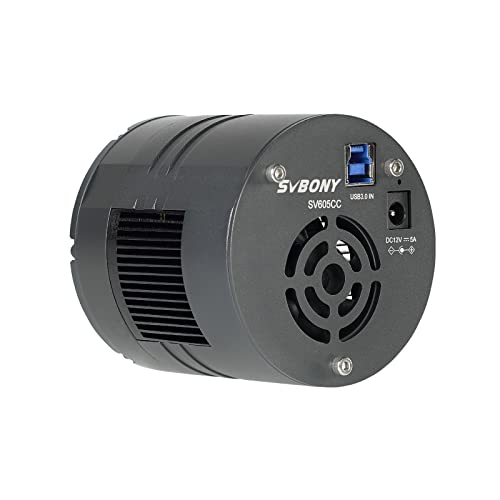
- 9MP square IMX533 color sensor
- Cooling to 30°C below ambient
- USB 3.0 connectivity
Best For: Cooled color deep-sky imaging and astronomy monitoring
High-Resolution Deep-Sky Choice

- 26MP APS-C BSI sensor
- 35°C below ambient cooling
- 16-bit ADC with zero amp-glow design
Best For: Detailed long-exposure imaging of faint nebulae and Ha targets
Beginner Planetary Pick
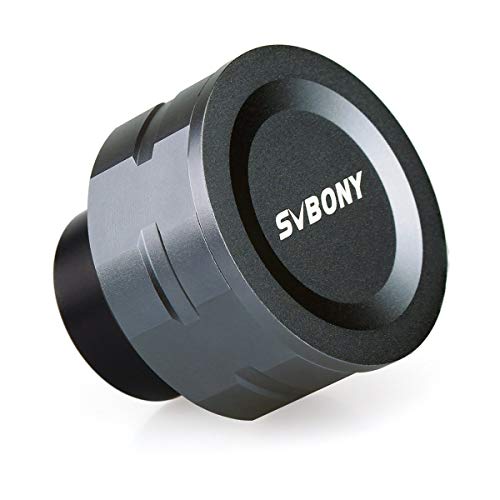
- 1080p IMX307 color sensor
- Up to 30 frames per second
- Plug-and-play 1.25-inch format
Best For: Beginner lunar, planetary, and live telescope viewing
Best All-in-One Setup – ASI585MC Air Cooled Color Camera
ZWO ASI585MC AIR Cooled Color Astronomy Camera w/Built-in Guide Camera & ASIAir with Power Supply
Check Price On AmazonFor streamlined astronomy cameras for deep sky imaging, the ZWO ASI585MC Air combines a cooled color sensor, built-in guiding, and ASIAir control in one system. Its STARVIS 2 sensor, zero amp glow, and hardware cooling are designed to support cleaner images during longer exposures.
Best For: Astrophotographers who want an integrated camera, guide camera, and rig-control solution with generous onboard storage.
Pros:
- Combines imaging, guiding, and control-system functions.
- 256GB eMMC storage and support for up to 1TB external storage.
- STARVIS 2 sensor offers high sensitivity, improved signal-to-noise performance, and zero amp glow.
- Cooling can reduce sensor temperature by 30–35°C below ambient.
Cons:
- Its broad feature set may be more than beginners need.
- Manual focus and a 4K video specification may not suit every workflow.
The ASI585MC Air is the most complete option here for users prioritizing convenience and system integration. It is particularly compelling when remote control, storage, and reduced noise matter as much as the color sensor.
Best High-Speed Planetary Option – SV305C Pro Telescope Camera
The SVBONY SV305C Pro is primarily a planetary camera, but its low readout noise and flexible ROI controls can also support specialized imaging tasks. For shoppers comparing astronomy cameras for deep sky imaging, its USB 3.0 transfer and guiding interface are useful workflow features, though the 2MP sensor is more oriented toward high-frame-rate capture.
Best For: Planetary imaging, guiding, and users who prioritize fast frame rates over deep-sky sensor size and resolution.
Pros:
- Captures 1920×1080 video at up to 107 FPS.
- IMX662 sensor provides high sensitivity and low readout noise.
- USB 3.0 supports fast data transfers up to 5Gbps.
- Includes an ST4 guiding interface and 128MB DDR buffer.
Cons:
- Its 2MP resolution is limited compared with larger deep-sky imaging sensors.
- Requires a computer and does not support iPad connection.
- Its strengths are more clearly aimed at planetary imaging than long-exposure deep-sky work.
The SV305C Pro makes sense as a fast, flexible planetary or guide camera. Deep-sky buyers should choose it mainly when guiding and high-speed capture are more important than cooled, high-resolution long exposures.
Best Compact IMX662 Camera – ZWO ASI662MC Color Astronomy Camera
The ZWO ASI662MC is a compact USB 3.0 color camera built around Sony’s sensitive IMX662 sensor. Among astronomy cameras for deep sky imaging, it is better suited to buyers who also want fast planetary capture, infrared sensitivity, and a simple lensless camera body.
Best For: Amateur astrophotographers seeking a compact color camera for planetary work, infrared-sensitive imaging, and general USB-connected telescope use.
Pros:
- IMX662 sensor delivers 1920×1080 resolution with 2.9-micron pixels.
- Outputs up to 102.6 frames per second at full resolution.
- Zero amp glow supports clean, low-noise images.
- High infrared sensitivity can help reveal additional planetary detail.
Cons:
- Its 2.1MP resolution and 1/2.8-inch sensor limit framing for larger deep-sky targets.
- No cooling or onboard guiding system is listed.
- Only one USB 3.0 port is specified.
The ASI662MC is a focused, compact choice rather than an all-in-one deep-sky platform. It is most attractive for users who value fast readout and infrared-sensitive planetary performance and only occasional entry-level deep-sky experimentation.
Best Entry-Level Deep-Sky Value – SV705C IMX585 Camera
The SVBONY SV705C is one of the more directly relevant choices for shoppers seeking astronomy cameras for deep sky imaging on an entry-level budget. Its large 1/1.2-inch IMX585 sensor, high quantum efficiency, dual-gain HCG mode, and near-infrared sensitivity support EAA, lucky imaging, and shorter deep-sky exposures.
Best For: EAA enthusiasts and beginners exploring entry-level deep-sky, planetary, and lucky imaging with a versatile color sensor.
Pros:
- 3856×2180 resolution provides a relatively large imaging area.
- IMX585 sensor offers high full-well capacity, up to about 90% peak QE, and strong signal-to-noise performance.
- Dual-gain HCG helps maintain dynamic range at higher gain while reducing read noise.
- CS port and included C-CS adapter support C-mount and CS-mount lenses.
Cons:
- It is not described as cooled, which may limit long-exposure noise control.
- It is positioned as an entry-level deep-sky and EAA camera rather than a dedicated long-exposure system.
- The supplied details do not list an integrated guide camera or control computer.
The SV705C offers the most balanced deep-sky-oriented sensor specification in this group without the complexity of an integrated control system. It is a strong starting point for EAA and shorter exposures, while demanding users may prefer dedicated cooling.
High-Capacity Performer – ZWO ASI585MC Pro
For astronomy cameras for deep sky imaging, the ZWO ASI585MC Pro combines a cooled color sensor with a generous 47ke- full-well capacity. Its low-noise design, high quantum efficiency, and fast USB 3.0 transfer also make it flexible for planetary, lunar, and solar work when paired with the appropriate equipment.
Best For: Imagers who want a cooled color camera with strong dynamic range, fast capture, and broad telescope use.
Pros:
- Two-stage TEC cooling can reduce sensor temperature by more than 35°C below ambient under stated test conditions.
- 47ke- full-well capacity helps preserve highlights and improve light-collection efficiency.
- Hardware-level zero amp glow and a read noise as low as 0.9e in HCG mode support clean exposures.
- USB 3.0 and a 512MB DDR3 cache enable up to 47 fps at full 8.29MP resolution in high-speed mode.
Cons:
- The 8.29MP resolution is lower than some high-resolution deep-sky cameras.
- Cooling performance varies with ambient temperature and operating time.
- A USB 3.0 connection and compatible telescope setup are required.
The ASI585MC Pro is a particularly versatile choice when clean, cooled color data and fast readout matter more than maximum pixel count. Its large full well and zero-amp-glow design should appeal to users photographing both bright and faint targets.
Wireless EAA Starter – SVBONY SC311 WiFi
The SVBONY SC311 is a convenient option among astronomy cameras for deep sky imaging when wireless control and portable observing are priorities. Its IMX662 sensor supports exposures up to 30 seconds, while the built-in battery, storage, and phone connectivity are aimed at accessible EAA and beginner imaging.
Best For: Beginners and visual observers who want a self-contained, phone-controlled telescope camera for EAA and short-exposure deep-sky work.
Pros:
- Built-in 2.4G WiFi creates a direct hotspot for operation from a phone or tablet.
- Supports exposures up to 30 seconds, RAW/FITS saving, scheduled shooting, photos, and video.
- Includes a 2500mAh battery rated for around four hours and a 32GB TF card expandable to 256GB.
- Standard 1.25-inch interface works with most telescopes for lunar, planetary, and deep-sky applications.
Cons:
- The 2.1MP resolution is modest for detailed deep-sky imaging.
- Photo mode does not provide an image preview; the exposure button must be tapped manually to view the result.
- Its 30-second maximum exposure is more limited than that of dedicated long-exposure cooled cameras.
The SC311 prioritizes ease of use over advanced capture performance. It is a practical entry point for mobile EAA and casual deep-sky experiments, but users pursuing extensive stacking or high-resolution results may outgrow its 2.1MP sensor and short exposure limit.
High-Resolution Cooled Color – ZWO ASI183MC Pro
ZWO ASI183MC Pro 20.18 MP CMOS Color Astronomy Camera with USB 3.0 # ASI183MC-P
Check Price On AmazonThe ZWO ASI183MC Pro is designed for detailed color capture of nebulae, galaxies, supernova remnants, and other targets. Its 20.1MP back-illuminated CMOS sensor, small 2.4-micron pixels, and TEC cooling make it a strong consideration for astronomy cameras for deep sky imaging on a motorized equatorial mount.
Best For: Deep-sky imagers seeking high-resolution color data and cooled performance for faint objects.
Pros:
- 20.1MP resolution and 2.4-micron pixels capture fine detail across a large 5496×3672 frame.
- Two-stage TEC cooling reduces sensor temperature by approximately 40–45°C below ambient according to the supplied specifications.
- High quantum efficiency, low read noise, and HCG mode support faint-object imaging.
- USB 3.0 transfer reaches up to 19 fps at maximum resolution, with a 256MB DDR3 buffer and USB 2.0 accessory hub.
Cons:
- The TEC cooler requires a separate 12V@3A power supply, which is not included.
- It is a manual-focus astronomy camera rather than a standalone, wireless imaging system.
- Solar imaging requires a solar filter, which is not included.
The ASI183MC Pro stands out for resolution and fine pixel detail, especially on a properly mounted telescope. Its cooling and accessory connectivity suit a more involved imaging setup, though the additional power requirement makes it less plug-and-play than simpler cameras.
Balanced Deep-Sky Starter – SV605CC 9MP Cooled Color Camera
For shoppers comparing astronomy cameras for deep sky imaging, the SVBONY SV605CC offers a practical combination of a square 9MP IMX533 color sensor, high quantum efficiency, and TEC cooling. Its compact design and USB 3.0 connection suit longer imaging sessions, while the square frame can simplify composition for select targets.
Best For: Deep-sky beginners and enthusiasts who want cooled color imaging for nebulae, panoramic astronomy, meteor monitoring, or lucky imaging.
Pros:
- 9MP IMX533 color sensor with a 3008×3008 square frame.
- Reported quantum efficiency of up to 80% for improved photon capture.
- Two-stage semiconductor cooling can reach 30°C below ambient temperature.
- Glow suppression is designed to help improve signal-to-noise performance.
Cons:
- The one-inch sensor may provide a smaller field of view than larger-format cameras.
- Manual focus and telescope-specific setup may require additional adjustment.
The SV605CC is a sensible choice when cooled color capture and a manageable square sensor matter more than maximum resolution or a larger imaging area.
High-Resolution Deep-Sky Choice – SC571CC APS-C Cooled Camera
The SVBONY SC571CC is the most resolution-focused option here for astronomy cameras for deep sky imaging. Its 26MP APS-C BSI sensor, 16-bit ADC, dual-stage cooling, and zero amp-glow design are aimed at preserving faint detail during extended exposures, while the front-window heater helps manage dew.
Best For: Experienced deep-sky imagers using APO, Newtonian, RC, or catadioptric telescopes and targeting faint nebulae, Ha regions, or molecular clouds.
Pros:
- 26MP APS-C sensor with a 23.4×15.7mm imaging area.
- Dual-stage TEC cooling reaches 35°C below ambient temperature.
- 16-bit ADC and up to 14 stops of dynamic range support smoother tonal transitions.
- Zero amp-glow circuitry and a 512MB DDR3 buffer support cleaner, steadier sessions.
Cons:
- The larger APS-C sensor may place greater demands on telescope image-circle coverage.
- Its advanced feature set may be more than a beginner needs.
Choose the SC571CC if resolution, dynamic range, cooling depth, and long-session stability are priorities; it is the strongest fit for detailed, demanding deep-sky work in this group.
Beginner Planetary Pick – SV105 1.25-Inch USB Camera
The SVBONY SV105 is an accessible entry point for shoppers exploring astronomy cameras for deep sky imaging, although its supplied features are better suited to the Moon, bright planets, and terrestrial targets. Plug-and-play USB operation, a standard 1.25-inch format, and up to 30 frames per second make it useful for learning basic capture workflows.
Best For: Beginners who want an inexpensive electronic eyepiece for lunar, planetary, and live telescope viewing.
Pros:
- 1/2.8-inch IMX307 color sensor records up to 1920×1080 at 30 frames per second.
- Plug-and-play design supports real-time observation on compatible computers.
- Standard 1.25-inch barrel and M28.5×0.6 thread accept telescope filters.
- Compatible capture software is listed for Windows, Linux, and macOS systems.
Cons:
- It is not cooled, so it is less specialized for long-exposure deep-sky imaging.
- The smaller sensor and 2K video resolution are more limited for faint, extended targets.
- It is not compatible with Apple phones or tablets running iOS.
The SV105 makes sense as a low-complexity learning camera for bright targets. For serious deep-sky exposures, a cooled model such as the SV605CC or SC571CC is better aligned with the task.
How We Picked the Best Astronomy Cameras for Deep Sky Imaging
We focused on cameras that suit different stages of astrophotography, from simple USB eyepiece-style models to dedicated cooled cameras for extended deep-sky sessions. We compared sensor size and resolution, cooling capability, connection speed, color performance, portability, software compatibility, and overall value. Because telescope focal length and target size matter, the list includes small-sensor cameras for tighter fields as well as larger formats that capture more expansive views.
Cooling received particular attention because it can reduce thermal noise during long exposures. We also considered practical features such as built-in guiding hardware, Wi-Fi or integrated control, USB 3.0 connectivity, and the availability of accessories and support.
Quick Comparison
- Best integrated setup: ZWO ASI585MC AIR, with built-in guiding and ASIAir functionality.
- Best high-resolution cooled option: ZWO ASI183MC Pro for detailed color imaging.
- Best large-sensor upgrade: SVBONY SV605CC or SV571CC for broader fields and improved framing flexibility.
- Best compact-value choices: SVBONY SV305C Pro, SV705C, and ZWO ASI662MC.
- Best beginner budget camera: SVBONY SV105 for basic lunar, planetary, and entry-level imaging.
Key Buying Factors
Cooling and Exposure Length
For serious deep-sky work, a cooled camera is usually the better choice. Thermoelectric cooling helps maintain a more consistent sensor temperature and can lower noise during long exposures. Uncooled models remain useful for short exposures, lunar and planetary imaging, lightweight setups, and beginners working within a tighter budget.
Sensor Size, Resolution, and Field of View
Higher resolution can reveal more detail, but pixel size and sensor dimensions also affect image scale and framing. Smaller sensors pair well with longer focal lengths and compact targets. APS-C and other larger sensors provide a wider field, which is helpful for large nebulae and galaxies but may require better correction across the telescope’s image circle.
Color Workflow and Connectivity
One-shot color cameras simplify acquisition by recording color data in a single exposure sequence. Check whether your preferred capture software supports the camera, and look for USB 3.0 when fast downloads and planetary video matter. Wi-Fi or integrated control can reduce cable clutter, while a built-in guide camera may simplify guiding and alignment.
Compatibility and Power
Confirm the camera’s mounting thread, nosepiece, backfocus requirements, cooling power needs, and compatibility with your telescope, filter drawer, reducer, and computer. A camera with impressive specifications is not a good fit if its sensor is too large for the optical system or its power and software requirements complicate your setup.
Who Should Buy Which Astronomy Cameras for Deep Sky Imaging?
Beginners seeking an inexpensive introduction should consider an uncooled SVBONY or ZWO USB camera, especially for bright targets and shorter sessions. Astrophotographers moving into longer exposures should prioritize a cooled model such as the ASI585MC Pro, ASI183MC Pro, SV605CC, or SC571CC. Choose a larger sensor when you need wider framing, and choose higher resolution when your optics and tracking can support the extra detail. If convenience matters most, the ASI585MC AIR is a strong all-in-one direction. Before buying, match the camera to your telescope’s focal length, available backfocus, tracking accuracy, and intended targets.