Monochrome astronomy cameras can reveal fine detail in galaxies, nebulae, lunar features, and planetary targets when paired with suitable filters and optics. The best choice depends on more than megapixel count: sensor format, cooling, pixel size, readout speed, and software compatibility all affect your results.
We’ve selected 10 cameras spanning compact guide-camera designs, USB eyepiece-style models, cooled deep-sky cameras, and advanced systems with integrated astronomy control features. Use the guide below to narrow the options by imaging goal, telescope, and budget.
Best 10 Monochrome Astronomy Cameras Picks for 2026
Deep-Sky Detail

- 9MP square monochrome sensor
- TEC cooling up to 35°C below ambient
- USB 3.0 and built-in accessory hub
Best For: Cooled deep-sky imaging with a telescope
Easy Lunar Viewing

- 8MP sensor with up to 4K video
- UVC plug-and-play viewing
- Standard 1.25-inch telescope connection
Best For: Beginner lunar and planetary imaging
High-Speed Cooled Imaging

- 8.29MP sensor with up to 47fps
- TEC cooling beyond 35°C below ambient
- Zero amp glow and 512MB cache
Best For: Versatile deep-sky, lunar, and planetary capture
Budget Planetary Capture

- 7.05MP IMX415 color sensor
- Up to 2K video at up to 30fps
- Plug-and-play 1.25-inch telescope connection
Best For: Entry-level lunar, planetary, and shared viewing
High-Resolution Deep-Sky Pick

- 26.1MP monochrome Sony IMX571 sensor
- 30–35°C below-ambient cooling
- 16-bit capture with low read noise
Best For: Detailed cooled deep-sky imaging with filters
Versatile Color Alternative
SVBONY SV605CC Cooled Color Camera
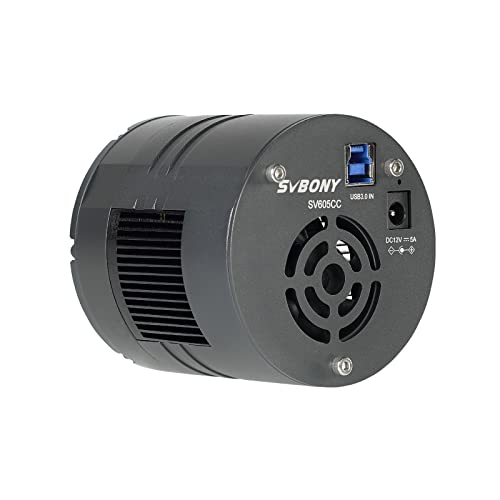
- 9MP square IMX533 color sensor
- Cooling reaches 30°C below ambient
- Supports deep-sky and lucky imaging
Best For: Flexible color astrophotography and meteor monitoring
Fast High-Sensitivity Option
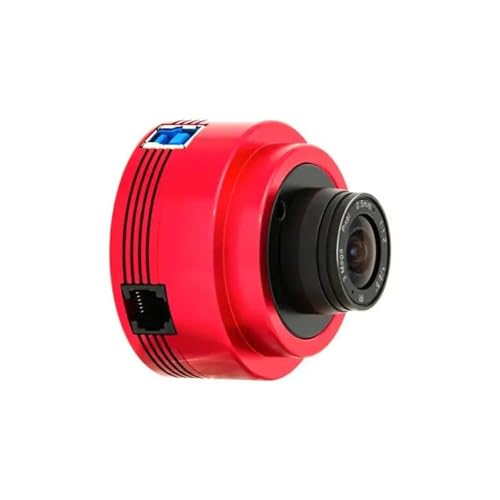
- 8.29MP monochrome CMOS sensor
- Up to 47.5 fps capture speed
- 0.8e read noise with HCG mode
Best For: Fast, low-noise monochrome and near-infrared imaging
Versatile Entry-Level Pick
SV705C IMX585 Telescope Camera

- 3856×2180 IMX585 resolution
- Planetary, EAA, and entry-level deep-sky capable
- CS/ C-CS lens compatibility
Best For: EAA enthusiasts and beginning astrophotographers
Integrated Cooled System

- Imaging, guiding, and control in one system
- 256GB storage with wireless connectivity
- 30–35°C below-ambient cooling
Best For: Connected, cooled astrophotography rigs
Compact Guiding Specialist

- 2.1MP monochrome CMOS sensor
- Large field of view for guide-star detection
- Lightweight 60g 1.25-inch body
Best For: Autoguiding and basic planetary or lunar imaging
Deep-Sky Detail – ZWO ASI533MM-Pro
ZWO ASI533MM-Pro 9 Megapixel USB3.0 Monochrome Astronomy Camera for Astrophotography
Check Price On AmazonFor serious monochrome astronomy cameras work, the ZWO ASI533MM-Pro combines a square 9MP sensor, TEC cooling, and fast USB 3.0 transfer. It is built for detailed deep-sky imaging through a telescope on a motorized equatorial mount, with filter-based color imaging also possible.
Best For: Deep-sky photographers who want cooled monochrome imaging and a flexible square sensor.
Pros:
- 9MP, 3008×3008 square sensor captures fine detail.
- TEC cooling reaches up to 35°C below ambient for lower-noise imaging.
- USB 3.0 supports transfers up to 20 frames per second.
- Built-in USB 2.0 hub can power accessories such as a guide camera or focuser.
Cons:
- Requires a separate 12V@3A power supply.
- Filters and some mounting accessories are not included.
- Manual-focus operation and an equatorial mount are part of the overall setup.
The ASI533MM-Pro is a strong choice when cooled performance and deep-sky flexibility matter more than an all-in-one kit. Its accessory hub and square sensor also suit more developed astrophotography rigs.
Easy Lunar Viewing – FIBONAX NOVA8M 4K Camera
The FIBONAX NOVA8M is a straightforward electronic eyepiece for lunar and planetary viewing. Among monochrome astronomy cameras and general telescope cameras, it stands out for UVC plug-and-play support, up to 4K video, and a standard 1.25-inch barrel.
Best For: Beginners and shared observing sessions focused on the Moon and bright planets.
Pros:
- 8MP sensor supports up to 4K video and high-frame-rate 1080p capture.
- UVC viewing works with compatible Windows, macOS, and Linux software.
- Standard 1.25-inch connection fits many telescope focusers.
- Removable IR-cut filter and lightweight CNC aluminum body.
Cons:
- Designed primarily for lunar and planetary imaging, not long-exposure deep-sky work.
- Manual telescope focusing is required.
- Focus compatibility depends on sufficient focuser travel.
The NOVA8M keeps computer-based observing accessible without requiring a dedicated driver for basic UVC use. It is best treated as a compact planetary camera rather than a cooled deep-sky imaging solution.
High-Speed Cooled Imaging – ZWO ASI585MM Pro
The ZWO ASI585MM Pro is a high-speed cooled option for monochrome astronomy cameras users who want one setup for deep-sky, lunar, and planetary imaging. Its 8.29MP STARVIS 2 sensor, large full-well capacity, and zero-amp-glow design support demanding capture sessions.
Best For: Astrophotographers seeking fast frame rates, cooled performance, and broad imaging versatility.
Pros:
- 8.29MP sensor records up to 47 frames per second in high-speed mode.
- Two-stage TEC cooling can lower sensor temperature more than 35°C below ambient.
- Hardware-level zero amp glow helps produce clean dark frames.
- 512MB DDR3 cache and USB 2.0 hub support stable transfers and accessories.
Cons:
- Requires a telescope setup and supporting capture accessories.
- Cooling performance varies with ambient conditions and operating time.
- Its advanced feature set may be more than beginners need.
With its high frame rate and cooled monochrome sensor, the ASI585MM Pro is particularly adaptable. It makes sense for users who want to move between planetary video and longer deep-sky exposures without changing cameras.
Budget Planetary Capture – SVBONY SV205 Telescope Camera
The SVBONY SV205 is a compact USB telescope camera aimed at accessible lunar and planetary imaging. It offers a 7.05MP IMX415 color sensor, plug-and-play operation, and a 1.25-inch barrel for direct connection to many compatible telescopes.
Best For: Beginners who want to record and share Moon, planet, and terrestrial telescope views.
Pros:
- 7.05MP sensor supports up to 2K video capture.
- Plug-and-play operation enables real-time computer viewing.
- 1.25-inch machined aluminum adapter barrel fits many telescopes.
- Includes a USB 3.0 cable, dust cover, and cleaning cloth.
Cons:
- Color sensor is not a dedicated monochrome camera.
- It is primarily intended for lunar and planetary shots rather than cooled deep-sky imaging.
- Mac users need Astroamx Capture, and it is not compatible with Apple phones or tablets.
The SV205 is a practical entry-level choice for computer-assisted observing and planetary video. Its simple connection and included accessories make it approachable, though advanced deep-sky users will likely want a cooled camera instead.
High-Resolution Deep-Sky Pick – ZWO ASI2600MM PRO
For demanding monochrome astronomy cameras users, the ZWO ASI2600MM PRO combines a 26.1MP Sony IMX571 sensor with 16-bit capture, low read noise, and active cooling. Its large active area and wide dynamic range make it a strong option for detailed deep-sky imaging.
Best For: Experienced astrophotographers who want high-resolution monochrome images and plan to use filters, a cooled setup, and dedicated astronomy software.
Pros:
- 26.1MP monochrome sensor with 3.76-micron pixels
- Cooling reaches 30–35°C below ambient temperature
- Low 1.0e read noise, 13.9 stops of dynamic range, and 16-bit ADC
- 512MB DDR3 buffer supports stable USB 3.0 data handling
Cons:
- Manual-focus operation and a computer-based workflow may be demanding for beginners
- Full-resolution frame rate is limited to 3.51 fps
- Requires compatible astronomy software, mount, and filters for a complete imaging setup
The ASI2600MM PRO is the most resolution-focused choice here. Its cooling, dynamic range, and large monochrome sensor favor serious deep-sky projects, while the broader system requirements make it less suited to casual observation.
Versatile Color Alternative – SVBONY SV605CC Cooled Color Camera
The SVBONY SV605CC is a cooled color camera rather than one of the dedicated monochrome astronomy cameras in this roundup. Its 9MP square IMX533 sensor, USB 3.0 connection, and 30°C below-ambient cooling suit deep-sky, panoramic astronomy, meteor monitoring, and lucky imaging.
Best For: Beginners or general-purpose astrophotographers who prefer a color workflow and want one camera for several observing and imaging applications.
Pros:
- 9MP square IMX533 color sensor with 3008×3008 resolution
- Up to 80% quantum efficiency according to the supplied specifications
- Double-layer semiconductor cooling reaches 30°C below ambient
- Designed for deep-sky, panoramic, meteor, and lucky imaging
Cons:
- It is a color camera, so it does not provide a monochrome sensor workflow
- Lower stated resolution than the ZWO ASI2600MM PRO
- Supplied specifications list a 1.6 kg item weight, which may matter for portable setups
The SV605CC is best treated as a flexible color alternative, not a direct monochrome competitor. Its square sensor and cooling are useful for varied applications, but users specifically seeking narrowband monochrome imaging should consider the dedicated ZWO models instead.
Fast High-Sensitivity Option – ZWO ASI678MM
The ZWO ASI678MM is a compact monochrome astronomy camera aimed at high-speed and sensitivity-conscious imaging. Its 8.29MP CMOS sensor supports up to 47.5 fps, while low read noise, low dark current, near-infrared sensitivity, and hardware-level amp-glow suppression strengthen its long-exposure and high-gain performance.
Best For: Imagers who prioritize fast frame rates, near-infrared response, low noise, and reliable data transfer over maximum pixel count.
Pros:
- 47.5 fps continuous shooting speed with USB 3.0 connectivity
- Low read noise as low as 0.8e when HCG mode is active
- Hardware-level amp-glow suppression with no stated amp glow at long exposures
- 256MB DDR3 cache helps reduce frame dropping during long exposure
Cons:
- 8.29MP resolution is substantially lower than the ASI2600MM PRO
- Supplied notes do not specify active cooling
- May be less suitable for users prioritizing a large, high-resolution deep-sky field
The ASI678MM emphasizes speed and clean signal handling rather than maximum resolution. Its HCG mode, near-infrared sensitivity, and amp-glow control make it a compelling specialist option for fast capture and demanding high-gain work.
Versatile Entry-Level Pick – SV705C IMX585 Telescope Camera
For shoppers comparing monochrome astronomy cameras, the SVBONY SV705C is a versatile option for planetary imaging, EAA, lucky imaging, and entry-level deep-sky work. Its IMX585 sensor combines a 3856×2180 maximum resolution with high quantum efficiency and improved near-infrared sensitivity.
Best For: EAA enthusiasts and beginners seeking a flexible camera for planetary, lunar, and introductory deep-sky imaging.
Pros:
- Supports planetary imaging, EAA, lucky imaging, and entry-level deep-sky shooting.
- IMX585 sensor offers 38ke full-well capacity, peak QE of about 90%, and improved signal-to-noise performance.
- CS port and included C-CS adapter support C-mount and CS-mount lenses.
- High near-infrared sensitivity can help capture additional celestial detail.
Cons:
- The supplied notes do not specify active cooling.
- As an entry-level-oriented camera, it may be less suited to demanding long-exposure workflows.
The SV705C stands out for its broad use case and adaptable lens compatibility. It is a practical starting point for users who want to explore several types of astrophotography rather than specialize in one imaging target.
Integrated Cooled System – ZWO ASI585MM Air
The ZWO ASI585MM Air is an integrated monochrome astronomy camera built for streamlined imaging sessions. It combines imaging, guiding, and rig control with ASIAir functionality, 256GB of eMMC storage, dual-band connectivity, and cooling that can lower the sensor temperature by 30–35°C below ambient.
Best For: Astrophotographers who want a connected, cooled imaging setup with built-in guiding and control features.
Pros:
- Combines imaging, guiding, and control in one system.
- 256GB eMMC storage plus support for external storage up to 1TB through USB 2.0 ports.
- STARVIS 2 technology, HCG mode, and read noise as low as 0.7e support clean, sensitive imaging.
- Cooling can reduce sensor temperature by 30–35°C below ambient during extended exposures.
Cons:
- At 700g, it is substantially less lightweight than compact guide cameras.
- The integrated feature set may be more than needed for users seeking a simple USB camera.
- The supplied notes list a one-year warranty.
This model is the most system-oriented choice in the group. Its storage, wireless connectivity, guiding, control, and cooling features make it attractive for users prioritizing convenience and an organized imaging rig.
Compact Guiding Specialist – ZWO ASI174MM-MINI
ZWO ASI174MM-MINI 2.1 MP CMOS Monochrome Astronomy Camera with USB 2.0# ASI174MM-MINI
Check Price On AmazonThe ZWO ASI174MM-MINI is a compact monochrome astronomy camera designed primarily for autoguiding, while also supporting monochrome imaging of planets, the Moon, and the Sun when used with a safe solar filter. Its 2.1MP sensor, larger field of view, and low 60g weight make it convenient for guide-scope and off-axis-guider setups.
Best For: Autoguiding, especially with an off-axis guider, plus basic planetary, lunar, and solar imaging with appropriate safety equipment.
Pros:
- Larger sensor and field of view can help reveal more potential guide stars.
- High QE and low noise support detection of fainter guide stars.
- Compact 60g CNC aluminum body slides directly into a 1.25-inch focuser.
- Captures up to 18.4 frames per second at maximum resolution.
Cons:
- Its 2.1MP resolution is modest compared with newer high-resolution imaging cameras.
- Uses USB 2.0 rather than a faster USB 3.0 connection.
- A safe solar filter is required for solar imaging and is not included.
The ASI174MM-MINI is a focused, lightweight tool rather than an all-in-one imaging system. Choose it when reliable guiding and easy 1.25-inch installation matter more than large files or advanced cooled-camera features.
How We Picked the Best Monochrome Astronomy Cameras
We focused on cameras that offer genuine value for astrophotography, from compact models for guiding and lunar or planetary work to cooled cameras intended for long-exposure deep-sky imaging. Our comparison considers sensor resolution, sensor format, pixel size, cooling, USB connectivity, software support, and practical compatibility with common telescopes, filter wheels, guide scopes, and imaging platforms.
Because the lineup includes both dedicated monochrome models and closely related color or electronic-eyepiece designs, check the specifications carefully before ordering. A camera’s product name does not always indicate whether it is cooled, monochrome, or optimized for long exposures.
Quick Comparison
- Best for advanced deep-sky imaging: ZWO ASI2600MM Pro, with its larger sensor class and cooled monochrome design.
- Best balanced option: ZWO ASI533MM-Pro, combining a square sensor format, cooling, and modern USB connectivity.
- Best for compact high-resolution imaging: ZWO ASI585MM Pro or ASI678MM, depending on your telescope’s focal length and target size.
- Best integrated setup: ZWO ASI585MM AIR, which combines a cooled camera with built-in guide and ASIAir functionality.
- Best for guiding: ZWO ASI174MM-MINI, a compact monochrome camera designed for guide scopes and auxiliary imaging.
- Best budget or basic telescope-camera format: the 1.25-inch USB eyepiece-style cameras, though their capabilities may be more limited for serious long-exposure work.
Key Buying Factors for Monochrome Astronomy Cameras
Sensor Size and Pixel Size
Larger sensors capture a wider field of view but may require more demanding optics, larger filters, and stronger image-circle coverage. Smaller pixels can record fine detail, while larger pixels are often more forgiving in low-light conditions. Use your telescope’s focal length and the target’s apparent size to estimate whether a camera will frame the Moon, planets, galaxies, or nebulae effectively.
Cooling and Long-Exposure Performance
Temperature-controlled cooling is especially valuable for deep-sky imaging because it reduces thermal noise and makes calibration frames more consistent. For short planetary captures or guiding, cooling may be unnecessary. If you plan to shoot narrowband or broadband exposures over several minutes, prioritize a cooled model.
Monochrome Workflow and Filters
Monochrome sensors work with red, green, blue, and narrowband filters to provide flexible control over luminance and emission-line imaging. They can produce excellent detail, but require additional equipment and a more involved processing workflow than a color camera. Confirm that your filter wheel, filter size, and backfocus arrangement match the selected camera.
Connection, Software, and Mounting
USB 3.0 is useful for transferring large files quickly, particularly during lunar and planetary recording. Also verify driver support for your preferred capture software, ASIAir or other control hardware, and operating system. A 1.25-inch nosepiece is convenient for small guide scopes, while larger threaded bodies may provide more secure connections for cooled deep-sky rigs.
Who Should Buy Which Monochrome Astronomy Cameras?
Choose a cooled monochrome camera such as the ASI533MM-Pro, ASI585MM Pro, or ASI2600MM Pro if your priority is serious deep-sky imaging and you are prepared to use filters and calibration frames. The ASI2600MM Pro is the more ambitious choice for wider fields and detailed imaging, while the ASI533MM-Pro is easier to match with smaller setups.
Choose the ASI585MM AIR if simplified field control and an integrated astronomy workflow matter more than building a system from separate components. The ASI678MM and similar compact high-resolution cameras suit lunar, planetary, and smaller-target imaging when your telescope can sample their small pixels effectively.
For guiding, look first at the ASI174MM-MINI. For casual observing, basic capture, or a low-cost introduction, a 1.25-inch USB telescope camera may be adequate. Before buying, confirm the sensor type, cooling method, included cables, required adapters, and compatibility with your telescope and capture software.