Choosing the right portable astrophotography mount can make the difference between sharp, well-tracked stars and frustratingly blurred exposures. The best option balances tracking accuracy, payload capacity, setup speed, and packability.
This roundup compares 10 mounts, wedges, bases, and tracker systems for photographers ranging from beginners shooting with wide-angle lenses to advanced users carrying heavier camera-and-telescope setups.
Best 10 Portable Astrophotography Mounts Picks for 2026
Best All-Around Tracker
iOptron SkyGuider Pro Full Package

- Supports up to 11 pounds when balanced
- Illuminated polar scope for alignment
- Up to 20 hours of internal battery life
Best For: Portable camera-and-lens astrophotography setups
Best Latitude Base
Sky-Watcher Star Adventurer EQ Base
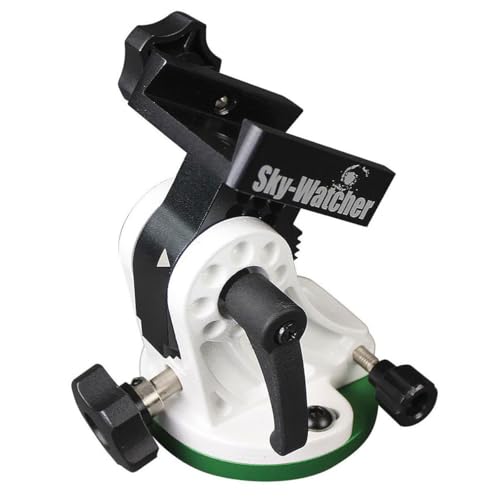
- Designed for Star Adventurer systems
- Micro-adjustment knobs aid fine positioning
- Compact aluminum base weighs 1.7 pounds
Best For: Star Adventurer owners refining portable alignment
Best GoTo Control
Explore Scientific iEXOS-100-2 Mount

- Eight-CPU PMC-Eight control system
- Wi-Fi and Bluetooth tablet control
- Includes equatorial mount and tripod
Best For: App-controlled GoTo astrophotography setups
Best for Low Latitudes
FANAUE SkyGuider Pro Base Mount

- Built for low-latitude polar alignment
- CNC aluminum construction weighs 500 grams
- Designed for SkyGuider Pro compatibility
Best For: SkyGuider Pro users near the equator or in southern regions
Best for Celestron Alt-Az Telescopes

- Adds equatorial tracking to compatible Celestron systems
- Supports long exposures and autoguiding
- Tool-less, portable design with latitude scale
Best For: Celestron NexStar, Evolution, and compatible Origin owners
Best GoTo Portable Mount

- Complete EQ kit with tripod and counterweight
- Built-in GoTo, Wi-Fi, and illuminated polar scope
- Includes pier extension for flexible setup
Best For: Portable imaging setups needing integrated GoTo control
Best Heavy-Duty Lightweight Tripod

- Supports a stated 110-pound load
- Weighs approximately 4.19 pounds
- Folds to about 20.28 inches for transport
Best For: Heavy equatorial rigs needing a portable support base
Best Full-GoTo Option
Sky-Watcher Star Adventurer GTi

- Full GoTo tracking in a compact mount head
- Built-in Wi-Fi and illuminated polar scope
- Includes counterweight bar and 5-pound counterweight
Best For: Portable photographers wanting a more complete GoTo setup
Best Latitude-Adjustment Accessory

- Provides 0°–90° angle adjustment
- Connects to standard tripods with a 3/8-inch thread
- Built from aluminum alloy for portable outdoor use
Best For: Adding adjustable positioning to an existing tracker or tripod system
Best Compact Open-Source Tracker
TeSeek Equatorial Star Tracker

- Supports stellar, lunar, and custom rotation speeds
- Switches between Northern and Southern Hemispheres
- Runs from a power bank and doubles as a gimbal head
Best For: DIY-minded photographers wanting a compact customizable tracker
Best All-Around Tracker – iOptron SkyGuider Pro Full Package
The iOptron SkyGuider Pro is a strong option for photographers seeking portable astrophotography mounts with a capable payload and straightforward polar alignment. Its compact 2.2-pound body supports up to 11 pounds when balanced, while the illuminated polar scope and rechargeable battery support longer sessions away from external power.
Best For: Portable camera-and-lens astrophotography setups that need stability, payload capacity, and extended battery life.
Pros:
- All-metal construction helps minimize vibration for sharper exposures.
- Supports camera combinations weighing up to 11 pounds when balanced.
- Illuminated polar scope and adjustable base simplify alignment.
- Internal rechargeable battery provides up to 20 hours of operation at 20°C.
Cons:
- Not water resistant.
- The full package is listed at 10.1 pounds, despite the mount body weighing 2.2 pounds.
- Manual exposure control may require more hands-on operation.
Choose this model when you want a portable tracker that balances useful capacity with precise alignment features. It is especially appealing for mobile imaging, provided you account for the overall package weight and protect it from moisture.
Best Latitude Base – Sky-Watcher Star Adventurer EQ Base
Sky Watcher S20530 Star Adventurer Latitude (EQ) Base, Telescope Accessory, Black
Check Price On AmazonThe Sky-Watcher Star Adventurer Latitude Base is a compact accessory for photographers building portable astrophotography mounts around a Star Adventurer system. Its aluminum construction, latitude lock, and micro-adjustment knobs are aimed at making fine positioning more controlled during setup.
Best For: Star Adventurer users who need a dedicated latitude-adjustment base for more precise setup.
Pros:
- Includes the latitude base, mounting block, tools, and instructions.
- Micro-adjustment knobs support fine positioning.
- Latitude adjustment lock helps secure the chosen setting.
- Compact 5.5-inch dimensions and 1.7-pound weight suit portable kits.
Cons:
- It is an accessory rather than a complete tracking mount.
- Its compatibility focus is the Star Adventurer system.
This is a practical upgrade for an existing Star Adventurer setup rather than a standalone solution. Consider it if controlled latitude adjustment and a relatively light aluminum base matter more than an all-in-one mount.
Best GoTo Control – Explore Scientific iEXOS-100-2 Mount
The Explore Scientific iEXOS-100-2 combines an equatorial mount and tripod with GoTo control for users who want portable astrophotography mounts with app-based operation. Its PMC-Eight system uses eight independent CPUs, while Wi-Fi and Bluetooth connectivity support the ExploreStars app on Apple, Android, and Windows tablets.
Best For: Astrophotographers who prioritize app-controlled GoTo navigation and a complete mount-and-tripod package.
Pros:
- Eight-CPU PMC-Eight system is designed for responsive, efficient operation.
- ExploreStars app supports alignment and navigation across major tablet platforms.
- Clutched dual-axis worm gears and belt-driven stepper motors provide quiet precision movement.
- Clutched axes allow smoother balancing and repositioning.
Cons:
- Requires a compatible tablet for app-based operation.
- Polar alignment uses an RA-axis sight hole rather than a polar scope.
- The supplied notes do not specify a payload capacity.
This mount is best suited to users who value computerized navigation and wireless control over minimal equipment. Its included tripod and GoTo features make it a more complete choice, while the unspecified payload means you should verify suitability for your telescope.
Best for Low Latitudes – FANAUE SkyGuider Pro Base Mount
The FANAUE SkyGuider Pro Base Mount is a specialized accessory for portable astrophotography mounts used near the equator or in southern regions. Its CNC-machined aluminum body is designed to provide a rigid platform, while the low-latitude adjustment range and precise threading support secure polar alignment with compatible SkyGuider Pro systems.
Best For: SkyGuider Pro users in low-latitude locations who need a stable, adjustable polar-alignment platform.
Pros:
- Designed specifically for low-latitude polar alignment.
- CNC-machined aluminum construction combines rigidity with a 500-gram weight.
- Precise threading is intended to create a secure, wobble-free connection.
- Vibration-reduction design supports longer-exposure astrophotography.
Cons:
- It is a base accessory, not a complete star-tracking mount.
- Compatibility is specifically centered on iOptron SkyGuider Pro systems.
- The supplied listing contains inconsistent model and built-in-media descriptions, so confirm fit before purchase.
This base makes the most sense when location-specific alignment is the main limitation of an existing SkyGuider Pro setup. Its low-latitude focus and compact CNC aluminum construction are useful advantages, but compatibility should be checked carefully.
Best for Celestron Alt-Az Telescopes – Equatorial Wedge
For owners of compatible Celestron computerized telescopes, this equatorial wedge is a practical way to add equatorial tracking for portable astrophotography. It tilts the telescope’s azimuth into an equatorial platform, supporting longer exposures and autoguiding for planetary and deep-space imaging.
Best For: Beginner to intermediate imagers using Celestron NexStar 6/8SE, Evolution, or compatible Origin telescopes.
Pros:
- Enables long-exposure astrophotography and autoguiding.
- Captive hardware and tool-less operation simplify setup.
- Portable design includes a latitude scale and integrated bubble level.
Cons:
- Designed specifically for compatible Celestron telescope systems.
- At 15 pounds, it adds meaningful weight to a portable setup.
This wedge is a focused upgrade rather than a universal mount: it makes the most sense when you already own a supported Celestron telescope and want equatorial capability without replacing the entire system.
Best GoTo Portable Mount – Star Adventurer GTi Kit
The Sky-Watcher Star Adventurer GTi is a complete portable astrophotography mount kit with a GoTo mount head, tripod, pier extension, counterweight, and illuminated polar scope. Built-in Wi-Fi and multiple tracking rates make it a flexible choice for lightweight imaging setups.
Best For: Astrophotographers who want a portable full GoTo EQ tracking system with included support hardware.
Pros:
- Complete kit includes tripod, pier extension, counterweight bar, and 5-pound counterweight.
- Built-in GoTo functionality and Wi-Fi support convenient operation.
- Illuminated polar scope assists with polar alignment.
Cons:
- The listed kit weighs 26 pounds, so it is portable but not ultralight.
- It is not water resistant.
- The supplied specifications list a 30-second maximum shutter speed.
Among portable astrophotography mounts, this kit stands out for convenience: it supplies the main components needed to begin tracking, while GoTo, Wi-Fi, and the polar scope reduce setup friction.
Best Heavy-Duty Lightweight Tripod – Carbon Fiber Equatorial Base
Carbon Fiber Telescope Equatorial Base Mount Tripod 50KG/110Lb High Load Capacity
Check Price On AmazonThis CAMINSTARRY carbon-fiber tripod is a high-capacity support option for portable astrophotography rigs. It weighs about 4.19 pounds while offering a stated 110-pound load limit, with quick assembly, vibration-damping carbon-fiber legs, and accessories for stabilizing the setup outdoors.
Best For: Imaging setups that need a lightweight, high-capacity tripod base for equatorial mounts and telescope equipment.
Pros:
- Stated 110-pound load capacity supports heavy equipment.
- Carbon-fiber construction weighs approximately 4.19 pounds.
- Includes stakes, hooks, sandbags, and an anti-dropout inner support plate.
- Folds to about 20.28 inches for transport.
Cons:
- This is a tripod/base rather than a complete tracking mount.
- Its maximum working height is 30 inches.
- It requires a compatible equatorial mount and telescope setup.
For photographers who already have an equatorial mount, this tripod prioritizes load capacity and field portability. Its included stabilization accessories are especially useful when imaging on grass, sand, or in windy conditions.
Best Full-GoTo Option – Sky-Watcher Star Adventurer GTi
For photographers comparing portable astrophotography mounts, the Sky-Watcher Star Adventurer GTi offers a compact equatorial setup with full GoTo performance. It includes a counterweight bar, 5-pound counterweight, built-in Wi-Fi, and an illuminated built-in polar scope. A dovetail is provided for mounting a DSLR or mirrorless camera, but the camera itself is not included.
Best For: Portable astrophotographers who want GoTo tracking and a more complete mount-head kit.
Pros:
- Full GoTo performance in a compact package
- Built-in Wi-Fi and illuminated polar scope
- Includes counterweight bar and 5-pound counterweight
- Supports camera and smartphone compatibility
Cons:
- Camera is not included
- At 6.9 kg, it is less lightweight than smaller tracker designs
- Requires manual focusing
This is the most feature-rich option in the group for users who want an integrated GoTo equatorial mount rather than a simple accessory. Its included balancing hardware and polar scope make it a practical starting point for portable camera-based astrophotography.
Best Latitude-Adjustment Accessory – 90° Adjustable Tripod Seat
This adjustable latitude base is a useful supporting component for portable astrophotography mounts and tracking platforms. Its angle adjustment ranges from 0° to 90°, while the 3/8-inch threaded base is designed for standard photography tripods and compatible astronomy equipment.
Best For: Astrophotographers who need a portable, adjustable interface between a tracker or mount and a standard tripod.
Pros:
- Adjusts through a 0° to 90° range
- Uses a standard 3/8-inch threaded tripod connection
- Aluminum alloy construction suits outdoor portable use
- Designed to work with trackers, telescopes, and photography equipment
Cons:
- This is an adjustment base, not a complete tracking mount
- Specific tracker or telescope compatibility should be checked before purchase
- Its 1.61-pound weight adds another component to a travel setup
Unlike a standalone star tracker, this product improves positioning and tripod compatibility within an existing system. It makes the most sense for users who already own a tracker or astronomy platform and need more flexible latitude adjustment.
Best Compact Open-Source Tracker – TeSeek Equatorial Star Tracker
Among portable astrophotography mounts, the TeSeek Equatorial Mount Star Tracker stands out for its compact, open-source design and USB-C power input. It supports stellar, lunar, and custom rotation speeds, switches between Northern and Southern Hemisphere use, and can also function as a gimbal head for time-lapse photography.
Best For: DIY-minded photographers seeking a small, customizable tracker that can run from a power bank.
Pros:
- Supports stellar, moon, and custom rotation speeds
- Works in both Northern and Southern Hemispheres
- Compact PETG and carbon-fiber shell
- Can operate as a gimbal head for time-lapse photography
Cons:
- Requires a separate ball head for camera connection
- May require a 1/4-to-3/8-inch screw sleeve for some ball heads
- Power bank and USB-A-to-USB-C cable are not included
This tracker is notably compact and flexible, but its modular connection and power requirements deserve attention before buying. It is a strong fit for users comfortable assembling accessories and using a power bank rather than relying on a built-in battery.
How We Picked These Portable Astrophotography Mounts
We focused on the features that matter most in the field: equatorial tracking, polar-alignment support, payload handling, portability, compatibility with standard tripods and cameras, and the practicality of each design for long-exposure imaging. The selection includes complete GoTo systems, compact star trackers, adjustable latitude bases, wedges, and heavier-duty mount platforms.
Because these products serve different users, there is no single “best” mount for every setup. A lightweight tracker may be ideal for a mirrorless camera and wide lens, while a GoTo equatorial mount is better suited to a telescope, heavier telephoto lens, or more automated observing workflow.
Quick Comparison
- Best for lightweight camera rigs: Compact star trackers with integrated or compatible ball-head support.
- Best for easier target finding: GoTo mounts such as the Star Adventurer GTi and iEXOS-100-2.
- Best for flexible polar alignment: Dedicated latitude bases and adjustable equatorial platforms.
- Best for heavier loads: Full equatorial mounts or high-capacity tripod bases with suitable counterweights.
- Best for portability: Camera-focused trackers and mount-head kits that separate from the tripod.
Key Buying Factors for Portable Astrophotography Mounts
Payload Capacity and Balance
Check the mount’s stated payload rating, but do not treat the maximum as a target for astrophotography. A camera, lens, intervalometer, guide scope, mounting plate, and counterweights all add up. Leave headroom for smoother tracking and better stability.
Tracking and Polar Alignment
Astrophotography requires the mount to compensate for Earth’s rotation. Look for a true equatorial tracking design and a practical polar-alignment system. Precise alignment becomes increasingly important as focal length and exposure time increase.
GoTo and Operating Convenience
GoTo functionality can locate targets automatically and is especially useful for deep-sky imaging. Manual trackers are often faster and simpler for wide-field Milky Way photography, with fewer batteries, cables, and setup steps to manage.
Portability and Tripod Compatibility
Consider total packed weight, whether the mount head detaches, and how easily it fits your existing tripod. A stable tripod is essential; even a capable tracker can produce poor results on a flexible or undersized support.
Power, Controls, and Accessories
Review battery options, app or hand-controller support, counterweight requirements, mounting threads, and included hardware. A complete kit may cost more but can be better value than assembling compatible parts separately.
Who Should Buy Which Portable Astrophotography Mounts?
Choose a compact camera tracker if you mainly use wide-angle or short telephoto lenses and want the smallest practical setup for landscapes, Milky Way panoramas, and star fields.
Choose a GoTo EQ mount if you want automated target locating, smartphone or controller operation, and enough flexibility to expand into longer lenses or smaller telescopes. Expect a larger, heavier setup and more involved alignment.
Choose an adjustable base or wedge if you already own a compatible tracker or telescope mount and need more precise latitude adjustment, improved stability, or better integration with your tripod.
Choose a higher-capacity equatorial platform for heavier optical tubes, large telephoto lenses, or accessories such as guide scopes. Prioritize rigidity and balanced loading over minimum pack size.
Before buying, match the mount to your complete imaging rig rather than the camera body alone. For most newcomers, an easy-to-align tracker with moderate payload capacity offers the best learning curve; experienced imagers may prefer GoTo control, expansion room, and finer alignment adjustment.