Long exposures reveal far more stars, nebulae, and Milky Way detail than a stationary tripod can capture—but Earth’s rotation quickly turns stars into trails. A star tracker compensates for that motion, allowing sharper images with longer shutter speeds and lower ISO settings.
These 10 options range from pocketable trackers for lightweight mirrorless cameras to GoTo equatorial mounts with greater payload capacity. The right choice depends on your camera weight, lens, portability needs, alignment workflow, and willingness to balance a mount carefully.
Best 10 Star Trackers for Long Exposure Photography Picks for 2026
Versatile Wi-Fi Tracker
Sky-Watcher Star Adventurer 2i Pro Pack
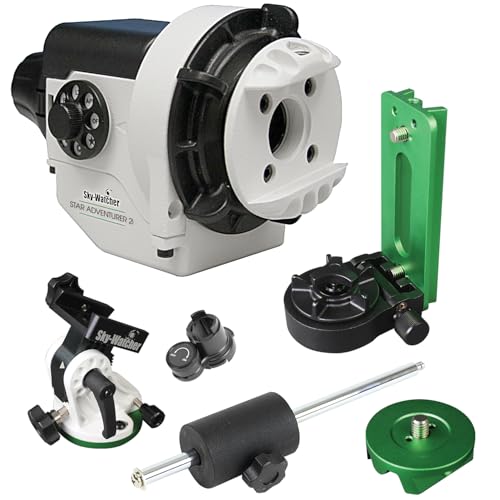
- Wi-Fi smartphone control via SAM Console
- Supports wide-field, time-lapse, and telescope use
- Equatorial base aids polar alignment
Best For: Flexible wide-field astrophotography setups
GoTo Equatorial Mount
Explore Scientific iEXOS-100-2 PMC-Eight

- Eight-CPU PMC-Eight control system
- ExploreStars app supports major tablet platforms
- Dual-axis gears and alignment sight hole
Best For: App-controlled telescope and astrophotography setups
Backcountry Compact Pick
SLIK ECH-630 Compact Star Tracker
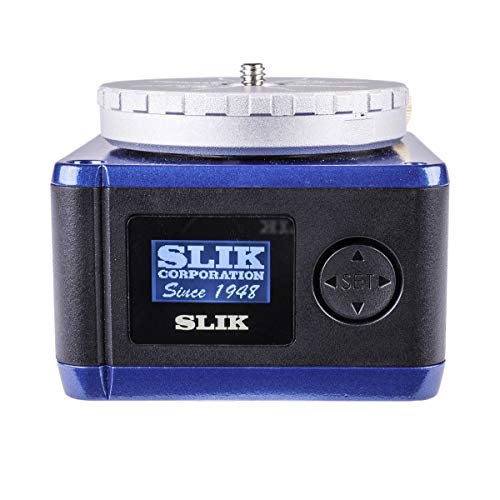
- Weighs about 22.4 ounces
- Offers celestial, lunar, solar, and time-lapse speeds
- Up to 20 hours on four AA batteries
Best For: Lightweight backcountry camera tracking
Portable Precision Mount
iOptron SkyGuider Pro Camera Mount

- Supports up to 11 pounds when balanced
- Illuminated AccuAlign polar scope
- Up to 20 hours of rechargeable operation
Best For: Traveling photographers with varied camera setups
Travel-Ready Precision

- Lightweight 0.58 kg tracker
- Five variable tracking speeds
- Smartphone shutter release and ST4 RA port
Best For: Travel and timelapse astrophotography
Simple Portable Tracking

- 3 kg maximum recommended payload
- Automatic RA tracking with polar scope
- Sidereal, solar, lunar, and half-speed modes
Best For: Portable camera and cellphone setups
GoTo Capability
Sky-Watcher Star Adventurer GTi

- Full GoTo equatorial tracking
- Built-in Wi-Fi and illuminated polar scope
- Includes counterweight bar and 5 lb counterweight
Best For: Portable GoTo astrophotography setups
Portable Proven Performer

- 1.5-pound portable tracking platform
- Includes equatorial base and polar scope
- Wi-Fi control and 6.6-pound payload
Best For: Portable wide-field astrophotography with DSLR or mirrorless cameras
Exposure-Focused Value Pick
Xiaoxin Single-Axis Star Tracker

- Published exposure guidance from 14mm to 300mm
- 5 kg capacity with included counterweight
- Bluetooth control and automated shutter features
Best For: Beginners exploring varied focal lengths and adjustable tracking
App-Free DIY Option

- Stellar, lunar, and custom tracking speeds
- No app required for operation
- Compact design with gimbal and time-lapse use
Best For: DIY users wanting customizable, app-free tracking
Versatile Wi-Fi Tracker – Sky-Watcher Star Adventurer 2i Pro Pack
The Sky-Watcher Star Adventurer 2i Pro Pack is a flexible choice for photographers seeking star trackers for long exposure photography. Its portable motorized platform supports wide-field astrophotography, time-lapse video, and telescopic use, while Wi-Fi enables smartphone control through the SAM Console app.
Best For: Photographers who want a modular tracker for Milky Way images, eclipses, and other wide-field astronomical subjects.
Pros:
- Supports wide-field astrophotography, time-lapse video, and telescopic use.
- Wi-Fi control through Sky-Watcher’s free SAM Console app.
- Deluxe equatorial base helps with positioning for polar alignment.
- Designed to integrate with existing photographic tripods.
Cons:
- At 7 pounds, it is heavier than the most compact tracker options.
- Its modular setup may require more configuration than a simple camera mount.
The Star Adventurer 2i is a strong all-around option when you want tracking flexibility and app control without limiting the setup to basic camera-and-lens use.
GoTo Equatorial Mount – Explore Scientific iEXOS-100-2 PMC-Eight
The Explore Scientific iEXOS-100-2 PMC-Eight is a more feature-rich option among star trackers for long exposure photography. It combines an equatorial mount and tripod with GoTo operation, app control, dual-axis worm gears, and an eight-CPU PMC-Eight system designed for responsive operation.
Best For: Astrophotographers who want tablet-controlled GoTo navigation and a mount suited to precise telescope positioning.
Pros:
- PMC-Eight system uses eight independent CPUs for defined functions.
- ExploreStars app works with Apple, Android, and Windows tablets.
- Dual-axis worm gears and belt-driven stepper motors support quiet operation.
- Polar alignment sight hole and altitude control assist with alignment.
Cons:
- Its equatorial mount and GoTo system are more involved than a compact camera tracker.
- Tablet compatibility is central to the app-based control experience.
This model makes the most sense for users moving beyond basic nightscape tracking and wanting app-guided object navigation with a telescope-capable equatorial platform.
Backcountry Compact Pick – SLIK ECH-630 Compact Star Tracker
The SLIK ECH-630 is a compact option for photographers comparing star trackers for long exposure photography on the move. Weighing 22.4 ounces and offering celestial, lunar, solar, and time-lapse speeds, it is designed for portable camera-based shooting, with controls managed through an LCD menu.
Best For: Backpacking and backcountry photographers who prioritize low weight and long battery runtime.
Pros:
- Compact 22.4-ounce design is suited to backpacking.
- Offers multiple speeds for celestial, lunar, solar, and time-lapse photography.
- Runs for up to 20 hours on four AA batteries.
- Optional SMH-250 micro adjustment head can assist with polar alignment.
Cons:
- The micro adjustment head for easier polar alignment is optional.
- The tracker head is intended for camera use rather than a broader GoTo mount setup.
Choose the ECH-630 when portability is the deciding factor. Its lightweight body and AA-powered operation are particularly practical for remote shoots where carrying a larger mount is inconvenient.
Portable Precision Mount – iOptron SkyGuider Pro Camera Mount
The iOptron SkyGuider Pro is built for photographers who need star trackers for long exposure photography without giving up portability. Its metal construction, illuminated AccuAlign polar scope, adjustable base, and balanced payload capacity support precise camera-and-lens tracking in a compact mount.
Best For: Mobile astrophotographers using a range of camera and lens combinations who want precise, illuminated polar alignment.
Pros:
- Supports up to 11 pounds when properly balanced.
- Illuminated AccuAlign polar scope simplifies low-light alignment.
- Latitude adjustment ranges from -30° to 65°, with ±5° azimuth adjustment.
- Internal rechargeable battery provides up to 20 hours of operation at 20°C.
Cons:
- The full setup may be less lightweight than the 2.2-pound mount-only figure suggests.
- It requires balancing the mounted equipment to reach its stated capacity.
- It is not water resistant.
The SkyGuider Pro is a compelling middle ground: compact enough for travel, but equipped with the adjustment range, alignment aid, and payload capacity needed for more demanding camera setups.
Travel-Ready Precision – Vixen POLARIE U
The Vixen POLARIE U is a compact option for photographers looking for star trackers for long exposure photography without adding much bulk to a travel kit. It offers variable tracking speeds, smartphone-controlled shutter release, and an ST4 port for right-ascension autoguiding.
Best For: Travel photographers and timelapse shooters who want a lightweight tracker with flexible speed settings.
Pros:
- Compact 0.58 kg design suited to portable setups
- Five tracking speeds for different shooting needs
- ST4 autoguiding port for right ascension
- Smartphone-controlled shutter release supports timelapse work
Cons:
- Uses four AA batteries or USB Type-C external power
- Autoguiding is limited to right ascension
- Manual focus may require more hands-on setup
The POLARIE U stands out when portability and control flexibility matter most. Its small footprint and smartphone features make it a practical companion for mobile night-sky photography.
Simple Portable Tracking – iOptron SkyTracker Pro
The iOptron SkyTracker Pro is a straightforward camera mount for photographers comparing star trackers for long exposure photography. Its automatic right-ascension tracking, included polar scope, and 3 kg maximum weight recommendation support portable camera and cellphone setups.
Best For: Beginners and mobile shooters who want automatic sidereal tracking in a compact camera mount.
Pros:
- Automatic right-ascension tracking
- Supports up to 3 kg of equipment
- Includes a polar scope and padded bag
- Offers sidereal, half-speed, solar, and lunar tracking modes
Cons:
- Maximum shutter speed is listed as 30 seconds
- Not water resistant
- Charges through Micro USB and may take about five hours to reach 80% charge
This mount keeps the feature set focused on essential tracking and portability. The multiple modes and included polar scope add versatility, though the stated shutter-speed limit may matter for some long-exposure workflows.
GoTo Capability – Sky-Watcher Star Adventurer GTi
The Sky-Watcher Star Adventurer GTi is the most feature-rich option here for photographers evaluating star trackers for long exposure photography. This portable equatorial mount combines full GoTo performance with built-in Wi-Fi, an illuminated polar scope, and a counterweight system.
Best For: Astrophotographers who want portable equatorial tracking with GoTo control and room for a more capable setup.
Pros:
- Full GoTo performance in a compact package
- Built-in Wi-Fi for connected control
- Includes an illuminated polar scope
- Comes with a counterweight bar and 5 lb counterweight
Cons:
- At 6.9 kg, it is substantially heavier than the other listed trackers
- Dovetail for mounting a DSLR or mirrorless camera is not included
- Requires battery power or external power
The GTi is a strong choice when automated GoTo operation is more important than minimum carry weight. Its included counterweight hardware and illuminated polar scope make it well suited to a more complete portable astrophotography system.
Portable Proven Performer – Star Adventurer Mini Pro Pack
For photographers comparing star trackers for long exposure photography, the Sky-Watcher Star Adventurer Mini offers a lightweight, established setup with motorized tracking, a polar scope, and a supplied equatorial base. Its 6.6-pound payload rating suits most DSLR and mirrorless camera setups, while Wi-Fi smartphone control adds convenience in the field.
Best For: Portable wide-field astrophotography, Milky Way images, eclipses, time-lapse work, and compatible DSLR or mirrorless camera setups.
Pros:
- Lightweight 1.5-pound tracker designed to fit in a camera bag or backpack.
- Includes an equatorial base and polar scope for positioning and Polaris alignment.
- Wi-Fi control through the free SynScan app supports convenient operation.
- Built-in AA battery compartment can provide up to 24 hours of mobile power; 5V mini-USB input is also available.
Cons:
- AA batteries and external power accessories are not included.
- Counterweights are not included, despite the included declination bracket supporting camera balance adjustments.
The Mini Pro Pack is a practical choice when portability and a complete alignment platform matter more than a compact, app-free design. Its supplied alignment accessories and broad camera compatibility make it a versatile starting point for nightscape shooting.
Exposure-Focused Value Pick – Xiaoxin Single-Axis Star Tracker
The Xiaoxin is aimed directly at photographers seeking star trackers for long exposure photography, with published exposure results across focal lengths from 14mm through 300mm. Its metal construction, Bluetooth controls, and included balance hardware make it a feature-rich option for beginners using DSLR or mirrorless equipment.
Best For: Beginners who want adjustable tracking speeds, automated shutter control, and a mount rated for camera and lens loads up to 5 kg.
Pros:
- Heavy-duty aluminum and stainless-steel construction with a stated 5 kg capacity.
- Published single-frame exposure results cover a wide range of focal lengths.
- Bluetooth and app-based controls support speed, shutter, exposure, hemisphere, and tracking-rate adjustments.
- Includes a balance wheel, counterweight, conversion screw, power cord, and storage bag.
Cons:
- Android app support is specified; iOS speed control uses an infrared remote.
- The mount is supplied without a clearly stated integrated battery, so its power arrangement should be confirmed before field use.
With its unusually detailed exposure claims and configurable controls, the Xiaoxin is appealing for photographers who want to experiment with different focal lengths. The included balancing accessories also reduce the need to assemble a separate support kit.
App-Free DIY Option – Equatorial Mount Star Tracker
For photographers who prefer simple hardware control, this open-source equatorial mount offers stellar, lunar, and custom rotation speeds without requiring an app. It is a compact option for star trackers for long exposure photography, but it requires a separate ball head for connecting a camera and a USB power setup.
Best For: DIY-minded astrophotographers and time-lapse users who want customizable tracking, hemisphere switching, and app-free operation.
Pros:
- Supports stellar, lunar, and custom rotation speeds.
- Switches between northern and southern hemisphere operation.
- Can function as a gimbal head for time-lapse photography.
- Compact PETG and carbon-fiber shell with USB Type-C power-bank compatibility.
Cons:
- A ball head is required to connect the camera.
- A separate 1/4-to-3/8-inch screw sleeve may be needed for many ball heads.
- No built-in battery is included, and the supplied power arrangement requires a USB-A-to-C cable; USB-C-to-C is prohibited.
This tracker stands out for its app-free workflow and configurable motion modes, making it interesting for users comfortable with assembling compatible camera hardware. Its power and connection requirements deserve attention before purchase.
How We Picked the Best Star Trackers for Long Exposure Photography
We evaluated these mounts by focusing on the factors that matter most in real astrophotography use: tracking design, stated payload capacity, portability, polar-alignment tools, power options, controls, and setup complexity. We also considered whether each model suits a lightweight wide-angle setup, a heavier DSLR and lens combination, or a more expandable equatorial system.
Tracking accuracy is important, but it is only one part of the result. A tracker that is difficult to level, polar-align, balance, or power reliably may produce fewer usable frames than a simpler model used correctly. The best option is the one that matches your complete camera setup and shooting habits.
Quick Comparison
- Best overall versatility: Sky-Watcher Star Adventurer 2i Pro Pack
- Best for compact travel kits: Vixen POLARIE U or Sky-Watcher Star Adventurer Mini Pro Pack
- Best for GoTo control: Sky-Watcher Star Adventurer GTi or Explore Scientific iEXOS-100-2
- Best for a complete camera-mount package: iOptron SkyGuider Pro Full Package
- Best for lightweight beginners: SLIK ECH-630 or Xiaoxin portable tracker
Key Buying Factors for Star Trackers for Long Exposure Photography
Payload and Balance
Check the manufacturer’s payload rating, then account for the camera, lens, ball head, mounting hardware, counterweight, and cables. Staying comfortably below the maximum capacity generally improves stability and tracking. Counterweights are especially useful with telephoto lenses or heavier DSLR bodies.
Tracking Modes and Accuracy
Sidereal tracking is the essential mode for stars and Milky Way landscapes. Lunar, solar, and other rates can be useful for specialized work. Single-axis trackers are often smaller and easier to carry, while equatorial mounts with more adjustment and control can better support demanding setups.
Polar Alignment
A clear polar scope, illuminated reticle, or app-assisted alignment can make setup faster and more repeatable. Consider where you will shoot: a tracker used in remote locations benefits from a simple alignment process and controls that remain practical in darkness.
Power, Portability, and Controls
Battery-powered models are convenient away from outlets, but check runtime and whether spare batteries are easy to carry. Wi-Fi, GoTo, and smartphone control add capability, though they can increase setup time and power consumption. A compact tracker may be preferable if you hike with your gear.
Who Should Buy Which Star Trackers for Long Exposure Photography?
Choose a compact tracker such as the POLARIE U, Star Adventurer Mini, or ECH-630 if you primarily use a lightweight mirrorless camera and wide or standard lens. These are attractive for travel and quick Milky Way sessions.
For photographers using a DSLR, heavier mirrorless body, or longer lens, consider the Star Adventurer 2i, SkyGuider Pro, or Star Adventurer GTi with the appropriate counterweight and mounting accessories. If automated object locating and motorized GoTo control are priorities, the GTi or iEXOS-100-2 is the stronger direction.
Beginners should prioritize a stable tripod, straightforward polar alignment, and enough payload headroom over advanced features. Whatever you choose, practice balancing and alignment at home before traveling; careful setup usually matters as much as the tracker itself.